Skarp
Skarp
Defending at Machine Speed: AI-Accelerated Vulnerability Management
This course examines Claude Mythos, Anthropic's Project Glasswing, and the June-to-July 2026 vulnerability disclosure surge through a defender-focused lens. Security and compliance teams will learn how to replace volume-driven patching with evidence-based prioritization, increase remediation throughput, update disclosure processes, and govern AI-assisted vulnerability discovery without learning operational exploitation techniques.
The first lecture plays free — no account needed.
What you'll learn
- Students will be able to distinguish AI-accelerated discovery from conventional scanning, fuzzing, and manual security research.
- Students will understand why lower discovery costs do not automatically produce lower organizational risk.
- Students will be able to describe the course's defender-only scope without relying on exploit-development techniques.
- Students will be able to summarize the purpose and operating model of Project Glasswing.
- Students will understand the roles of AI systems, external security firms, maintainers, vendors, and coordinated-disclosure teams.
- Students will be able to separate candidate findings, validated vulnerabilities, disclosed reports, advisories, and completed patches.
- Students will be able to interpret the reported 2026 disclosure surge without assuming that every new CVE creates equal risk.
- Students will understand why temporal correlation with AI adoption does not prove that every disclosure was AI-discovered.
- Students will be able to compare severity, known exploitation, predicted exploitation, asset exposure, and business impact.
- Students will be able to model vulnerability management as a queue with arrival rate, validation capacity, and remediation capacity.
Prerequisites
- Autonomous vulnerability discovery
- Traditional discovery economics
- Project Glasswing
- Human-reviewed vulnerability reports
- Machine-scale findings
- CVE volume and severity interpretation
Course Content
8 modules · 2h total
The Moment Vulnerability Discovery Changed
What happens when finding serious software flaws becomes dramatically cheaper than reviewing and fixing them? The 2026 shift reveals why vulnerability management can no longer be designed around a human-speed stream of findings.
Inside Claude Mythos and Project Glasswing
A restricted frontier model, a coalition of major technology organizations, and thousands of reported flaws created an unprecedented defensive experiment. The evidence also shows where impressive model capability ends and human security work begins.
Reading the 2026 CVE Wave Without the Hype
The June-to-July 2026 data produced striking headlines, including roughly 1,500 high- or critical-severity disclosures in one month. Yet volume, severity, exploitability, and organizational exposure tell very different stories.
The Discovery-Remediation Asymmetry
AI can generate findings continuously, but maintainers still need to reproduce defects, design fixes, test regressions, coordinate releases, and support deployment. The scarce resource has moved from finding flaws to safely eliminating exposure.
Prioritization Beyond the Severity Score
A red CVSS label is no longer enough when high-severity findings arrive by the hundreds. A defensible decision combines exploitation evidence, reachability, asset criticality, control strength, and the consequences of a failed patch.
Building a High-Throughput Remediation System
The winning programme is not the one that opens the most tickets; it is the one that closes meaningful exposure safely and quickly. Automation, ownership, deployment rings, and verification turn vulnerability intelligence into measurable risk reduction.
Disclosure Policy for Machine-Scale Findings
Traditional disclosure clocks assume that findings arrive at a manageable rate. AI-generated backlogs force difficult choices about validation, maintainer capacity, public deadlines, patch availability, and the risk of giving adversaries a roadmap.
Governance and the Defender Action Plan
Executives, security teams, product owners, legal counsel, and compliance functions must now make decisions from the same rapidly changing evidence. A practical operating model connects technical exposure with accountability, regulatory reporting, and investment priorities.
Read the Textbook
Read every chapter for free, right here in your browser.
The Moment Vulnerability Discovery Changed
The important change is not that a machine can run a scan. Organizations have used scanners, static analysis, and fuzzing for years.
The shift is that agentic systems can combine multiple research tasks: read a repository, form a threat model, inspect a change, run approved tests in an isolated environment, connect evidence across files, and draft a remediation proposal. This can produce a much larger stream of plausible, contextualized security findings than a human-only workflow.
Study Flashcards
Key concepts from this course as flashcard pairs.
The Moment Vulnerability Discovery Changed
Candidate finding
A tool-generated security concern that has not yet been confirmed as valid, relevant, or actionable.
Validation
The process of establishing that a finding is real and relevant using safe evidence, such as review, reachability analysis, or isolated testing.
Reachability
Whether a vulnerable code path can actually be invoked in the organization's deployed configuration.
Machine-scale findings
A volume of potential findings generated faster than a human-speed triage and remediation process can comfortably process.
Compensating control
A safeguard that reduces risk when an immediate code patch is unavailable or unsafe, such as access restriction or feature disablement.
Defender-only scope
Work limited to authorized assets and protective purposes, with controlled testing, human oversight, and no unauthorized exploitation.
Inside Claude Mythos and Project Glasswing
Trusted-access deployment
A controlled model-access approach that limits use to vetted organizations, authorized purposes, and monitored environments instead of making a high-risk capability generally available.
Candidate finding
A suspected flaw generated by a model or researcher that still needs reproduction, scope checking, and severity assessment.
Validated vulnerability
A flaw that a qualified reviewer has confirmed through reproduction or comparable technical evidence, with impact reassessed.
Coordinated disclosure
A process for privately sharing vulnerability details with the responsible party, allowing time to investigate and fix before broad publication.
Advisory
A public security notice describing affected versions, impact, updates, and mitigations. It is not identical to the patch itself.
Completed patch
A released corrective change to code or configuration. It reduces risk only when downstream users deploy it successfully.
+1 more flashcards
Reading the 2026 CVE Wave Without the Hype
CVE
A standardized identifier for a publicly known cybersecurity vulnerability. A CVE identifier does not itself measure organizational exposure or risk.
Disclosure volume
The number of vulnerability records or advisories made public during a period. It may differ from the number of flaws discovered, exploitable issues, or required patches.
CVSS
A framework for communicating technical vulnerability severity. Use it as one input, not as a complete measure of organizational risk.
KEV
CISA's catalog of vulnerabilities with evidence of exploitation in the wild. It is a high-priority threat signal.
EPSS
A daily, data-driven estimate of the probability that a published CVE will see exploitation activity in the next 30 days.
Exposure
The presence of an affected asset in a configuration and location reachable through a plausible attack path.
+1 more flashcards
The Discovery-Remediation Asymmetry
Remediation throughput
The rate at which an organization can safely remediate and verify vulnerabilities or exposures in the environments that matter.
Triage capacity
The rate at which a team can validate, deduplicate, scope, and prioritize incoming findings.
Maintainer burden
The engineering and coordination work imposed on people responsible for understanding, fixing, testing, releasing, and supporting a component.
Patch latency
The elapsed time from a relevant vulnerability signal or available fix to verified protection on affected assets.
Exploit-window compression
Reducing the period in which attackers can exploit an exposure by accelerating mitigation, remediation, deployment, and verification.
Unsafe remediation debt
Known, relevant exposure that remains open because remediation demand exceeds safe validation, engineering, release, or deployment capacity.
Prioritization Beyond the Severity Score
CVSS severity
A standardized estimate of technical severity. It is useful input, but it is not a complete measure of organizational remediation priority.
Known exploitation
Credible evidence that adversaries have exploited a vulnerability. CISA KEV is a major prioritization signal for vulnerabilities exploited in the wild.
Reachability
Whether an attacker can invoke the vulnerable path in the deployed environment, given network access, configuration, and prerequisites.
Asset criticality
The importance of an asset or service to safety, identity, revenue, operations, legal duties, or essential business functions.
Compensating control
A temporary or alternative safeguard that reduces exploitability or impact when the permanent remediation cannot be completed immediately.
Dependency depth
The number and complexity of connected components affected by a change. It influences testing and rollout sequence, not the underlying urgency of exposure.
Building a High-Throughput Remediation System
Remediation unit
The smallest work item that can meaningfully reduce exposure, often a service plus its deployed artifact and environment rather than one scanner alert.
Time to validate
Elapsed time from finding intake to a supported conclusion about presence, applicability, reachability, and ownership.
Time to mitigate
Elapsed time from finding intake to an effective temporary or compensating control that materially reduces exploitation opportunity.
Time to remediate
Elapsed time from finding intake to verified permanent removal or correction of the meaningful exposure.
VEX
Vulnerability Exploitability eXchange: structured or documented status explaining whether a product is affected and why. It is evidence that still requires product and deployment validation.
Reopen rate
The percentage of closed remediation records that return because exposure persisted, recurred, or closure evidence proved inadequate.
Disclosure Policy for Machine-Scale Findings
Coordinated vulnerability disclosure
A process that aligns reporters, maintainers, affected parties, remediation, and public communication to reduce exploitation risk.
Human validation
A qualified review confirming reproducibility, affected scope, preconditions, and security impact before a suspected finding is treated as a vulnerability.
Submission pacing
Deliberately limiting and sequencing reports so maintainers can triage high-value findings without being overwhelmed by duplicates or low-confidence leads.
Embargo
A time-bounded restriction on public technical details while affected parties coordinate remediation, mitigation, or notifications.
Systemic dependency
A shared component whose vulnerability can affect many downstream products, requiring upstream and downstream coordination.
Limited advisory
A public communication that gives defenders actionable mitigation or exposure information while withholding unnecessarily exploit-enabling details.
Governance and the Defender Action Plan
CISA KEV Catalog
CISA's catalog of vulnerabilities known to be exploited in the wild. It is a high-value prioritization input, not a complete risk score.
Materiality
For SEC purposes, an investor-focused assessment of whether there is a substantial likelihood that a reasonable shareholder would consider information important.
SEC Form 8-K Item 1.05
For covered U.S. domestic registrants, the current-report item for a material cybersecurity incident, filed within four business days after the materiality determination.
CRA reporting
From September 11, 2026, manufacturers report qualifying actively exploited vulnerabilities and severe incidents affecting products with digital elements through the CRA reporting process.
Compensating control
A temporary or alternative safeguard that reduces risk when the preferred remediation, such as a patch, cannot yet be deployed.
Decision packet
A retained evidence set showing technical facts, business context, decisions, actions, approvals, verification, and disclosure analysis.
More in Technology
See all →
Reading the EU Cloud and AI Development Act

Operationalizing the NIST AI RMF and Generative AI Profile in Practice

CIPP/E Exam Prep: Mastering European Data Protection Law and the GDPR
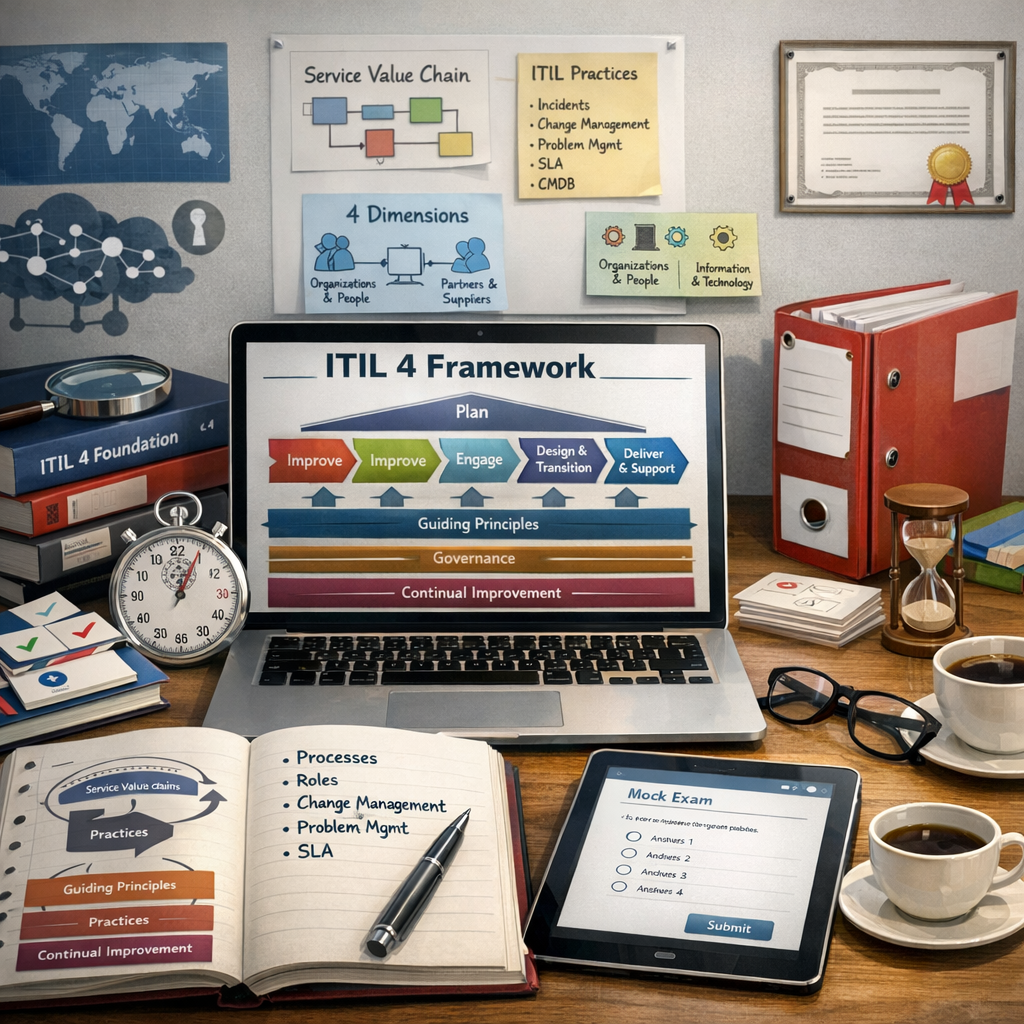
ITIL 4 Foundation Exam Prep: Complete Syllabus, Exam-Focused

US Government Data Classifications for IT Service Providers