Skarp
Skarp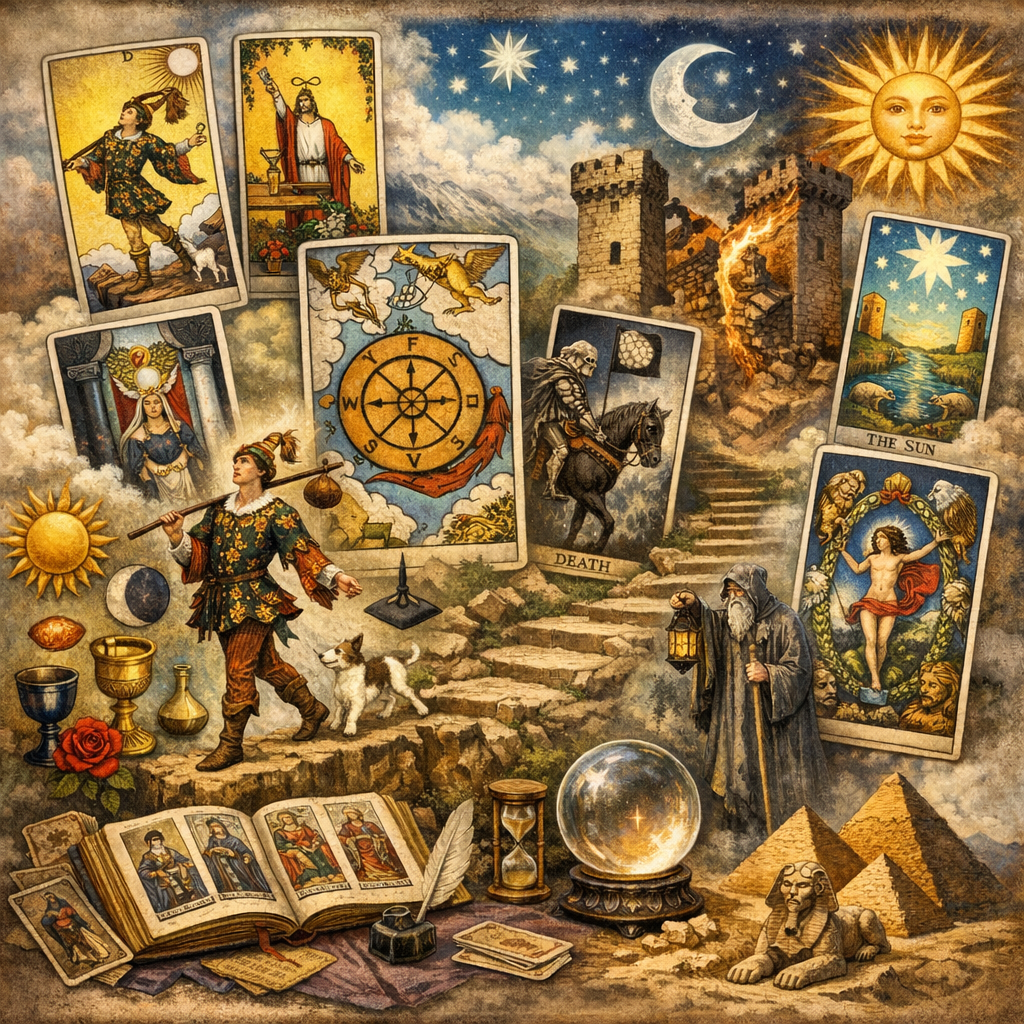
Tarot Card Deep Dive: Symbolism, History, and Story Across the Arcana
Journey through every tarot card as a living story, from the Fool’s first step to the layered worlds of the suits and courts. You’ll connect historical roots, traditional and modern symbolism, and narrative links so you can read and teach tarot with confidence, nuance, and intuition.
The first lecture plays free — no account needed.
What you'll learn
- Students will be able to summarize the historical development of tarot from early European playing cards to modern divination systems.
- Students will understand the key differences between Marseille, Rider-Waite-Smith, and Thoth lineages and how they shape card imagery and reading style.
- Students will be able to describe the basic structure of a standard 78-card tarot deck, including the division into Major and Minor Arcana.
- Students will understand how suits and elements (Wands/Fire, Cups/Water, Swords/Air, Pentacles/Earth) organize themes and experiences in readings.
- Students will be able to outline the Fool’s Journey as a narrative framework for understanding the sequence of the Major Arcana.
- Students will understand how clusters of Major Arcana cards (e.g., Magician–Emperor, Lovers–Chariot–Strength, Tower–Star–World) represent developmental thresholds.
- Students will be able to interpret the core imagery and archetypal themes of Major Arcana I–V in at least one standard deck (e.g., Rider-Waite-Smith).
- Students will understand how these early Majors form a pattern of inner/outer, masculine/feminine, and personal/collective energies that frames later cards.
- Students will be able to articulate key narrative and symbolic themes for Majors VI–XIV and relate them to stages of personal development.
- Students will understand how different decks reframe or update these archetypes (e.g., feminist, queer, culturally specific reinterpretations) while preserving or altering core meanings.
Prerequisites
- Historical origins of tarot
- Major tarot deck families
- Basic tarot structure and numbering
- Familiarity with the idea of archetypes
- The Fool’s Journey narrative
- Tarot suits and elements overview
Course Content
12 modules · 3h total
From Card Game to Archetypal Mirror: What Tarot Really Is
Step behind the velvet curtain of tarot’s mystique into a six-century story of games, secret societies, and modern spiritual seekers, and see how a simple pack of cards became a tool for storytelling, reflection, and divination.
Tarot Architecture: The 78-Card System and Its Hidden Order
Beneath the colorful images lies a precise structure of numbers, suits, and roles; once you see this skeleton, every card stops being random and starts belonging to a coherent symbolic universe.
The Fool’s Journey: Mapping the Story of the Major Arcana
Follow the Fool as a stand-in for the human soul through innocence, crisis, revelation, and integration, and watch the 22 trumps rearrange themselves into a single mythic storyline.
Major Arcana I: Magician to Hierophant – Power, Polarity, and Pattern
Move card by card from the Magician’s focused will to the Hierophant’s inherited wisdom, tracing how early Majors establish identity, relationship, and belonging in the Fool’s emerging world.
Major Arcana II: Lovers to Temperance – Choice, Shadow, and Integration
Enter the middle stretch of the journey, where desire, willpower, withdrawal, crisis, and healing collide, and notice how these cards echo psychological turning points in real human lives.
Major Arcana III: Devil to World – Collapse, Liberation, and Wholeness
Walk through the darkest and most luminous gates of the tarot, where bondage, destruction, revelation, and completion mark the Fool’s final initiation into a wider, stranger universe.
Minor Arcana Storylines: Elements, Numbers, and Everyday Life
Zoom into the so-called “small” cards and discover that they quietly carry the plotlines of work, love, conflict, and growth, encoded in elemental suits and repeating number patterns.
Court Cards as People, Parts, and Postures of Mind
Meet the Pages, Knights, Queens, and Kings not as flat “person cards” but as dynamic blends of element, maturity, and role that can mirror you, others, or inner voices in a spread.
Reading Tarot as Narrative: From Single Card to Spreads
Watch individual symbols snap together into stories as you practice moving from single-card reflections to multi-card spreads that track tension, change, and resolution over time.
Tradition and Innovation: Comparing Historical and Modern Decks
Lay a Marseille trump beside a Rider-Waite-Smith scene and a contemporary feminist or queer deck, and see how each era redraws the same archetype to speak in its own visual language.
Intuition, Ethics, and Cultural Context in Tarot Practice
Step into the reader’s seat and grapple with the real-world questions: how far to lean on intuition, where to draw ethical lines, and how to honor cultural and spiritual contexts responsibly.
Designing Lessons and Journeys: Teaching Tarot as Symbolic Literacy
Turn your own understanding into a path for others by shaping card meanings, history, and narrative practice into engaging lessons, exercises, and group explorations.
Read the Textbook
Read every chapter for free, right here in your browser.
In this module, you will trace tarot from a 15th‑century European card game to a modern tool for reflection and divination. You will see that tarot is not a single fixed system but a family of related practices.
Key big ideas you will meet: Tarot began as playing cards, not as a secret mystical code. Esoteric and divinatory meanings were layered onto the cards centuries later. Three major lineages shape most modern decks: Marseille, Rider‑Waite‑Smith (RWS), and Thoth. Most decks you see today (especially in English‑speaking countries) are visually and conceptually based on the RWS pattern.
As you go, keep two questions in mind: How did a game become a spiritual tool? How do different deck traditions change the way people read the cards?
Study Flashcards
Key concepts from this course as flashcard pairs.
From Card Game to Archetypal Mirror: What Tarot Really Is
Tarot (historical origin)
A 15th‑century European trick‑taking card game using a deck with four suits plus a set of trump cards; not originally designed for divination.
Major Arcana
The set of trump cards in a tarot deck, depicting allegorical figures and scenes (e.g., the Fool, Death, the World). Historically part of the game’s trump suit, later given esoteric meanings.
Minor Arcana
The four suits of a tarot deck (e.g., Wands/Batons, Cups, Swords, Coins/Pentacles), containing numbered pip cards and court cards; structurally similar to regular playing cards.
Tarot de Marseille
A historic French tarot pattern with woodcut‑style art and largely non‑illustrated pip cards, used both for games and, later, for divination.
Rider‑Waite‑Smith (RWS)
A 1909 tarot deck created by A. E. Waite and illustrated by Pamela Colman Smith, featuring fully illustrated scenes on all cards; the basis for many modern decks.
Thoth Tarot
An esoteric tarot deck designed by Aleister Crowley and painted by Frieda Harris (1930s–40s), known for abstract, symbol‑dense imagery and unique titles.
+3 more flashcards
Tarot Architecture: The 78-Card System and Its Hidden Order
Major Arcana
22 archetypal cards (usually numbered 0–21) representing big-picture themes or life chapters. Includes The Fool, Magician, Death, The World, etc.
Minor Arcana
56 cards divided into four suits (Wands, Cups, Swords, Pentacles), each with Ace–10 and four court cards, focusing on everyday situations.
Suits and Elements
Modern standard mapping: Wands–Fire, Cups–Water, Swords–Air, Pentacles (or Coins/Disks)–Earth.
Court Cards
Four ranks in each suit (Page, Knight, Queen, King) that often represent people, roles, or stages of development in that suit’s element.
Ace–10 Number Pattern
A repeating story in each suit: Ace = seed, 2 = duality, 3 = growth, 4 = stability, 5 = disruption, 6 = recovery, 7 = testing, 8 = movement, 9 = culmination, 10 = completion.
The Fool (0)
A special Major Arcana card numbered 0, often treated as the traveler or wild card that moves through the rest of the Major Arcana sequence.
The Fool’s Journey: Mapping the Story of the Major Arcana
Fool (0)
Protagonist of the Journey; unnumbered/zero archetype representing innocence, open potential, and the soul before heavy conditioning.
Act I – World of Forms
Magician–Chariot: the Fool learns skills, intuition, nurture, structure, tradition, values, and how to steer a life in the outer world.
Act II – Inner Trial
Strength–Temperance: the Fool confronts impulses, solitude, fate, consequences, surrender, endings, and the need for balance and integration.
Act III – Revelation and Integration
Devil–World: the Fool faces bondage, collapse, healing, uncertainty, joy, awakening, and ultimately a sense of wholeness and completion.
Developmental Threshold
A cluster or card (e.g., Lovers, Chariot, Strength, Tower–Star–World) that marks a major shift or turning point in the Fool’s growth.
Narrative Cluster
A group of Major Arcana cards that naturally form a mini-story, such as Magician–Emperor (ego toolkit) or Tower–Star–World (collapse to integration).
Major Arcana I: Magician to Hierophant – Power, Polarity, and Pattern
Magician (I)
Archetype of focused will, conscious power, and the ability to channel ideas into reality. Linked with Mercury and the four suit tools on the table.
High Priestess (II)
Archetype of mystery, intuition, and inner knowing. Sits at a threshold with a veil, emphasizing hidden or unconscious knowledge.
Empress (III)
Archetype of nurture, abundance, and embodied creativity. Associated with Venus, fertility, and supportive environments.
Emperor (IV)
Archetype of structure, authority, and protection. Linked with Aries, boundaries, and long-term stability.
Hierophant (V)
Archetype of tradition, institutions, and shared belief systems. Represents initiation into cultural or group patterns.
Polarity (in tarot)
A dynamic pair of contrasting energies (e.g., active/receptive, inner/outer) that define each other and create balance when integrated.
+2 more flashcards
Major Arcana II: Lovers to Temperance – Choice, Shadow, and Integration
Lovers (VI)
Archetype of choice and values in relationship; moving from immediate desire to value-based decisions. Modern decks highlight consent, queerness, and chosen family.
Chariot (VII)
Willpower, control, and ego armor. Directing conflicting drives toward a goal. Updated imagery may show accessible mobility and healthier boundaries.
Strength (VIII)
Soft power, compassion, and emotional regulation. Working with instincts instead of suppressing them; often linked to nervous system regulation today.
Hermit (IX)
Intentional solitude, reflection, and deep study or inner work. Can signal healthy retreat or, in shadow, isolation and avoidance.
Wheel of Fortune (X)
Cycles, luck, and turning points. Highlights impermanence and external forces; modern decks may stress social and ecological systems.
Justice (XI)
Ethics, cause and effect, and structural fairness. Linked to legal and social justice; modern decks often show protest and community accountability.
+3 more flashcards
Major Arcana III: Devil to World – Collapse, Liberation, and Wholeness
Devil (XV)
Entrapment, addiction, toxic patterns, and the illusion of powerlessness. Points to where we collude with our own bondage and may need to reclaim agency.
Tower (XVI)
Sudden disruption and collapse of false structures. Shocks that expose denial or instability, clearing the way for more honest foundations.
Star (XVII)
Gentle hope, healing, and recovery after crisis. Vulnerability, authenticity, and reconnecting with guidance, creativity, or spiritual support.
Moon (XVIII)
Ambiguity, dreams, and unconscious material surfacing. A liminal phase of confusion, fear, and deep psychological exploration.
Sun (XIX)
Clarity, vitality, joy, and healthy visibility. Expressing an authentic self with confidence and experiencing life-affirming energy.
Judgement (XX)
Awakening, calling, and life review. Seeing past choices clearly, integrating lessons, and deciding to live in alignment with deeper values.
+4 more flashcards
Minor Arcana Storylines: Elements, Numbers, and Everyday Life
Suit of Wands (element and life themes)
Fire: energy, will, motivation, creativity, passion, initiative; everyday themes of projects, risks, enthusiasm, anger, leadership, burnout.
Suit of Cups (element and life themes)
Water: emotion, relationships, intuition, bonding, empathy; everyday themes of crushes, friendships, heartbreak, family dynamics, mood swings, healing.
Suit of Swords (element and life themes)
Air: thought, communication, conflict, decisions, beliefs; everyday themes of arguments, overthinking, anxiety, clarity, truth-telling, cutting ties.
Suit of Pentacles (element and life themes)
Earth: body, money, work, health, material reality, skills; everyday themes of jobs, income, study, exercise, home, practical plans.
Ace (number pattern)
Seed or pure potential: a raw burst of the suit's element, a new chance, idea, or energy entering.
Five (number pattern)
Conflict or disruption: instability, challenge, or loss that shakes the earlier stability of the Four.
+4 more flashcards
Court Cards as People, Parts, and Postures of Mind
What are three main ways to read court cards?
1) As people in a situation, 2) As parts of the self (inner voices, moods), 3) As postures of mind or strategies (ways of using the suit's energy).
Rank meanings: Page and Knight
Page: beginner, student, messenger, experimenting. Knight: activist, mover, agent of change, pursuing goals intensely.
Rank meanings: Queen and King
Queen: integrator, nurturer, inner authority, embodies the element. King: director, strategist, outer authority, sets structures and decisions.
Elemental model of suits
Wands = Fire (energy, passion), Cups = Water (feelings, connection), Swords = Air (thought, communication), Pentacles = Earth (body, work, resources).
Double-element model for ranks
Pages = Earth, Knights = Fire, Queens = Water, Kings = Air. Combine with suit element to get blends like Earth of Fire or Water of Air.
Example: Knight of Cups in double-element terms
Knight = Fire, Cups = Water → Fire of Water: passionate pursuit of emotional or artistic experiences; chasing connection or inspiration.
+1 more flashcards
Reading Tarot as Narrative: From Single Card to Spreads
Single-card pull
A one-card reading used as a focused prompt or snapshot of energy, offering one main image, mood, or message to reflect on.
Spread
An arrangement of multiple tarot cards where each position has a defined role, allowing you to read a situation as a narrative over time or from different angles.
Repetition (in spreads)
When a suit, number, or theme appears multiple times in one spread, emphasizing that element or stage in the narrative.
Contrast (in spreads)
A strong difference between cards (such as rest vs action), highlighting tension, inner conflict, or a potential turning point in the story.
Progression (in spreads)
A sense of movement or development across cards, such as escalating numbers or shifting moods, that suggests an unfolding storyline.
Card position
The defined role a card plays in a spread (for example: Past, Present, Future, or Situation, Challenge, Advice). The position acts as that card’s narrative job description.
+2 more flashcards
Tradition and Innovation: Comparing Historical and Modern Decks
Tarot de Marseille (TdM)
A historical tarot pattern from 17th–18th century France/Italy with iconic trumps and mostly non-illustrated pips, emphasizing number, suit, and tradition.
Rider-Waite-Smith (RWS)
A 1909–1910 deck illustrated by Pamela Colman Smith under A.E. Waite, using narrative scenes for all cards and forming the basis of most modern English-language decks.
Thoth Tarot
A deck painted by Frieda Harris under Aleister Crowley, featuring renamed trumps, abstract pips with printed keywords, and a distinct court structure (Knight, Queen, Prince, Princess).
Illustrated pips
Numbered suit cards (1–10) that show full scenes or stories, as in RWS-style decks, giving immediate narrative cues for interpretation.
Non-illustrated pips
Numbered suit cards shown mainly as arranged suit symbols (e.g., cups, swords), as in Marseille decks, requiring reliance on number, suit, and context.
Feminist tarot deck
A deck that centers women and femmes, critiques patriarchal symbolism, and often renames or reframes traditional cards to highlight power, agency, and systemic issues.
+2 more flashcards
Intuition, Ethics, and Cultural Context in Tarot Practice
Autonomy (in tarot ethics)
The principle that the querent has the right to make their own choices. Readings should support, not replace, their decision-making power.
Non-maleficence
An ethical principle meaning "do no harm". In tarot, avoid advice or claims that could cause physical, financial, or psychological harm.
Third-party question
A question that focuses on someone who is not present and has not consented (for example, "Is my ex happy?"), raising privacy and ethical concerns.
Cultural appropriation
Using symbols, stories, or practices from a marginalized culture without permission, context, or benefit to that culture, often repeating patterns of extraction.
Closed spiritual practice
A tradition or set of rituals reserved for specific communities, initiates, or lineages. Outsiders are not automatically entitled to use or depict it.
Intuition (in tarot)
Spontaneous impressions, sensations, and associations that arise while reading. Most ethical readers ground intuition in study, context, and clear boundaries.
Designing Lessons and Journeys: Teaching Tarot as Symbolic Literacy
Symbolic literacy
An approach that treats tarot as a visual language: students learn to read imagery, patterns, and context, not just memorize fixed keywords.
Experiential activity
A learning task where students actively do something (e.g., journaling, partner readings, deck comparisons) to connect concepts with lived experience.
20–20–20 rule
A simple planning guideline for a 60‑minute session: ~20 minutes concepts, ~20 minutes guided analysis, ~20 minutes personal or partner practice.
Sequencing
The intentional order of topics and activities so that each session builds from recognition to interpretation to real‑world application.
Deck comparison
A teaching technique that places different versions of the same card side by side (e.g., Marseille, Rider‑Waite‑Smith, contemporary queer deck) to explore tradition and innovation.
Ethical framing
The explicit guidance a teacher gives about consent, scope of questions, and cultural sensitivity to ensure tarot practice is respectful and responsible.
More in Arts & Culture
See all →
Introduction to Philosophy: Big Questions and Key Thinkers
Mastering The Wheel of Time: A Comprehensive Expert Course
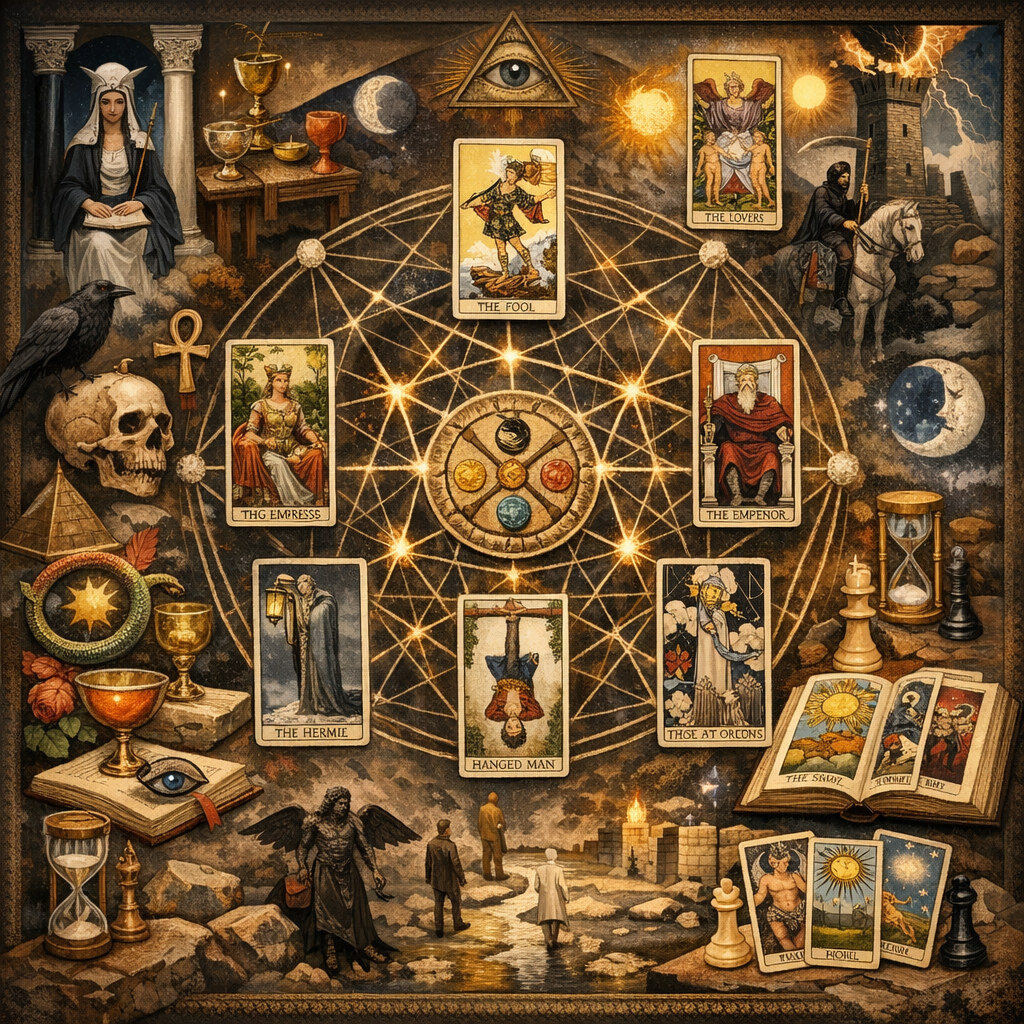
Advanced Tarot: Archetypes, Symbolism, and the Narrative Web of the Arcana
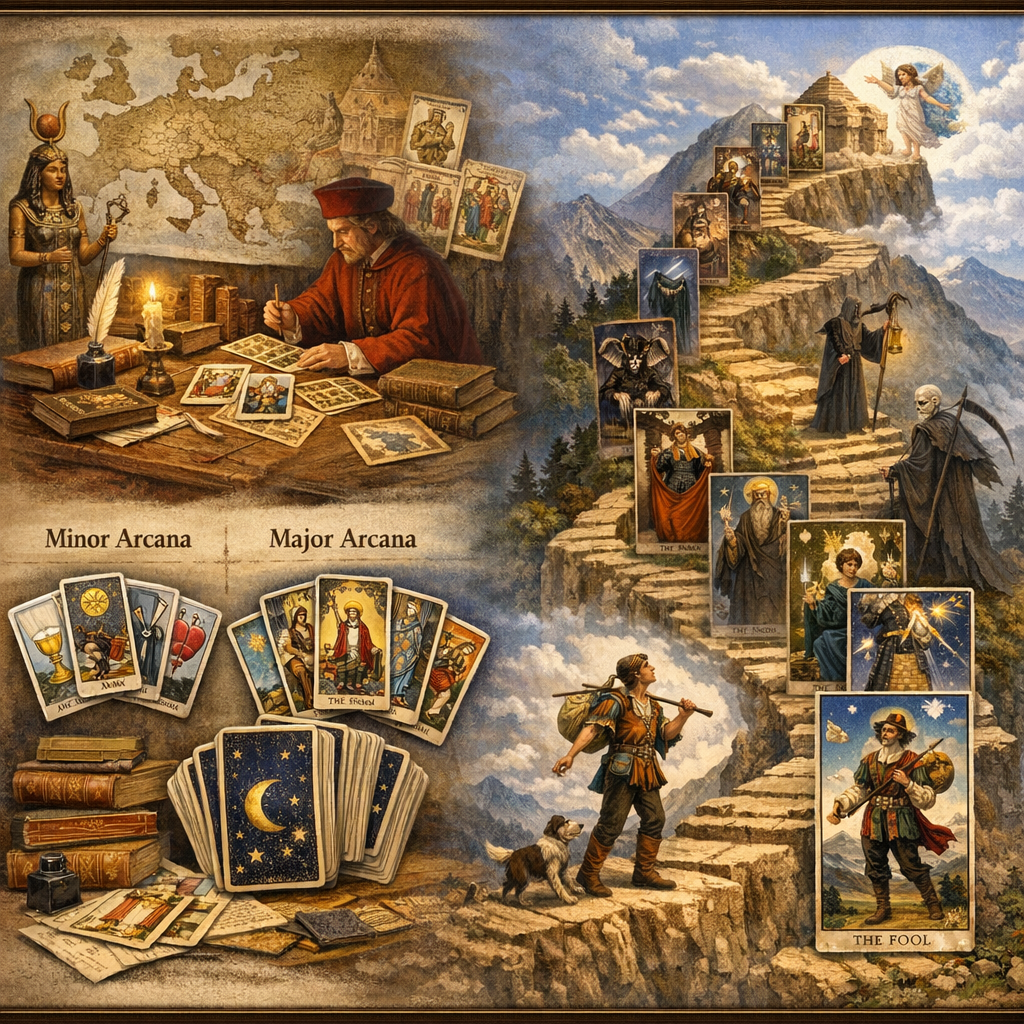
Foundations of Tarot: History, Structure, and the Major Arcana Journey
Meta-Kabbalah Lab: Architecting Your Own System of Letters, Tree, Names & Gates