Skarp
Skarp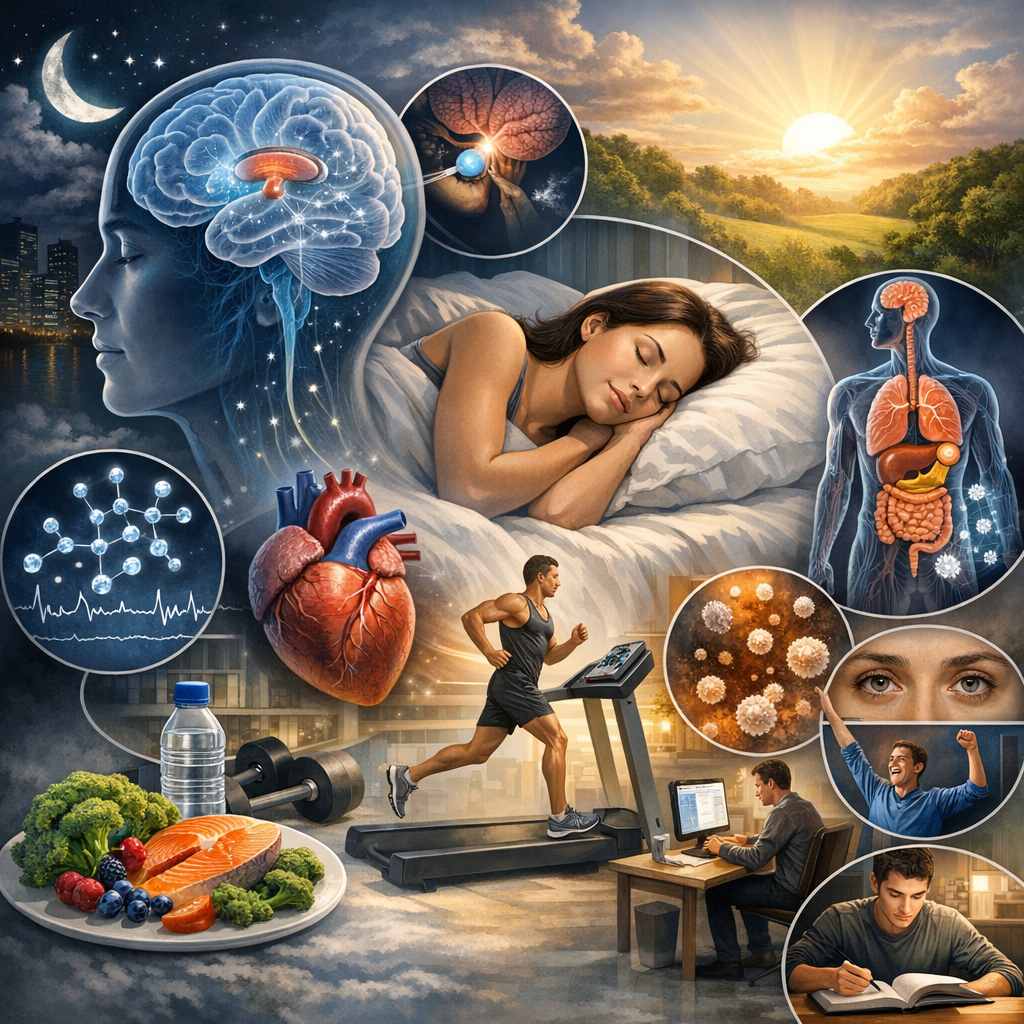
The Science of Sleep: Unlocking Restful Nights
Explore how sleep works in the brain and body, why it matters for health and performance, and how to use evidence-based strategies to sleep better. This course translates the latest sleep science into practical steps you can apply immediately for more restful nights.
The first lecture plays free — no account needed.
What you'll learn
- Students will be able to explain at least three major functions of sleep for brain and body.
- Students will understand how insufficient sleep impacts mood, learning, immunity, and long-term health.
- Students will be able to identify how many hours of sleep are recommended for their age group.
- Students will be able to describe the main sleep stages and what typically occurs in each.
- Students will understand how sleep cycles repeat through the night and why waking during certain stages feels worse.
- Students will be able to relate changes in sleep architecture to aging (e.g., less deep sleep in older adults).
- Students will be able to distinguish between circadian rhythm and sleep pressure as separate drivers of sleep.
- Students will understand how adenosine builds up to create sleep pressure over the day.
- Students will be able to explain why jet lag and irregular schedules disrupt sleep and daytime functioning.
- Students will be able to describe how light and darkness regulate melatonin and sleep timing.
Prerequisites
- basic understanding of why sleep is important from Module 1
- understanding of basic sleep functions and stages from Modules 1–2
- knowledge of circadian rhythms from Module 3
- understanding of sleep stages and cycles from Module 2
- basic understanding of sleep’s role in health from Module 1
- overall understanding of sleep architecture and health impacts from Modules 1–6
Course Content
10 modules · 2h 30m total
Why We Sleep: Foundations of Restful Nights
Introduce what sleep is, why it evolved, and how it affects your brain, body, mood, and performance.
Inside a Night’s Sleep: Stages, Cycles, and Architecture
Explore how sleep is organized into stages and cycles, what happens in each stage, and why that matters for feeling rested.
Body Clocks and Sleep Pressure: What Makes You Feel Sleepy
Learn how circadian rhythms and sleep pressure work together to control when you feel awake or sleepy.
Light, Melatonin, and Chronotypes: Timing Your Sleep
Discover how light and darkness influence melatonin, how this shapes your natural sleep timing, and what it means to be a morning or evening type.
Sleep and the Brain: Memory, Emotion, and Mental Health
Examine how sleep shapes learning, memory consolidation, emotional regulation, and risks for mental health issues.
Sleep and the Body: Metabolism, Immunity, and Long-Term Health
Connect sleep to physical health outcomes including metabolism, cardiovascular health, immune function, and disease risk.
Common Sleep Problems: Insomnia, Fragmented Sleep, and Daytime Sleepiness
Identify common sleep complaints, underlying mechanisms, and when to seek professional help.
Evidence-Based Sleep Hygiene: Behaviors That Build Better Sleep
Translate sleep science into concrete daily habits that reliably improve sleep quality and regularity.
Caffeine, Alcohol, Naps, and Screens: Everyday Factors That Shape Sleep
Examine how common substances and behaviors—like coffee, alcohol, napping, and screen use—help or harm sleep.
Building Your Personal Sleep Plan
Integrate course concepts to assess your current sleep, set realistic goals, and design a personalized, science-backed improvement plan.
Read the Textbook
Read every chapter for free, right here in your browser.
Sleep is more than just "turning off" for the night.
Scientific definition (simplified): Sleep is a reversible, natural state where: Your awareness of the outside world is reduced Your brain activity follows predictable patterns (sleep stages) Your body and brain perform critical maintenance tasks
Sleep vs. Rest Rest: You might be lying down, scrolling your phone, or daydreaming. Your muscles and mind feel less busy, but your brain is still in a wake state. Sleep: Your brain switches into specific sleep stages (NREM and REM), your muscles relax more deeply, and many repair and memory processes activate.
Study Flashcards
Key concepts from this course as flashcard pairs.
Why We Sleep: Foundations of Restful Nights
Sleep vs. Rest
Rest is a low‑activity wake state (you’re still awake and aware). Sleep is a distinct brain state with specific stages (NREM and REM) where awareness drops and critical brain/body maintenance happens.
NREM Sleep
Non‑Rapid Eye Movement sleep, including light and deep stages (N1, N2, N3). It is especially important for physical repair, immune function, and some types of memory.
REM Sleep
Rapid Eye Movement sleep, when brain activity resembles wakefulness and vivid dreaming is common. It supports emotional processing, creativity, and certain memory functions.
Glymphatic System
A brain “cleaning” system that becomes more active during sleep, especially deep sleep, helping clear waste products like beta‑amyloid from between brain cells.
Sleep Deprivation / Sleep Restriction
Getting less sleep than your body needs, either for a short time (deprivation) or repeatedly over days and weeks (restriction), which impairs mood, learning, immunity, and long‑term health.
Recommended Sleep for Teens (13–18 years)
Most teens need about 8–10 hours of sleep per 24 hours for optimal health, learning, and mood, according to major sleep organizations as of 2026.
Inside a Night’s Sleep: Stages, Cycles, and Architecture
Sleep cycle
A repeating pattern of sleep stages (N1, N2, N3, REM) lasting about 90–110 minutes, occurring 4–6 times per night in a typical full sleep period.
Sleep architecture
The overall structure and pattern of sleep across the night, including how much time is spent in each stage and how those stages are arranged in cycles.
NREM sleep
Non-Rapid Eye Movement sleep, which includes stages N1, N2, and N3. It is generally associated with physical restoration and certain types of memory consolidation.
REM sleep
Rapid Eye Movement sleep, characterized by vivid dreaming, rapid eye movements, low muscle tone, and brain activity similar to wakefulness. Important for emotional regulation and memory.
N1 sleep
The lightest stage of sleep and the transition from wakefulness; brief, easily interrupted, with slow rolling eye movements and the start of theta brain waves.
N2 sleep
A light-to-moderate sleep stage marked by sleep spindles and K-complexes on EEG; makes up the largest portion of adult sleep and helps with memory and sensory filtering.
+4 more flashcards
Body Clocks and Sleep Pressure: What Makes You Feel Sleepy
Circadian rhythm
An internally generated, roughly 24-hour cycle in physiology and behavior (such as sleep–wake timing, hormone release, and body temperature) that is synchronized to the environment mainly by light.
Suprachiasmatic nucleus (SCN)
A small cluster of neurons in the hypothalamus that acts as the brain’s master clock, coordinating circadian rhythms throughout the body using light signals from the eyes.
Homeostatic sleep drive (sleep pressure)
The process by which the need for sleep increases the longer you are awake and decreases during sleep, helping balance total sleep and wake time.
Adenosine
A neuromodulator that accumulates in the brain during wakefulness and contributes to sleep pressure; its effects are temporarily blocked by caffeine.
Melatonin
A hormone released mainly at night by the pineal gland that signals biological night to the body and helps regulate circadian timing of sleep.
Jet lag
A temporary mismatch between your internal circadian clock and the local time after rapid travel across time zones, causing disturbed sleep and daytime fatigue.
+2 more flashcards
Light, Melatonin, and Chronotypes: Timing Your Sleep
Melatonin
A hormone produced mainly by the pineal gland that signals **biological night** to your body. Its release is increased in darkness and suppressed by light, especially blue-rich light.
Circadian Rhythm
Your internal ~24-hour timing system that regulates sleep-wake cycles, body temperature, hormones, and more. It is strongly influenced by light.
Chronotype
An individual’s natural tendency toward earlier or later sleep and wake times (e.g., morning lark, night owl, or in-between).
Suprachiasmatic Nucleus (SCN)
A small region in the brain’s hypothalamus that acts as the **master clock**, receiving light signals from the eyes and coordinating circadian rhythms.
Blue Light
Short-wavelength light (~460–480 nm) that is especially powerful at affecting the circadian system and suppressing melatonin. Common in daylight and LED screens.
Phase Advance vs Phase Delay
A **phase advance** shifts your internal clock earlier (you get sleepy and wake earlier). A **phase delay** shifts it later (you get sleepy and wake later). Timing of light exposure can cause advances or delays.
+1 more flashcards
Sleep and the Brain: Memory, Emotion, and Mental Health
Memory consolidation
The process during which freshly formed memories are stabilized, strengthened, and reorganized, especially during sleep, so they become more long-lasting and integrated with existing knowledge.
NREM sleep (especially deep N3)
Non-Rapid Eye Movement sleep, including stages N1–N3. Deep N3 is characterized by slow brain waves and is strongly involved in consolidating declarative memories and supporting glymphatic waste clearance.
REM sleep
Rapid Eye Movement sleep, a stage with active brain patterns, vivid dreaming, and muscle paralysis. Important for emotional processing, procedural memory, and creative association.
Amygdala
An almond-shaped structure deep in the brain that detects emotional significance, especially threats, and is central to fear and anxiety responses.
Prefrontal cortex (PFC)
The front part of the brain involved in planning, decision-making, and self-control. It helps regulate emotions by exerting top-down control over the amygdala.
Glymphatic system
A brain-wide fluid clearance system that uses cerebrospinal fluid to remove metabolic waste products, especially active during deep NREM sleep.
+2 more flashcards
Sleep and the Body: Metabolism, Immunity, and Long-Term Health
Insulin
A hormone made by the pancreas that helps move glucose from the blood into cells. Lower insulin sensitivity (insulin resistance) makes it harder to control blood sugar and increases diabetes risk.
Leptin
A hormone mainly released by fat cells that signals fullness to the brain. Lower leptin after short sleep can make you feel less satisfied after eating.
Ghrelin
A hormone mostly made in the stomach that increases hunger. It tends to rise with short sleep, leading to more appetite and snacking.
Insulin resistance
A state where cells do not respond well to insulin, so the body needs more insulin to keep blood sugar normal. Linked to type 2 diabetes and is worsened by chronic short sleep.
Nocturnal dipping
The normal drop (about 10–20%) in blood pressure during sleep. Reduced dipping with poor sleep is linked to higher risk of hypertension and heart disease.
Cytokines
Signaling proteins released by immune cells and other cells that help regulate inflammation and immune responses. Their balance is influenced by sleep.
+1 more flashcards
Common Sleep Problems: Insomnia, Fragmented Sleep, and Daytime Sleepiness
Insomnia disorder
A long-lasting pattern (≥3 nights/week, ≥3 months) of difficulty falling asleep, staying asleep, or waking too early, despite enough opportunity to sleep, with daytime problems like fatigue or poor concentration.
Sleep-onset insomnia
A form of insomnia where the main difficulty is falling asleep at the beginning of the night (often taking ≥30 minutes), occurring frequently.
Sleep-maintenance insomnia
A form of insomnia where the main difficulty is staying asleep, with multiple awakenings or very early morning awakenings and trouble returning to sleep.
Fragmented sleep
Sleep that is repeatedly interrupted by awakenings or brief arousals, reducing sleep depth and quality even if total time in bed seems long.
Excessive daytime sleepiness (EDS)
A level of sleepiness during the day that is stronger than expected for a person’s age and situation, leading to unintended dozing or difficulty staying awake.
Obstructive sleep apnea (OSA)
A sleep disorder where the upper airway repeatedly collapses or becomes blocked during sleep, causing snoring, gasping, drops in oxygen, and frequent arousals.
+4 more flashcards
Evidence-Based Sleep Hygiene: Behaviors That Build Better Sleep
Sleep Hygiene
A set of daily behaviors and environmental choices that support healthy sleep timing, quality, and duration. It is helpful for many people but, by itself, is usually not enough to treat chronic insomnia.
Chronotype
An individual’s natural tendency to feel more alert in the morning, evening, or somewhere in between. Often described as “morning-type,” “evening-type,” or “intermediate.”
Social Jet Lag
The mismatch between your biological sleep rhythm and your social schedule, often seen as big differences between weekday and weekend sleep times.
Stimulus Control
A set of behavioral rules used in CBT‑I to strengthen the association between bed and sleep, and weaken the link between bed and wakefulness, worry, or screen use.
Wind-Down Routine
A consistent set of calming activities in the 30–60 minutes before bed that helps your brain and body transition from wakefulness to readiness for sleep.
Sleep Environment (Dark, Cool, Quiet)
Evidence-based bedroom conditions that support sleep: minimal light exposure, a slightly cool temperature, and low or controlled noise (often with white noise if needed).
Caffeine, Alcohol, Naps, and Screens: Everyday Factors That Shape Sleep
Adenosine
A chemical that builds up in the brain while you’re awake, increasing sleep pressure. High adenosine makes you feel sleepy; it decreases during sleep, especially deep sleep.
Caffeine (adenosine receptor antagonist)
A stimulant that blocks adenosine receptors (mainly A1 and A2A), making you feel less sleepy even though sleep pressure is still present. Long half-life means it can disrupt sleep hours after you consume it.
Sleep architecture
The structure and pattern of sleep stages (N1, N2, N3/deep sleep, and REM) across the night. Good sleep architecture includes regular cycling and enough deep and REM sleep.
REM rebound
An increase in REM sleep after it has been suppressed (for example, by alcohol earlier in the night), often leading to more intense or vivid dreams.
Sleep inertia
The groggy, disoriented feeling after waking, especially from deep sleep. More likely after waking from a 30–45 minute nap or from deep sleep at night.
Circadian rhythm
Your internal 24-hour body clock that regulates sleep–wake timing, hormone release, body temperature, and more. Strongly influenced by light, especially blue light.
+2 more flashcards
Building Your Personal Sleep Plan
Consistent Sleep Schedule
Going to bed and waking up at roughly the same time every day (within about 1 hour), including weekends. Helps stabilize your body clock and improve sleep quality.
Caffeine Cut-Off Time
A personal rule to avoid caffeine in the 6–8 hours before bedtime (for many teens, that means no caffeine after about 2:00–3:00 p.m.). Reduces difficulty falling asleep.
Screen Wind-Down
A planned period (often 30–60 minutes) before bed with reduced or no screen use, dim light, and calmer activities to help your brain shift into sleep mode.
Sleep-Friendly Naps
Short naps (about 20–30 minutes) taken earlier in the day, not too close to bedtime, to avoid cutting into nighttime sleep.
Sleep Environment
Keeping your bedroom as dark, quiet, and cool as reasonably possible, and using your bed mainly for sleep (and not long gaming/scrolling sessions).
More in Health & Wellness
See all →
Nutrition Basics: Building a Healthy, Balanced Diet
Gut-Brain Axis Essentials: How Your Digestion Shapes Your Mood and Mind
Foundations of Mental Health and Everyday Wellness

Digital Resilience: Protecting Your Mental Well‑being in a Hyperconnected World