Skarp
Skarp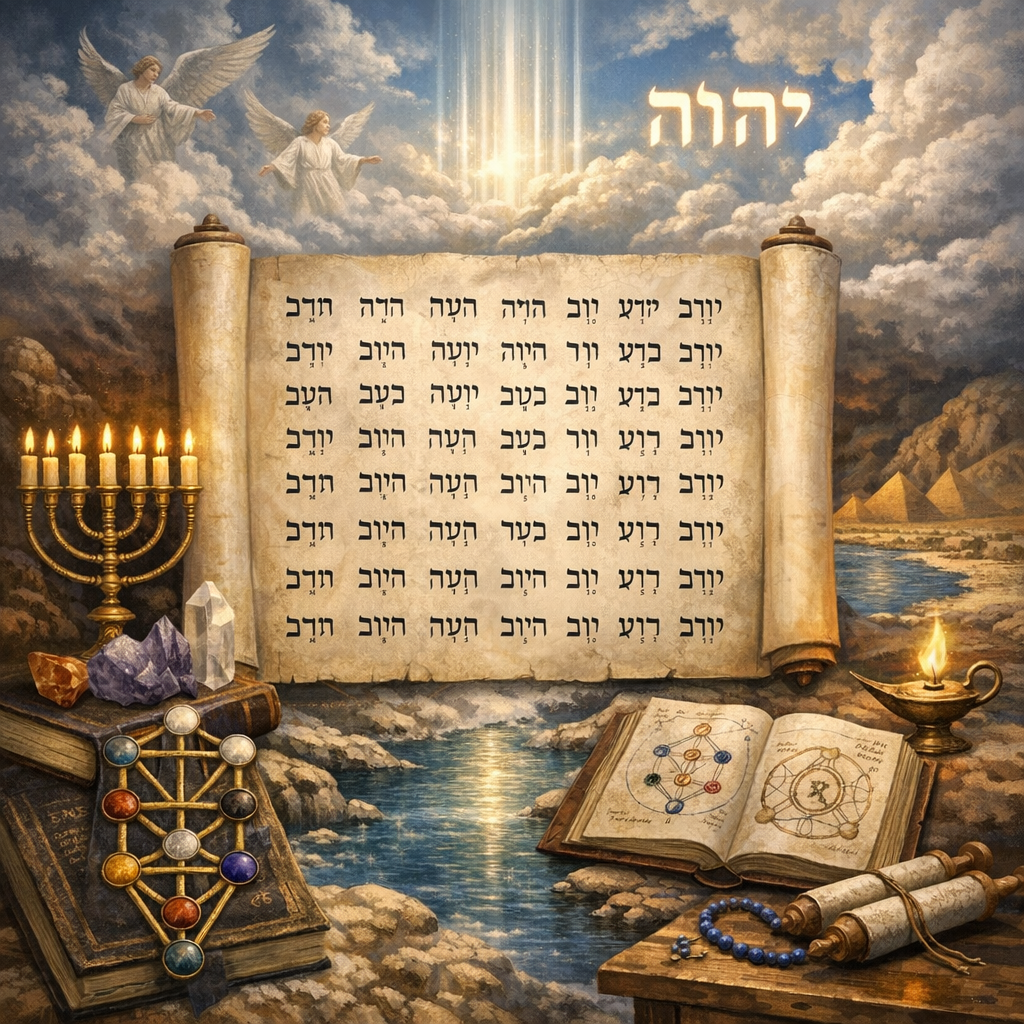
The 72 Names of God: A Gentle Kabbalistic Introduction
This course offers a careful, beginner-friendly introduction to the 72 Names of God (Shem HaMephorash) in Jewish mysticism. You will discover their scriptural and historical roots, how traditional sources understand them, the ethical and spiritual framework around their use, and a simple, respectful way to begin meditating with selected Names to enrich your personal spiritual life.
The first lecture plays free — no account needed.
What you'll learn
- Students will be able to describe in simple terms what is meant by “the 72 Names of God” in Jewish mystical tradition.
- Students will understand the basic distinction between the Tetragrammaton and the 72-fold Name within the broader set of divine Names.
- Students will be able to articulate why these Names are approached with special reverence and caution.
- Students will be able to identify Exodus 14:19–21 as the classical source of the 72-fold Name.
- Students will understand, at a conceptual level, how the 72 three-letter combinations are derived from these verses.
- Students will be able to summarize how the term Shem HaMephorash shifted historically from referring to the Tetragrammaton to various extended Names, including the 72-fold form.
- Students will be able to outline key Jewish legal and ethical concerns around handling divine Names in writing and speech.
- Students will understand why many traditional sources discourage casual or magical use of esoteric Names.
- Students will be able to explain the idea that work with the 72 Names is embedded within a broader life of Torah, mitzvot, and ethical refinement, even if they themselves are not halakhically observant.
- Students will be able to distinguish between classical Jewish-kabbalistic treatments of the 72 Names and later Christian, Hermetic, and occult appropriations.
Prerequisites
- Names of God in Judaism (overview)
- Meaning of Shem HaMephorash
- Place of the 72-fold Name among other divine Names
- Exodus 14:19–21 as the textual source of the 72-fold Name
- Traditional letter-triad derivation (72 triplets of Hebrew letters)
- Classical rabbinic attitudes toward esoteric Names and their use
Course Content
8 modules · 2h total
What Are the 72 Names of God?
Step into the world of Jewish mysticism and meet the mysterious “72 Names of God” that have inspired awe, speculation, and devotion for centuries. Discover what they are—and what they are not—before you ever try to use them.
Scriptural Roots: Exodus and the 72-Fold Name
Travel back to the splitting of the Red Sea and see how three short verses in Exodus became the seedbed for an intricate kabbalistic Name of God. Watch how scribal patterns turn into mystical practice.
Tradition and Caution: How Jewish Sources Frame the Names
Before touching any mystical practice, step into the traditional guardrails: reverence, halakhic boundaries, and the insistence that powerful Names are not spiritual shortcuts.
From Kabbalah to Pop Spirituality: Many Readings of the 72 Names
Trace how the 72 Names traveled from dense kabbalistic texts into Christian esotericism, occult grimoires, and modern self-help, and learn how to tell serious tradition from spiritual marketing.
Ethical Foundations: Middot, Intention, and Safe Practice
Before focusing on any specific Name, build the inner vessel—character traits, intentions, and boundaries—that traditional mystics saw as the true prerequisite for working with the Divine.
Seeing the Names: Hebrew Letters, Triplets, and Visual Contemplation
Enter the visual language of the 72 Names as patterns of Hebrew letters, and discover how simply looking—rather than speaking—can itself be a meditative act.
Working with One Name: A Gentle Practice Framework
Rather than racing through all seventy-two, slow down with a single Name and learn a simple, repeatable way to bring it into your heart, prayer, and daily awareness.
From One Name to a Path: Integrating Practice into Daily Life
Turn occasional experiments into a gentle spiritual rhythm, weaving Name meditation together with prayer, study, and acts of kindness so that mysticism serves real life.
Read the Textbook
Read every chapter for free, right here in your browser.
In Judaism, God is understood as beyond full human understanding, so no single name can completely describe God. Instead, Jewish texts use many Names of God, each highlighting a different aspect of the divine.
Some of the most common names in the Hebrew Bible and later tradition are: Elohim – often translated "God," associated with power and justice. YHWH (the Tetragrammaton, the 4-letter Name) – the most sacred name, linked to God's eternal being and mercy. Adonai – "my Lord," used when reading the Tetragrammaton aloud. El Shaddai – often translated "God Almighty."
Over centuries, especially in Jewish mysticism (Kabbalah), rabbis and mystics explored these names not only as words, but as spiritual "keys" to understanding creation, prayer, and the human soul.
Study Flashcards
Key concepts from this course as flashcard pairs.
What Are the 72 Names of God?
Names of God in Judaism
Multiple biblical and traditional names (like Elohim, YHWH, Adonai, El Shaddai) used to express different aspects of the one God, since no single name can fully describe the divine.
Tetragrammaton
The four-letter Name of God, YHWH, considered the most sacred biblical Name. Traditionally not pronounced as written; read as Adonai in prayer.
Shem HaMephorash
Literally "the explicit Name." In early rabbinic texts, usually the 4-letter Name YHWH as pronounced in the Temple; in later Kabbalah, also used for extended Names like the 72-fold Name.
72 Names of God (72-fold Name)
A set of 72 three-letter Hebrew combinations derived from Exodus 14:19–21 using a forward–backward–forward letter arrangement. Used in Jewish mysticism for meditation and reflection.
42-letter Name
A complex divine Name in Kabbalah, often linked to the mystical prayer Ana Bekoach and sometimes seen as encoded in the opening words of Genesis.
Kabbalah
A stream of Jewish mysticism that explores the inner meaning of the Torah, divine Names, and the structure of reality. Developed especially from the 12th to 16th centuries and studied in various forms today.
+1 more flashcards
Scriptural Roots: Exodus and the 72-Fold Name
Exodus 14:19–21
Three consecutive verses in the Red Sea story that, in traditional mystical counting, each have 72 Hebrew letters and serve as the classic scriptural source for the 72-fold Name.
72-fold Name of God
A sequence of 72 three-letter combinations (triplets) derived from the letters of Exodus 14:19–21 by writing the verses in three rows, reversing the middle row, and reading down the columns.
Triplet (in this context)
One of the 72 groups of three Hebrew letters formed from Exodus 14:19–21. Together, the 72 triplets are often called the 72 Names of God.
Shem HaMephorash (historical meaning)
Literally “the Explicit Name.” In early rabbinic sources, it usually refers to the four-letter Name Y-H-W-H, pronounced only in the Temple.
Shem HaMephorash (later usage)
In medieval mystical and magical traditions, can also refer to extended divine Names, especially the 72-fold Name built from Exodus 14:19–21.
Boustrophedon pattern
A writing pattern where lines alternate direction. In this module, it refers to keeping verses 19 and 21 in one direction, reversing verse 20, then reading down the columns to form triplets.
+1 more flashcards
Tradition and Caution: How Jewish Sources Frame the Names
Halakha
Jewish law: the system of legal and practical guidance that covers areas like writing, erasing, and speaking divine Names.
Shemot she-einan nimchakim
Hebrew for "Names that may not be erased" – certain divine Names that, once written with intent, should not be erased or casually discarded.
Geniza
A storage place for worn-out sacred texts containing divine Names, often followed by respectful burial.
Hashem
Literally "the Name"; a common substitute used in speech instead of pronouncing certain divine Names directly.
Kabbalistic guardrails
Traditional kabbalistic requirements such as Torah grounding, mitzvah observance, moral refinement, and guidance from a teacher before engaging esoteric practices.
Core caution about the 72 Names
They are not meant as magical shortcuts or vending machines for desires, but as part of a broader life of connection to God and ethical growth.
From Kabbalah to Pop Spirituality: Many Readings of the 72 Names
72-fold Name of God
A sequence traditionally derived from three verses in Exodus 14:19–21, forming 72 three-letter combinations used in Jewish mystical traditions with great caution.
Classical Jewish-kabbalistic use
Use of the 72 Names within Jewish law, prayer, and ethics, focused on knowing God and inner transformation, not quick magical results.
Abraham Abulafia
A 13th-century Jewish kabbalist known for prophetic Kabbalah and meditative practices with divine Names aimed at spiritual union with God.
Christian Kabbalah
Renaissance-era Christian reinterpretation of Jewish Kabbalah (e.g., Reuchlin), reading Christian doctrines into kabbalistic ideas.
Hermetic / occult reception
Adoption of the 72 Names into magical systems with angel lists, talismans, zodiac degrees, and ritual instructions for practical outcomes.
Shem ha-meforash angels
A set of 72 angels constructed from the 72 three-letter Names in many occult traditions, each linked to specific tasks and astrological positions.
+2 more flashcards
Ethical Foundations: Middot, Intention, and Safe Practice
Middot
Ethical traits or qualities of character (like humility, patience, compassion, truthfulness) that form the inner vessel for safe spiritual work.
Kavvanah
Intention or directed awareness; aiming the heart toward closeness to God, service, and alignment with Torah, rather than control or ego.
Yir'ah
Awe or reverent fear of God; a mix of wonder, respect, and awareness of limits that keeps you from treating holy things as toys.
Non-pronunciation guideline
The safety rule that you should not pronounce the 72 Names as if they were magical incantations; focus instead on study and ethical reflection.
Non-magical intent
Approaching the Names not as tools to control people or events, but as supports for inner growth and deeper awareness of God.
Respect for halakhah
Honoring Jewish law and communal norms; checking with competent teachers before adopting advanced mystical practices.
Seeing the Names: Hebrew Letters, Triplets, and Visual Contemplation
72 Names (Ayin-bet Shemot)
A traditional kabbalistic set of **72 three-letter Hebrew sequences**, often treated as sacred names. In this module, you relate to them mainly through **visual and mental contemplation**.
Triplet
A group of **three Hebrew letters** forming one of the 72 Names. Not usually a normal Hebrew word, but a **symbolic unit for meditation**.
Visual Contemplation
A practice of **quietly looking at or imagining** a pattern (such as a letter triplet), noticing details and inner responses, **without necessarily saying it out loud**.
Right-to-left script
Hebrew is read from **right to left**, so in a triplet like והו, you mentally trace the letters starting from the **rightmost** character.
Respectful Restraint
An attitude of **not pronouncing** certain sacred names casually, focusing instead on **inner intention, ethics, and quiet attention** when working with them.
Mirror vs. Button
Two attitudes toward the Names: **button** treats them like tools to force outcomes; **mirror** treats them as ways to see your own inner state and grow in character.
Working with One Name: A Gentle Practice Framework
Middot
Hebrew term for character traits or qualities (like compassion, patience, humility) that form the inner vessel for spiritual work.
Kavanah (Intention)
The focused intention or inner direction you bring to practice, such as: "I am working with this Name to grow in patience."
Contemplation (in this module)
A gentle, steady focus on one Name or attribute, visually or verbally, without forcing special experiences.
Integration
Carrying the Name into daily life through one small, concrete action that expresses its quality.
Healthy Spiritual Fruit
Over time, increased patience, honesty, compassion, and groundedness, even if sessions feel simple or uneventful.
Role of Journaling
To notice patterns over time, support reflection, and help you discern whether the practice is helping you grow in healthy ways.
From One Name to a Path: Integrating Practice into Daily Life
Weekly focus sentence
A one-line statement that links your chosen Name to a single quality for the week. Example: "For this week, I use the Name to remember: I can pause before reacting."
Anchor moment
A regular daily activity (like brushing teeth or commuting) that you connect to a 1–3 minute Name practice so it becomes part of your routine.
Weekly check-in
A 5–10 minute session once a week to look at the Name, breathe, and briefly reflect or journal about how the quality showed up in your life.
Kindness action
One small, concrete action each week that expresses your chosen quality in relationships, work, or self-care.
Healthy limit
A boundary that keeps practice safe and sustainable: short sessions, staying grounded, and the freedom to stop whenever needed.
Warning sign
A signal that practice may be unbalanced, such as feeling panicky, unreal, pressured to practice, or using the Name to avoid real problems.
More in Arts & Culture
See all →
Introduction to Philosophy: Big Questions and Key Thinkers

Mastering The Wheel of Time: A Comprehensive Expert Course
Advanced Tarot: Archetypes, Symbolism, and the Narrative Web of the Arcana

Tarot Card Deep Dive: Symbolism, History, and Story Across the Arcana

Foundations of Tarot: History, Structure, and the Major Arcana Journey