Skarp
Skarp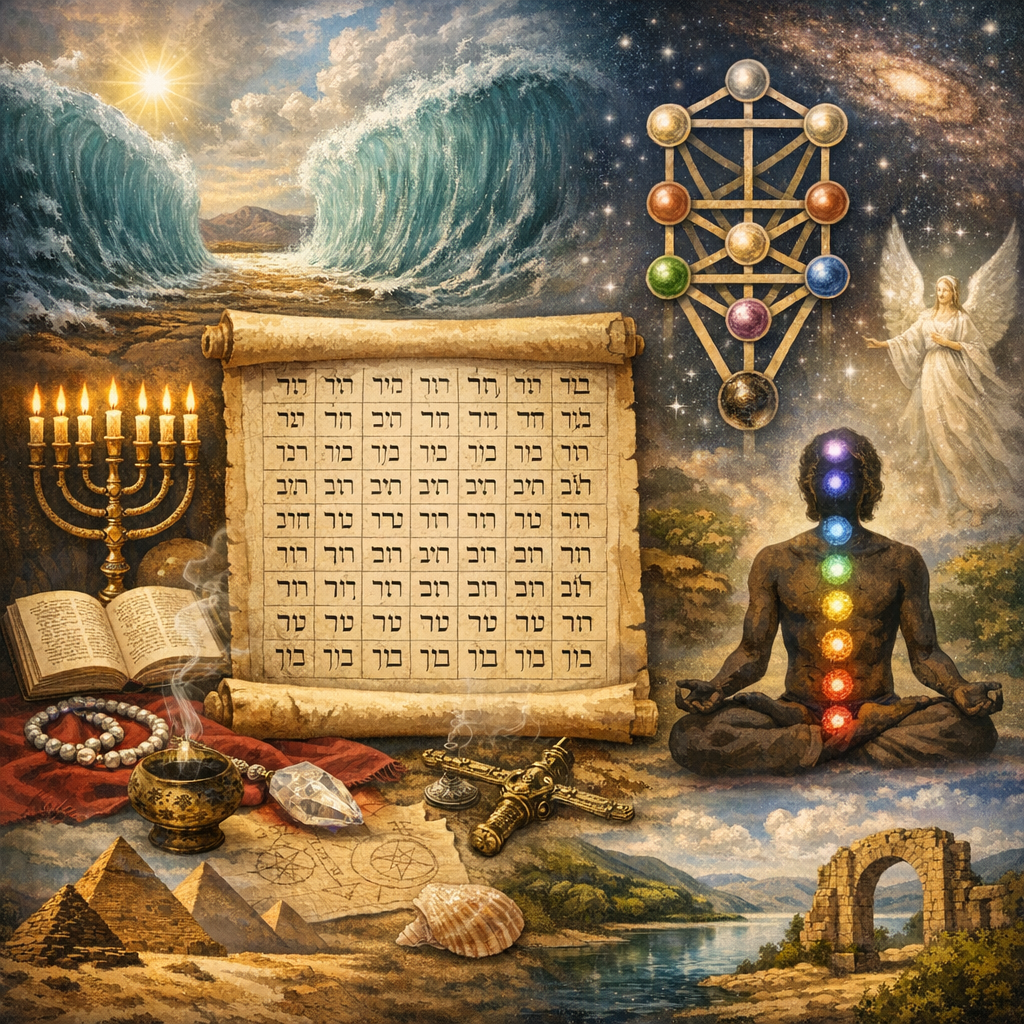
The 72 Names of God: A Gentle Introduction to Kabbalistic Meaning and Practice
This course offers a careful, beginner‑friendly introduction to the 72 Names of God (Shem HaMephorash) in Jewish mysticism. You will learn where the Names come from, how traditional sources understand them, core ethical and spiritual principles, and a simple, safe framework for meditating with selected Names in a respectful way that can enrich your personal spiritual life.
The first lecture plays free — no account needed.
What you'll learn
- Students will be able to describe, in simple terms, what the 72 Names of God are and how they differ from ordinary names of God in Judaism.
- Students will understand that the 72 Names come from Jewish mystical traditions (Kabbalah) and are not a stand‑alone magical system.
- Students will be able to identify common modern misconceptions about the 72 Names (e.g., as instant miracle formulas).
- Students will be able to summarize how the 72 Names are traditionally derived from Exodus 14:19–21 using three 72‑letter verses and letter‑triplets.
- Students will understand the Kabbalistic idea that Hebrew letters and divine Names function as channels of creative energy rather than mere labels.
- Students will be able to distinguish this classical derivation from later Christian, Hermetic, or occult reinterpretations.
- Students will be able to explain why traditional sources caution against unsupervised advanced Kabbalistic practices, especially complex manipulations of divine Names.
- Students will understand basic safety principles for beginners: humility, psychological grounding, respect for tradition, and avoiding promises of guaranteed miracles.
- Students will be able to articulate personal ethical guidelines for how they intend to approach the 72 Names in a way that honors Judaism and avoids cultural appropriation.
- Students will be able to recognize the idea that each Hebrew letter carries symbolic and spiritual significance in Kabbalistic thought.
Prerequisites
- Names of God in Judaism vs. the 72 Names
- Basic idea of Shem HaMephorash (the Explicit Name)
- Kabbalah as a stream within Judaism, not a separate religion
- Method of deriving 72 letter triplets from the three verses
- Connection between letter‑permutations and creation in Kabbalah
- Basic safety principles for beginners
Course Content
11 modules · 2h 45m total
What Are the 72 Names of God?
A mysterious grid of Hebrew letter‑triplets, promises of healing and protection, and whispers of “secret names” — step behind the hype to discover what the 72 Names actually are and how Jewish mystics have understood them.
From the Red Sea to Seventy‑Two Names: Origins in Exodus
Behind the dramatic crossing of the Red Sea lies a subtle pattern of letters that Kabbalists turned into a whole contemplative universe — follow the trail from three biblical verses to seventy‑two letter triplets.
Walking Carefully: Safety, Ethics, and Respectful Approach
Stories of mystics who “flew too close to the sun” have made Kabbalah seem dangerous — discover what those warnings really mean, and how simple ethical safeguards can make your practice grounded, humble, and safe.
Hebrew Letters as Living Symbols
Strange squiggles or living sparks of creation? Enter the world of Hebrew letters as Kabbalists see them, and learn just enough to work with the 72 Names without needing full Hebrew fluency.
A Gentle Framework for Name Meditation
Instead of chasing spectacular visions, build a simple, repeatable way of sitting with a Name — breath, attention, and intention woven together into a quiet, nourishing practice.
Names of Healing: Softening Pain and Restoring Wholeness
Many are drawn to the 72 Names seeking healing — discover how Kabbalistic healing is less about “fixing” and more about reconnecting to wholeness, and how selected Names can support that inner movement.
Names of Protection: Boundaries, Trust, and Inner Refuge
Images of amulets and protective symbols abound, but what does “protection” mean in a mystical tradition that insists God is everywhere? Reframe protection as healthy boundaries and trust, supported by specific Names.
Names of Transformation: Breaking Patterns and Opening Possibility
When old habits feel like iron chains, the 72 Names have long been invoked for breakthrough and change — learn how to pair transformation‑oriented Names with honest self‑reflection to shift deep patterns.
Names of Compassion and Connection: Relating to Self, Others, and the Divine
Beyond fixing problems, many Names invite a softer heart — turn toward those Names that nurture compassion, forgiveness, and a sense of being held in a larger love.
Choosing Your Personal Practice: A Small Constellation of Names
Instead of trying to master all 72 at once, craft a modest “constellation” of a few Names that speak to you now, and weave them into a sustainable rhythm of practice.
Context, Controversy, and Next Steps on the Path
From medieval mystics to celebrity‑driven Kabbalah and modern occult systems, the 72 Names have traveled far — step back to see the bigger picture and discern where you want to go next in your own learning.
Read the Textbook
Read every chapter for free, right here in your browser.
In many spiritual circles today, you may see posters, apps, or jewelry with a strange grid of Hebrew letters: 72 little triplets like והו, ילי, סאל.
People often advertise these as the "72 Names of God" that can bring instant healing, protection, or success if you just look at them or meditate on them. This can sound mysterious and even magical.
In this module, you will: Learn what these 72 triplets actually are in Jewish mystical tradition. See how they relate to Names of God in Judaism more broadly. Understand what traditional sources do and do not say about them. Practice spotting modern misconceptions.
Study Flashcards
Key concepts from this course as flashcard pairs.
What Are the 72 Names of God?
Names of God in Judaism (general)
Words and titles like YHWH, Adonai, Elohim that appear in the Hebrew Bible and prayer. They have meanings and are used in regular religious speech (with rules about pronunciation and respect).
Shem HaMephorash
Literally "the explicit name". In early rabbinic texts it mainly refers to the four-letter Name YHWH, especially as pronounced in the Temple. Later Kabbalists sometimes use it for longer, secret divine names.
72 Names of God
A set of 72 Hebrew letter‑triplets constructed from three verses in Exodus 14 using a mystical pattern. Treated in Kabbalah as a form of expanded divine name or letter‑code, not as ordinary spoken names.
Kabbalah
Jewish mystical tradition that explores the inner meaning of Scripture, commandments, and reality. It is a stream within Judaism, not a separate religion.
Modern misconception about the 72 Names
The idea that simply viewing or wearing the 72 Names guarantees instant miracles, wealth, or protection, without ethical effort or connection to Judaism. Classical sources do not support this guarantee.
Key difference: ordinary Names vs. 72 triplets
Ordinary Names are meaningful words or titles for God used in prayer. The 72 triplets are constructed letter‑codes from Exodus 14, mainly used in mystical meditation, diagrams, or amulets.
From the Red Sea to Seventy‑Two Names: Origins in Exodus
Exodus 14:19–21
Three consecutive verses describing the moment around the crossing of the Red Sea. In traditional counting each has 72 Hebrew letters, forming the textual basis for the 72 letter triplets.
Boustrophedon pattern
A forward–backward–forward writing method. In the 72 Names derivation: verse 1 right-to-left, verse 2 left-to-right (reversed), verse 3 right-to-left, then read vertically.
72 Names (Shem Ayin-Bet)
A set of 72 Hebrew letter triplets, each formed from one letter of each of the three 72-letter verses in Exodus 14:19–21, traditionally treated as channels of divine energy.
Name of God in Kabbalah
Not just a label, but a spiritual channel or frequency through which a specific aspect of divine energy is revealed or accessed.
Sefer Yetzirah
An early Jewish mystical text that describes creation through 10 sefirot and 22 Hebrew letters, foundational for later Kabbalistic ideas about letters as creative forces.
Classical Jewish Kabbalah vs. later reinterpretations
Classical Kabbalah uses Hebrew Names within Jewish law and ethics for contemplation. Later Christian, Hermetic, and New Age uses often recast them as magical tools, mix in other systems, and may ignore the Exodus context.
Walking Carefully: Safety, Ethics, and Respectful Approach
Yichudim
Advanced Kabbalistic "unifications" involving complex visualizations and combinations of divine Names, traditionally reserved for well-prepared students with guidance.
Simple contemplation
Gentle reflection, such as quietly focusing on a verse or letter-triplet and linking it to an ethical quality, without expecting guaranteed miracles.
Spiritual bypassing
Using spiritual ideas or practices to avoid dealing with real psychological, relational, or ethical problems.
Ethical use of divine Names
Approaching divine Names with humility, avoiding claims of guaranteed miracles, respecting consent and tradition, and linking practice to real-world ethical behavior.
Psychological grounding
Staying connected to basic health routines, relationships, and, when needed, professional support, so that spiritual practice does not destabilize you.
Cultural appropriation (in this context)
Using elements of Jewish mystical tradition, like the 72 Names, as a personal tool or product without acknowledging or respecting their Jewish roots and community.
Hebrew Letters as Living Symbols
Reading direction of Hebrew
Hebrew is read and written right to left. In a three-letter sequence, you start with the letter on the right, then move to the middle, then the left.
What kind of letters are most Hebrew letters?
They are mostly consonants. Vowel sounds are often not written or shown with small marks that many modern texts omit.
Alef (א): sound and simple meaning
Alef is often silent or a soft breath and carries a vowel. A simple symbolic keyword in Kabbalah is Oneness or Beginning.
Yod (י): keyword and image
Yod sounds like y in "yes". Keyword: Point or Seed. Image: a tiny dot of light, the smallest letter, a seed of intention.
He (ה): keyword and image
He sounds like h in "heart". Keyword: Breath or Revelation. Image: a window letting light in.
Vav (ו): keyword and image
Vav sounds like v in "voice". Keyword: Connection or Hook. Image: a nail or hook that links two things.
+3 more flashcards
A Gentle Framework for Name Meditation
Name meditation (in this module)
A gentle, contemplative practice of sitting with one sacred Name, anchored in breath, body awareness, and simple intention, without forcing visions or magical expectations.
How is Name meditation different from prayer?
Prayer focuses on what you say or feel toward the Divine (asking, thanking, sharing). Name meditation focuses on quietly being with one Name through breath and attention.
How is Name meditation different from visualization?
Visualization uses inner images as the main tool. Name meditation may include soft imagery, but its core is breath + Name + intention within embodied awareness.
Core 3 elements of Name meditation
1) Breath (often with slightly longer exhale), 2) Attention resting on the Name, 3) Gentle, honest intention (such as patience or compassion).
Why preparation matters
A short setup of posture, softening tension, and time boundaries tells your body and mind that practice time is safe, contained, and not overwhelming.
Key grounding methods after practice
Feeling body contact (feet, seat, hands), orienting to the room (seeing and hearing), using senses scans or touch, and brief journaling to integrate the experience.
Names of Healing: Softening Pain and Restoring Wholeness
Kabbalistic view of healing
Healing is seen as **alignment** of body, emotion/psyche, and soul, and reconnection to an underlying wholeness, rather than simply fixing symptoms.
Role of divine Names in healing
Divine Names function as **channels or bridges** that help us feel divine qualities (like compassion and protection) and support inner change, not as mechanical cures.
Supportive vs. substitutive use of Names
Supportive use: Names are used alongside medical and psychological care to calm, comfort, and give meaning. Substitutive use (replacing needed treatment) is discouraged and unsafe.
Non-coercive intention
An attitude that avoids trying to force healing. Instead of demanding a cure, we hold gentle wishes like "May I feel supported" or "May I be guided to the help I need."
Example of a healing meditation step
Visualize your chosen Name in soft light, coordinate it with slow breathing, notice body sensations, and let the Name rest near an area of discomfort with a kind inner phrase.
Names of Protection: Boundaries, Trust, and Inner Refuge
Outer protection
Practical safety steps in the external world, such as locks, safe travel choices, medical or legal help. Important, but different from inner emotional or spiritual protection.
Inner protection
Qualities inside you that help you respond wisely: inner refuge, healthy boundaries, and trust. Supported by practices like Name meditation.
72 Names of God
A traditional Kabbalistic set of 72 three-letter combinations derived from Exodus 14:19–21, often used in meditation, prayer, and sometimes on amulets.
Healthy boundaries
The ability to sense what is your responsibility and what is not, to say yes or no appropriately, and to stay connected without being overwhelmed.
Inner refuge
A felt sense of a quiet, steady center within you, where you can return even in stressful situations. In this module, Name meditation helps you access this refuge.
Protection-oriented Name meditation
A short practice using a sacred Name or word with breath and intention to cultivate inner refuge, clarity, and wise emotional boundaries.
Names of Transformation: Breaking Patterns and Opening Possibility
Teshuvah
A core Jewish concept meaning "return" or realignment with one's deepest integrity and with God; includes self‑review, regret, making amends, and committing to better choices.
72 Names of God
A Kabbalistic system of 72 three‑letter combinations derived from Exodus 14:19–21, used in many contemporary settings as meditation tools rather than magic spells.
Names of Transformation
A practical category for Names people use to support change, courage, and breaking stuck patterns, understood as tools for teshuvah.
Pattern → Teshuvah → Name → Action
The four‑step map used in this module: identify a stuck pattern, define a direction of return, choose a Name as focus, and take one small concrete action.
L‑A‑V (Lamed‑Alef‑Vav)
A Name often associated with courage and breaking through fear or limitation in contemporary practice.
M‑H‑Sh (Mem‑Hey‑Shin)
A Name often associated with letting go of old patterns and "resetting" unhelpful cycles.
+2 more flashcards
Names of Compassion and Connection: Relating to Self, Others, and the Divine
Rachamim
Hebrew term for compassion/mercy, related to the word for womb (rechem). Suggests tender, womb-like care and balancing judgment with mercy.
Chesed
Hebrew term for lovingkindness or steadfast love. Often pictured as overflowing generosity and giving more than is strictly deserved.
72 Names of God
A traditional set of 72 three-letter Hebrew combinations, derived from Exodus 14:19–21, used in Kabbalah as meditative symbols pointing to different spiritual qualities.
Alef Lamed Dalet (א ל ד)
A three-letter Name often associated in modern charts with softening harsh inner voices and inviting self-compassion and mercy.
Name-based loving-kindness practice
A short meditation linking a compassion-oriented Name with simple phrases of blessing: first for yourself, then for others, imagining the Name as a gentle light at the heart.
From self-compassion to other-compassion
The idea that learning to speak to yourself with kindness makes it easier to see others as doing their best and to extend mercy outward, while still keeping healthy boundaries.
Choosing Your Personal Practice: A Small Constellation of Names
Small constellation (of Names)
A personal set of about 3–6 Names or Name-themes that you work with regularly, instead of trying to use all 72 at once.
Four core themes
Healing, Protection, Transformation, Compassion/Connection. A simple way to balance your practice so it supports your whole life.
Intuitive resonance
The sense that a Name feels alive, meaningful, or calming for you right now, without being driven by fantasies of control or power.
Traditional association
The usual meaning or area of focus a Name has in your course or tradition (for example, linked to healing, humility, or courage).
Ethical use of Names
Using Names to support your own growth, clarity, and compassion, while respecting others' freedom and not replacing needed professional care.
Practice schedule
A simple 1–2 week plan that rotates your chosen Names through short, regular sessions you can realistically keep.
Context, Controversy, and Next Steps on the Path
72 Names (in this course)
A set of 72 three-letter combinations drawn from Exodus 14:19–21, used in Jewish mystical tradition for meditation and prayer, later adapted in Christian, Hermetic, and New Age systems.
Kabbalah
A broad term for Jewish mystical traditions. In classic use, it includes deep study, prayer, and ethical life; in popular culture, it is often oversimplified or commercialized.
Hermetic / occult tradition
Western esoteric systems (especially from the Renaissance onward) that mix elements of Kabbalah with astrology, alchemy, magic, and secret societies.
Commercialization
Turning spiritual ideas into products or services mainly for profit, often with strong promises and little depth or accountability.
Cultural appropriation
Using elements of a culture (like sacred Names or symbols) without understanding, respect, or real connection to the people and traditions they come from.
Respectful learning
Approach that includes context, listening to insiders, humility about your limits, ethical focus, and honest credit to original sources and teachers.
More in Arts & Culture
See all →
Introduction to Philosophy: Big Questions and Key Thinkers

Mastering The Wheel of Time: A Comprehensive Expert Course
Advanced Tarot: Archetypes, Symbolism, and the Narrative Web of the Arcana
Tarot Card Deep Dive: Symbolism, History, and Story Across the Arcana
Foundations of Tarot: History, Structure, and the Major Arcana Journey