Skarp
Skarp
SHS Science Foundations: Integrated Chemistry, Biology, and Physics
Build a strong Senior High School science foundation by connecting core ideas from chemistry, biology, and physics. Through clear explanations, simple experiments, and exam-style questions, you will review essential math skills for science and master the key concepts needed for success in SHS science courses.
The first lecture plays free — no account needed.
What you'll learn
- Students will be able to use SI units, convert between common units, and apply scientific notation and significant figures in calculations.
- Students will understand how to set up and solve simple algebraic equations, interpret tables and graphs, and describe the basic steps of the scientific method and experimental design.
- Students will be able to describe matter using the particle model and distinguish between solids, liquids, gases, and plasmas, including common changes of state.
- Students will understand the difference between physical and chemical properties and changes, calculate density from mass and volume, and classify samples as elements, compounds, or mixtures.
- Students will be able to label the main parts of an atom and use atomic number and mass number to identify elements and isotopes.
- Students will understand how the periodic table is organized, recognize metals and nonmetals, and describe in simple terms how valence electrons and charge relate to ion formation and reactivity trends.
- Students will be able to distinguish between ionic and covalent bonds using simple particle diagrams and identify molecules from chemical formulas.
- Students will understand how to interpret and write simple word and symbol equations, apply the law of conservation of mass qualitatively, and recognize common signs of a chemical reaction.
- Students will be able to state the main ideas of cell theory and compare prokaryotic and eukaryotic cells at a basic level.
- Students will understand the functions of key cell organelles, differences between plant and animal cells, and the basic ideas of diffusion and osmosis across cell membranes.
Prerequisites
- SI units and measurement from Module 1
- Ratios and basic algebra from Module 1
- Particle model of matter from Module 2
- Atomic structure and ions from Module 3
- Particle model and properties of matter from Module 2
- Cell structures and functions from Module 5
Course Content
14 modules · 3h 15m total
Getting Ready for SHS Science: Math, Measurement, and Scientific Thinking
Numbers, units, and graphs quietly shape every science problem you will face—step into the lab-ready toolkit that turns everyday math into a powerful scientific language.
Matter All Around: Particles, States, and Properties
From ice cubes to air and metal, everything you touch is built from tiny particles—uncover how their motion and arrangement explain the surprising behavior of matter.
Inside the Atom: Elements, Ions, and the Periodic Table
Dive beneath the surface of matter to meet protons, neutrons, and electrons—and see how the periodic table secretly organizes the entire material universe.
How Atoms Stick: Chemical Bonding and Simple Reactions
Salt, water, and the air you breathe are all results of atoms ‘holding hands’—discover how bonds form and break in the chemical reactions that power everyday life.
Cells: The Basic Units of Life
Zoom into the hidden world of cells to see how tiny structures work together like a microscopic city keeping every organism alive.
Energy in Living Things: Photosynthesis, Respiration, and Food Chains
Follow the journey of energy from sunlight to your muscles, revealing how plants, animals, and microbes form a connected web of life.
Genetics Basics: DNA, Genes, and Inheritance Patterns
Traits like eye color and blood type are written in a chemical code—decode how DNA, genes, and chromosomes pass information from one generation to the next.
Ecosystems and the Human Body: Systems, Balance, and Health
From forests to your own organs, complex systems stay alive by staying in balance—see how interactions, cycles, and feedback keep both ecosystems and your body functioning.
Describing Motion: Distance, Speed, and Graphs
Whether it is a car on the highway or a falling ball, motion leaves a mathematical trail—learn to read and sketch the stories hidden in simple motion graphs.
Forces and Newton’s Laws: Why Objects Start, Stop, and Move
Pushing a door, riding a bike, or jumping into the air all follow the same rules—unpack the forces and laws that govern every motion you see.
Energy, Work, and Simple Machines
From lifting backpacks to using ramps and pulleys, energy quietly changes form—see how work, power, and simple machines make tasks easier without breaking physics’ rules.
Waves, Sound, and Light
Music, echoes, colors, and even phone signals are all waves in action—trace how vibrations carry energy and information through sound and light.
Electricity and Simple Circuits
From phone chargers to lightning storms, electric charges are constantly on the move—see how voltage, current, and resistance work together in simple circuits you can build and test.
Connecting the Sciences: Big Ideas and Exam-Style Practice
Chemistry, biology, and physics are not separate islands—bring them together through big-picture ideas, mixed-topic questions, and exam-style practice that boosts SHS readiness.
Read the Textbook
Read every chapter for free, right here in your browser.
In Senior High School (SHS) science, math is not a separate subject you leave at the classroom door. It is the language that lets you describe, compare, and predict what happens in experiments.
You will use numbers to measure how fast something falls, how hot a liquid gets, or how much current flows in a circuit. You will use graphs to see patterns and equations to connect variables like speed, time, and distance.
This short module (about 15 minutes) will refresh the key tools you need: SI units and scientific notation Significant figures and measurement error Ratios, proportions, and basic algebra in science Reading and creating tables and graphs Scientific method and experimental design basics
Study Flashcards
Key concepts from this course as flashcard pairs.
Getting Ready for SHS Science: Math, Measurement, and Scientific Thinking
SI (International System of Units)
A globally agreed system of measurement used in science, based on base units like meter (m), kilogram (kg), second (s), kelvin (K), mole (mol), and ampere (A).
Scientific notation
A way of writing numbers as a × 10ⁿ, where 1 ≤ a < 10 and n is an integer, used for very large or very small values.
Significant figures
The digits in a measurement that are known with certainty plus one estimated digit, showing the precision of the measurement.
Independent variable
The variable that is deliberately changed in an experiment to test its effect on another variable.
Dependent variable
The variable that is measured in an experiment; it may change when the independent variable changes.
Controlled variables
Factors kept constant in an experiment so they do not influence the dependent variable.
+2 more flashcards
Matter All Around: Particles, States, and Properties
Matter
Anything that has mass and takes up space.
Particle model of matter
A model that explains matter as tiny particles that are always moving, with spaces and forces between them.
Physical change
A change in form or state where no new substance is formed (for example, melting, boiling, cutting).
Chemical change
A change where one or more new substances with different properties are formed (a chemical reaction).
Density
Mass per unit volume; calculated as density = mass / volume.
Element
A pure substance made of only one kind of atom; listed on the periodic table.
+4 more flashcards
Inside the Atom: Elements, Ions, and the Periodic Table
Atom
The smallest unit of an element that still has that element's properties; made of protons, neutrons, and electrons.
Proton
Positively charged subatomic particle in the nucleus; atomic number equals the number of protons.
Neutron
Neutral subatomic particle in the nucleus; adds mass and helps stabilize the nucleus.
Electron
Negatively charged, very light particle moving in the electron cloud; controls chemical behavior.
Atomic number (Z)
Number of protons in an atom's nucleus; defines the element.
Mass number (A)
Total number of protons plus neutrons in the nucleus of a specific atom.
+4 more flashcards
How Atoms Stick: Chemical Bonding and Simple Reactions
Ionic bond
A chemical bond formed by the transfer of electrons from one atom to another, producing oppositely charged ions that attract each other. Typically between a metal and a non-metal.
Covalent bond
A chemical bond formed when two atoms share one or more pairs of electrons. Usually occurs between non-metal atoms and forms molecules.
Molecule
A group of two or more atoms joined by covalent bonds, acting as a single particle. Example: H2O, CO2, O2.
Chemical formula
A shorthand way to show which elements and how many atoms of each are in a substance. Example: H2O has 2 hydrogen atoms and 1 oxygen atom.
Word equation
A way of describing a reaction using words: reactants → products. Example: magnesium + oxygen → magnesium oxide.
Symbol equation
A chemical equation using formulas instead of words. Example: 2H2 + O2 → 2H2O.
+4 more flashcards
Cells: The Basic Units of Life
Cell theory
Biology rulebook stating that: (1) all living things are made of one or more cells, (2) the cell is the basic unit of structure and function, and (3) all cells come from pre-existing cells.
Prokaryotic cell
A small, simple cell without a nucleus or membrane-bound organelles; examples include bacteria and archaea.
Eukaryotic cell
A larger, more complex cell with a nucleus and membrane-bound organelles; found in plants, animals, fungi, and protists.
Cell membrane
Thin, flexible boundary made mainly of phospholipids and proteins that controls what enters and leaves the cell.
Nucleus
Membrane-bound organelle that stores DNA and controls the cell’s activities.
Mitochondrion (plural: mitochondria)
Organelle that releases energy from food molecules to produce ATP; often called the powerhouse of the cell.
+4 more flashcards
Energy in Living Things: Photosynthesis, Respiration, and Food Chains
Photosynthesis (word equation)
carbon dioxide + water + light energy → glucose + oxygen
Cellular respiration (aerobic, word equation)
glucose + oxygen → carbon dioxide + water + energy (ATP)
Chloroplast
Organelle in plant and algal cells where photosynthesis happens; contains chlorophyll to absorb light.
Mitochondrion (plural: mitochondria)
Organelle in most eukaryotic cells where cellular respiration releases energy from glucose to make ATP.
Producer
An organism (usually using photosynthesis) that makes its own food from simple substances; entry point of energy into most food chains.
Consumer
An organism that must eat other organisms to obtain energy and nutrients (herbivores, carnivores, omnivores).
+3 more flashcards
Genetics Basics: DNA, Genes, and Inheritance Patterns
DNA
DeoxyriboNucleic Acid; the molecule that stores genetic information in cells, organized into genes and chromosomes.
Gene
A segment of DNA that contains instructions for making a specific protein or functional RNA, influencing a trait.
Chromosome
A long, tightly coiled piece of DNA wrapped around proteins. Humans usually have 46 in body cells, arranged in 23 pairs.
Allele
A different version of the same gene, such as a brown-eye allele vs. a blue-eye allele.
Genotype
The combination of alleles an organism has for a gene, often written as letter pairs (for example, BB, Bb, or bb).
Phenotype
The observable traits of an organism, such as eye color or blood type, resulting from genotype and environment.
+4 more flashcards
Ecosystems and the Human Body: Systems, Balance, and Health
Ecosystem
All the living (biotic) and nonliving (abiotic) things in an area and how they interact.
Biotic factor
A living or once-living part of an ecosystem, such as plants, animals, fungi, or bacteria.
Abiotic factor
A nonliving part of an ecosystem, such as sunlight, temperature, water, soil, or air.
Population
All the individuals of the same species living in a specific area.
Community
All the different populations that live together in an area.
Homeostasis
The process by which an organism maintains a stable internal environment despite external changes.
+4 more flashcards
Describing Motion: Distance, Speed, and Graphs
Reference point
A fixed place used to describe position and motion, e.g., your house, the starting line, or the ground.
Distance
The total path length an object travels, always positive and without direction.
Displacement
The straight-line change in position from start to finish, including direction (a vector).
Speed
How fast distance changes; distance traveled per unit time, without direction.
Average speed
Total distance divided by total time for a trip.
Velocity
Speed with direction; how fast displacement changes (a vector).
+2 more flashcards
Forces and Newton’s Laws: Why Objects Start, Stop, and Move
Force
A push or pull that can change an object's motion. Measured in newtons (N).
Balanced forces
Forces that cancel out so the net force is 0 N. The object's motion does not change.
Unbalanced forces
Forces that do not cancel. Net force is not 0 N, so the object's motion changes (it accelerates).
Newton's First Law (Inertia)
An object keeps its state of motion (rest or constant straight-line motion) unless a net external force acts on it.
Newton's Second Law
The acceleration of an object depends on the net force and its mass. Conceptually: F = m × a.
Newton's Third Law
For every action force, there is an equal and opposite reaction force acting on a different object.
+4 more flashcards
Energy, Work, and Simple Machines
Energy
The ability to cause change or do work. It appears in many forms (kinetic, potential, thermal, chemical, etc.) but is conserved in total.
Law of conservation of energy
Energy cannot be created or destroyed; it can only be transferred or transformed from one form to another. Total energy stays constant.
Kinetic energy
Energy of motion. Moving objects (like cars or rolling balls) have kinetic energy; faster or more massive objects have more.
Gravitational potential energy
Energy stored due to an object's height in a gravitational field. Higher positions have more gravitational potential energy.
Work (physics)
Energy transferred when a force causes an object to move in the direction of the force. In simple cases, work = force × distance and is measured in joules (J).
Power
The rate of doing work or transferring energy. Power = work ÷ time and is measured in watts (W), where 1 W = 1 J/s.
+2 more flashcards
Waves, Sound, and Light
Wave
A repeating disturbance that carries energy from one place to another without transporting matter the whole distance.
Amplitude
The size of a wave; for transverse waves, the height from rest to crest. Larger amplitude means more energy.
Wavelength (λ)
The distance between two matching points on a wave, such as crest to crest or compression to compression.
Frequency (f)
The number of wave cycles that pass a point each second, measured in hertz (Hz).
Mechanical wave
A wave that requires a medium (solid, liquid, or gas) to travel, such as sound or water waves.
Electromagnetic wave
A wave of vibrating electric and magnetic fields that can travel through a vacuum, such as light or radio waves.
+6 more flashcards
Electricity and Simple Circuits
Electric charge
A basic property of matter that causes electric forces; can be positive or negative. Moving charge creates electric current.
Electric field
The invisible region around a charged object where other charges feel a force. Explains attraction and repulsion at a distance.
Electric current (I)
The rate of flow of electric charge, measured in amperes (A). In metals, it is mainly moving electrons.
Voltage (V)
Electric potential difference; the "push" that drives current through a circuit, measured in volts (V).
Resistance (R)
How much a material or component opposes current, measured in ohms (Ω). Higher resistance means less current for the same voltage.
Ohm's law
The relationship `V = I × R`, linking voltage (V), current (I), and resistance (R) in many simple circuits.
+4 more flashcards
Connecting the Sciences: Big Ideas and Exam-Style Practice
Conservation of energy
A law stating that energy cannot be created or destroyed, only transferred from one object to another or transformed from one form to another in a closed system.
Conservation of mass
In ordinary chemical and biological processes, the total mass of a closed system remains constant; atoms are rearranged but not created or destroyed.
System
The part of the universe you are focusing on in an experiment or problem. Everything outside it is the surroundings.
Independent variable
The variable that is deliberately changed in an experiment to see its effect on the dependent variable.
Dependent variable
The variable that is measured in an experiment; it changes in response to the independent variable.
Controlled variable
A variable that is kept constant during an experiment to make the test fair and ensure valid results.
+3 more flashcards
More in Science
See all →
Chemische Grundlagen für die Biotechnologie: Von Atomen zu Biomolekülen
Quantum Mechanics Mastery: From Foundations to Modern Frontiers
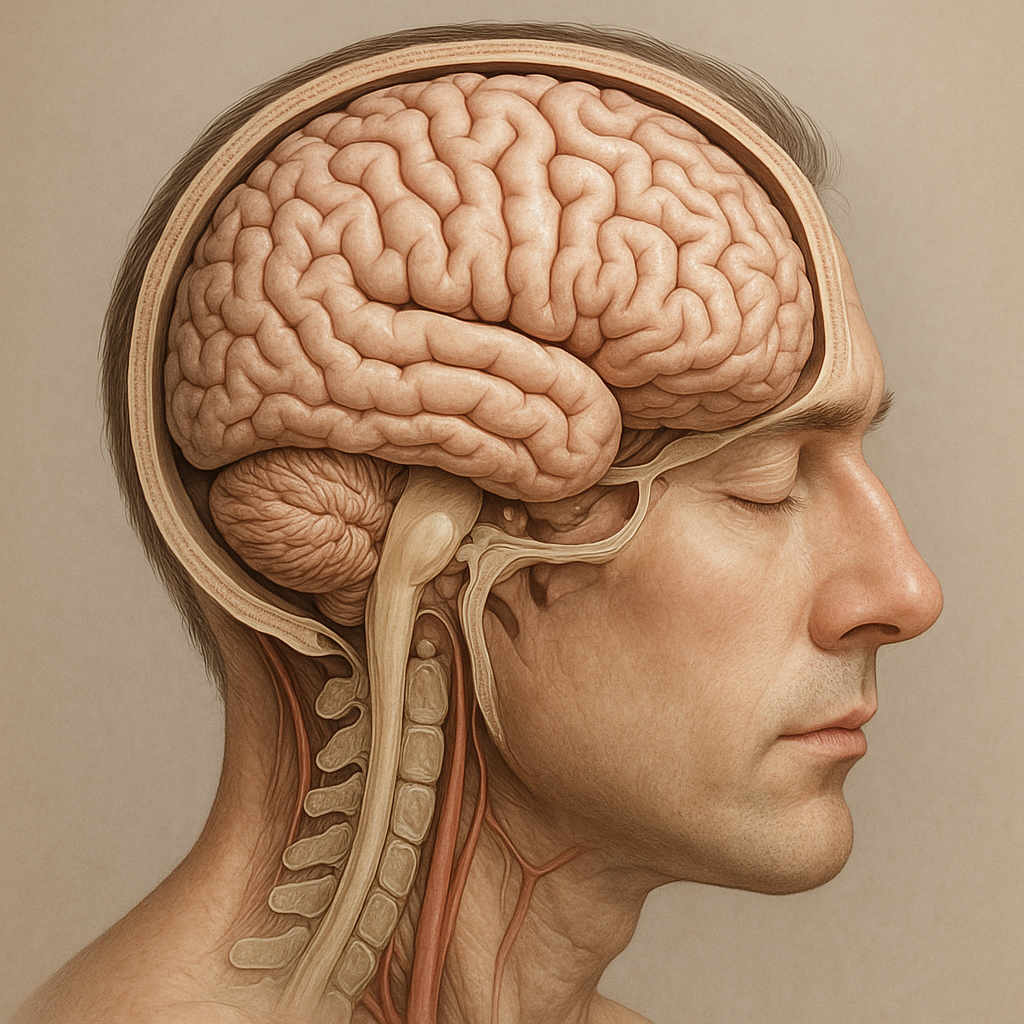
How the Human Brain Works: A Guided Tour of Your Mind
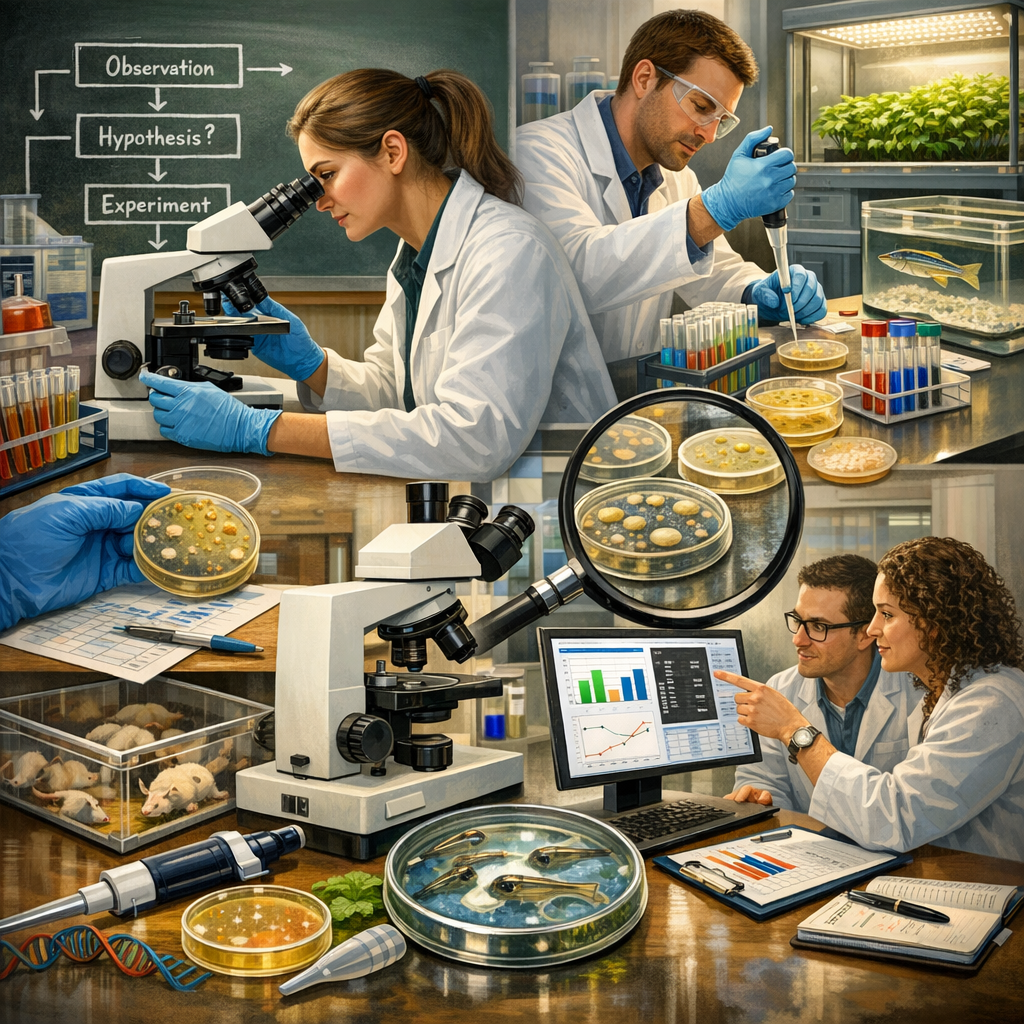
BIO 204: Fundamentals of Scientific Inquiry in the Biological Sciences
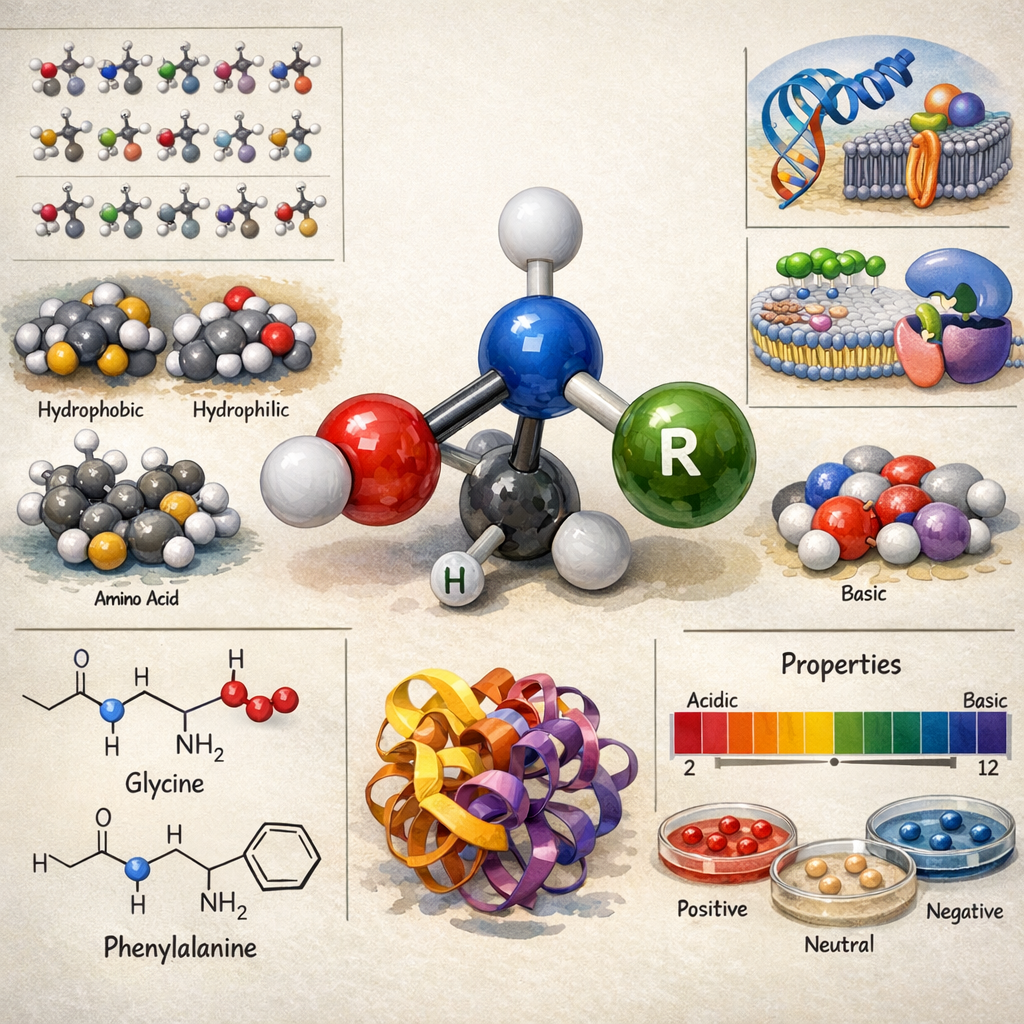
BCH 204 Essentials: Structure, Properties, and Functions of the 20 Amino Acids