Skarp
Skarp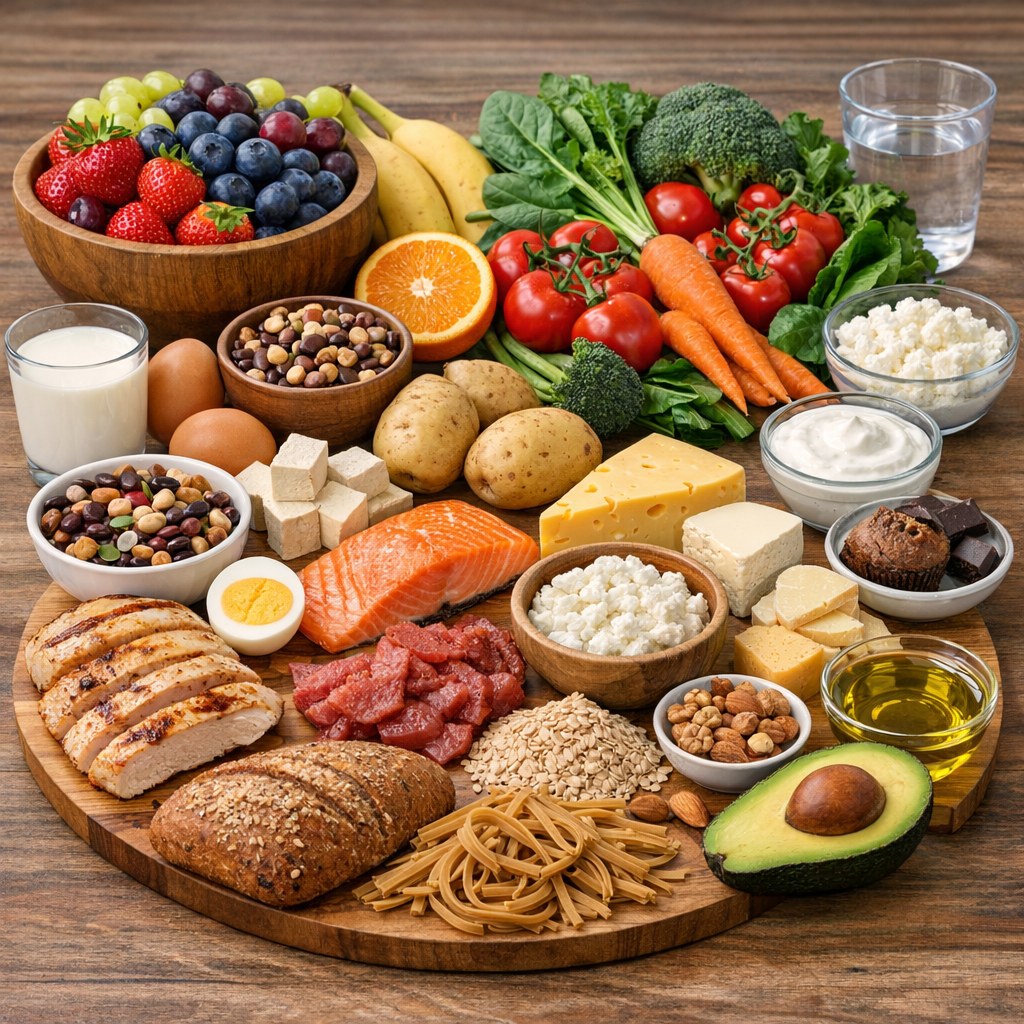
Nutrition Basics: Building a Healthy, Balanced Diet
This course introduces the core ideas behind a healthy diet, from understanding food groups and nutrients to building balanced meals in everyday life. You will discover how to read food labels, plan simple meals, and make small, realistic changes that support long-term health.
The first lecture plays free — no account needed.
What you'll learn
- Students will be able to describe what a healthy dietary pattern is in simple terms.
- Students will understand how diet relates to long-term health outcomes such as heart disease and type 2 diabetes.
- Students will be able to distinguish between evidence-based nutrition guidance and common fad-diet claims at a basic level.
- Students will be able to define carbohydrates, proteins, and fats and give at least two food examples of each.
- Students will understand the basic roles of vitamins and minerals in supporting body functions such as immunity and bone health.
- Students will be able to explain what dietary fiber is and why it is important for digestion and long-term health.
- Students will be able to list the major food groups and give examples of each.
- Students will understand the difference between whole and refined grains and why whole grains are generally recommended more often.
- Students will be able to identify both plant-based and animal-based protein sources appropriate for a healthy diet.
- Students will be able to explain the concept of energy balance in simple terms (energy in vs energy out).
Prerequisites
- definition of a healthy dietary pattern
- diet and long-term health
- macronutrients: carbohydrates, proteins, fats
- micronutrients basics
- major food groups
- macronutrients and their energy contribution
Course Content
9 modules · 2h total
What Does a “Healthy Diet” Really Mean?
Healthy eating advice is everywhere, but much of it is confusing or contradictory. This module cuts through the noise so you can see what most experts actually agree on when it comes to food and health.
Meet Your Nutrients: Carbs, Protein, Fats, Vitamins, and Minerals
Behind every meal is a mix of nutrients quietly powering your body. This module reveals what those nutrients are, what they do, and why you actually need all three macronutrients—carbs, protein, and fat.
Food Groups and Dietary Patterns: Putting Foods into “Buckets”
Instead of memorizing nutrients, many people find it easier to think in food groups. This module shows how fruits, vegetables, grains, proteins, and dairy (or alternatives) fit together into modern healthy eating patterns.
Energy, Portions, and Hunger: How Much Is Enough?
Eating well is not just about what you eat, but also how much and how often. This module introduces the idea of energy balance, portion sizes, and how to listen to your body’s hunger and fullness cues.
Hydration and Drinks: More Than Just Water
What you drink can quietly add a lot of sugar—or support your health with almost no effort. This module looks at water, sugary drinks, juices, coffee, tea, and how they fit into a healthy pattern.
Decoding Food Labels and Ingredients Lists
Supermarket packages are covered in numbers and claims—‘low fat’, ‘high protein’, ‘no added sugar’. This module shows how to quickly read labels so you can see past the marketing to what’s really inside.
Building Balanced Meals and Snacks in Real Life
Turning guidelines into a plate of food can feel tricky. This module walks through simple meal and snack ideas that balance food groups and nutrients without complicated recipes or strict rules.
Special Considerations: Allergies, Preferences, and Cultural Foods
No single diet fits everyone. This module shows how allergies, intolerances, vegetarian or vegan choices, and cultural traditions can all be honored while still following healthy eating principles.
From Knowledge to Habit: Making Healthy Eating Stick
Knowing what to eat is only half the battle; the real challenge is doing it consistently. This final module helps you turn nutrition knowledge into small, realistic habits you can maintain over time.
Read the Textbook
Read every chapter for free, right here in your browser.
When nutrition scientists talk about a "healthy diet" today, they usually say healthy dietary pattern instead of a single perfect diet.
A dietary pattern means the way you usually eat over weeks, months, and years, not one meal or one day.
Across large studies from many countries, and in major guidelines (like the 2020–2025 US Dietary Guidelines and the 2023 WHO recommendations), experts broadly agree that a healthy dietary pattern: Is mostly plants: vegetables, fruits, whole grains, beans, lentils, nuts, and seeds. Uses healthy fats: like olive oil or other unsaturated oils, and limits trans fats. Includes some protein foods: fish, beans, lentils, nuts, seeds, eggs, and moderate amounts of poultry or dairy if you choose. Keeps highly processed foods as occasional extras: especially sugary drinks, sweets, fast food, and processed meats. Matches your energy needs: enough food to fuel you, but not so much that weight and blood sugar climb over time.
Study Flashcards
Key concepts from this course as flashcard pairs.
What Does a “Healthy Diet” Really Mean?
Dietary pattern
Your usual way of eating over weeks, months, and years, not a single meal or day.
Whole foods
Foods that are close to their natural form and minimally processed, like vegetables, fruits, whole grains, beans, nuts, and seeds.
Ultra-processed foods
Products made mostly from refined ingredients and additives, such as many chips, candies, sugary drinks, and fast foods.
Evidence-based nutrition
Nutrition advice based on many good-quality studies and reviews, not just personal stories or single small studies.
Fad diet
A trendy eating plan that promises quick results, often bans whole food groups, and is not supported by strong long-term research.
Meet Your Nutrients: Carbs, Protein, Fats, Vitamins, and Minerals
Macronutrients
Nutrients you need in larger amounts: carbohydrates, proteins, and fats. They provide energy and building material for your body.
Micronutrients
Vitamins and minerals. You need them in small amounts, but they are essential for body functions like immunity, bone health, and energy use.
Carbohydrates
Your body’s main and fastest energy source. Found in foods like grains, fruits, starchy vegetables, beans, and dairy.
Protein
The main building and repair nutrient. Helps build muscles, organs, skin, enzymes, hormones, and antibodies.
Fats
A long-lasting energy source that also helps absorb vitamins A, D, E, and K, supports hormones, and protects organs.
Vitamins
Organic (carbon-based) micronutrients that help control many body processes, such as immunity, vision, and energy use.
+4 more flashcards
Food Groups and Dietary Patterns: Putting Foods into “Buckets”
Food groups
Big "buckets" of foods with similar nutrients and roles in the diet, such as fruits, vegetables, grains, protein foods, and dairy/alternatives.
Whole grain
A grain that still has all three parts: bran, germ, and endosperm. Examples: brown rice, oats, whole wheat bread, quinoa, barley.
Refined grain
A grain that has had the bran and germ removed, leaving mainly the starchy endosperm. Examples: white rice, white bread, many pastries.
Plant-based protein
Protein foods that come from plants, such as beans, lentils, tofu, nuts, seeds, and soy products.
Animal-based protein
Protein foods that come from animals, such as meat, poultry, fish, eggs, and most dairy products.
Dairy and alternatives group
Foods rich in calcium and often protein, including milk, yogurt, cheese, and fortified plant alternatives like soy milk.
+1 more flashcards
Energy, Portions, and Hunger: How Much Is Enough?
Energy balance
The relationship between energy in (calories from food and drinks) and energy out (energy your body uses to live, move, grow, and repair) over time.
Portion size
The amount of food you actually put on your plate and eat at one time.
Serving size
A standard amount of food used on labels or guidelines (like 1 slice of bread). It helps with comparison, not a rule for how much you must eat.
Mindful eating
Paying attention to your food and your body's signals while you eat, without judging yourself. It includes eating more slowly and checking hunger and fullness.
Hunger cues
Body signals that you need fuel, such as an empty or rumbling stomach, low energy, headache, or thinking a lot about food.
Fullness cues
Body signals that you have had enough food, such as feeling satisfied, calm about food, and able to move comfortably.
Hydration and Drinks: More Than Just Water
Hydration
Having enough water in your body so it can work properly. Good hydration helps your brain, heart, muscles, and digestion.
Dehydration
When your body does not have enough water. Mild dehydration can cause thirst, dark yellow pee, headache, and tiredness.
Sugary drink
A drink with sugar added, such as regular soda, sweetened juice drinks, energy drinks, or many flavored coffees and teas.
Added sugar
Sugar that is put into foods or drinks during making or cooking, not the sugar that is naturally part of whole fruits or plain milk.
Healthier drink choices
Drinks like water, unsweetened tea, coffee without sugar, and small amounts of milk or fortified plant drinks that fit into a healthy pattern.
Diluted juice
Juice mixed with water, for example half juice and half water. It lowers the sugar per glass compared with full-strength juice.
Decoding Food Labels and Ingredients Lists
Serving size
The amount of food the label is based on. All numbers for calories and nutrients refer to this amount, not the whole package.
Calories
A measure of energy in food. Linked to energy balance: eating more calories than you use over time can lead to weight gain.
Total sugars
All sugars in the food, including natural sugars (like in fruit or milk) and added sugars.
Added sugars
Sugars added during processing, such as sugar, syrups, honey, or juice concentrates used as sweeteners.
Saturated fat
A type of fat that, in high amounts, is linked to higher LDL cholesterol and heart disease; many guidelines suggest limiting it.
Sodium
The part of salt that affects blood pressure. Often listed as sodium on labels; high intakes are linked to higher blood pressure.
+2 more flashcards
Building Balanced Meals and Snacks in Real Life
Plate method: basic layout
Half the plate vegetables and fruits, one-quarter protein foods, and one-quarter grains or starchy foods, plus a small amount of healthy fats.
Protein + fiber snack rule
Build snacks by combining a protein food (like yogurt, nuts, eggs, hummus) with a high-fiber food (like fruits, vegetables, or whole grains).
Examples of protein foods
Chicken, fish, eggs, yogurt, cheese, beans, lentils, chickpeas, tofu, tempeh, nuts, and seeds.
Examples of high-fiber foods
Vegetables, fruits (especially with skin), beans, lentils, whole grains like brown rice, oats, whole grain bread, and popcorn.
Role of healthy fats
Healthy fats like olive oil, avocado, nuts, and seeds support your body and help you feel satisfied when used in small amounts.
Special Considerations: Allergies, Preferences, and Cultural Foods
Food allergy
A reaction where the immune system responds to a food. Can happen quickly, even with small amounts, and may be life-threatening. Needs medical diagnosis and careful management.
Food intolerance
A reaction where the digestive system has trouble with a food. Often depends on how much is eaten. Uncomfortable but usually not life-threatening.
Vegetarian eating pattern
A way of eating that leaves out meat, poultry, and fish. Some vegetarians still eat dairy and/or eggs.
Vegan eating pattern
A way of eating that avoids all animal products, including meat, fish, eggs, and dairy. Often also avoids honey and gelatin.
Fortified food
A food that has extra vitamins or minerals added, such as calcium, vitamin D, or vitamin B12 in some plant milks and cereals.
Balanced plate idea
A simple way to build meals: about 1/2 vegetables and fruit, 1/4 protein, and 1/4 whole grains or starchy foods, plus some healthy fats.
From Knowledge to Habit: Making Healthy Eating Stick
Good habit goal
A small, specific, realistic action you can do regularly, described clearly so you can tell if you did it.
Environment design
Changing what is around you (like where food is stored or what is visible) to make healthy choices easier and automatic.
If-then plan
A simple rule you decide in advance: If [challenging situation], then I will [small helpful action].
Most-of-the-time pattern
Your usual eating habits over weeks and months. This matters more for health than any single meal or day.
More in Health & Wellness
See all →
Gut-Brain Axis Essentials: How Your Digestion Shapes Your Mood and Mind

Foundations of Mental Health and Everyday Wellness
The Science of Sleep: Unlocking Restful Nights

Digital Resilience: Protecting Your Mental Well‑being in a Hyperconnected World