Skarp
Skarp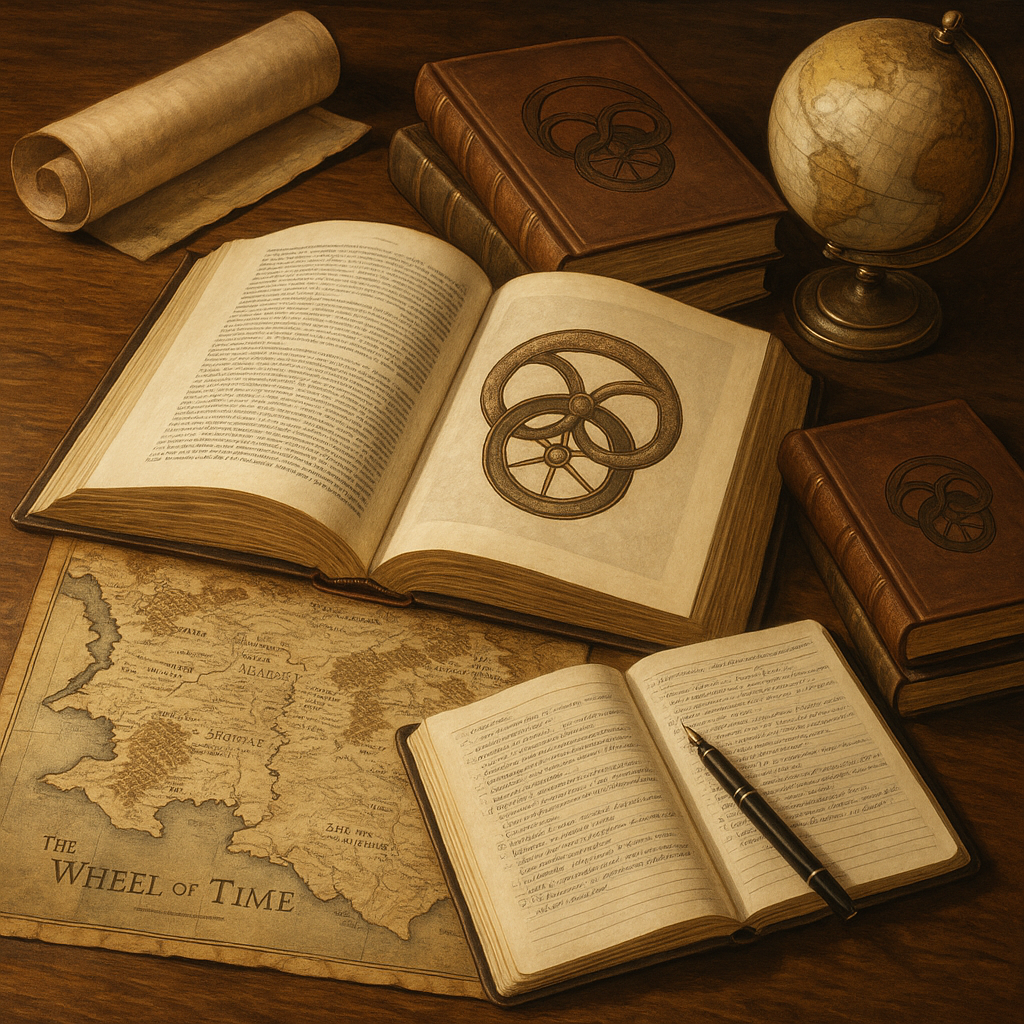
Mastering The Wheel of Time: A Comprehensive Expert Course
This course guides you from a solid overview of The Wheel of Time into deep expertise in its worldbuilding, magic system, themes, characters, and adaptations. You will learn to read the series critically, connect it to myth and culture, and confidently discuss and analyze both the books and the recent TV adaptation.
The first lecture plays free — no account needed.
What you'll learn
- Students will be able to list all main Wheel of Time novels in order and distinguish the prequel and companion books.
- Students will understand the role of Robert Jordan and Brandon Sanderson in completing the series.
- Students will be able to summarize the existence and status of the 2021–2025 Prime Video adaptation and its place in the franchise.
- Students will be able to explain how the Wheel and the Pattern structure history and destiny in the series.
- Students will understand the metaphysical roles of the Creator and the Dark One and how they differ from typical fantasy deities.
- Students will be able to analyze how ta’veren influence events and why Jordan uses them as a narrative device.
- Students will be able to describe how the One Power is accessed, used, and limited in the series.
- Students will understand the gendered split of the Power and its narrative consequences, including the taint on saidin and its removal.
- Students will be able to compare the One Power to other supernatural abilities and discuss how they interact.
- Students will be able to outline the major historical eras and turning points leading up to the main story.
Prerequisites
- Series overview and publication timeline
- The Wheel and the Pattern of Ages
- Series overview and major arcs
- Mapping the world: history, Ages, and geography
- The One Power and magic systems
- Cultures, politics, and institutions
Course Content
15 modules · 3h 45m total
Module 1 – Getting Oriented: What Is The Wheel of Time?
Establish a high-level understanding of The Wheel of Time as a book series and multimedia franchise, including its scope, publication history, and major components.
Module 2 – The Pattern and the Wheel: Core Metaphysics
Dive into the fundamental metaphysical concepts that define the series’ universe: the Wheel, the Pattern, the Creator, the Dark One, and ta’veren.
Module 3 – The One Power and Magic Systems
Examine the mechanics and implications of the One Power, including saidar and saidin, channeling, and related artifacts, as well as alternate power systems.
Module 4 – Mapping the World: History, Ages, and Geography
Explore the historical backstory and geography of the world, from the Age of Legends and the Breaking to the Third Age, with attention to key locations and events.
Module 5 – Cultures, Politics, and Institutions
Analyze the political and cultural landscape of The Wheel of Time, focusing on key nations, factions, and institutions such as the Aes Sedai and Whitecloaks.
Module 6 – The Core Cast: Rand, the Emond’s Field Five, and Moiraine
Focus on the central characters from Emond’s Field and their mentor, examining their arcs, motivations, and roles in the Pattern from the early books through the finale.
Module 7 – Beyond the Two Rivers: Key Secondary Characters and Antagonists
Examine major secondary characters and antagonists, including Forsaken, rulers, and allies, and how they enrich themes and conflicts.
Module 8 – Plot Architecture: From The Eye of the World to A Memory of Light
Study the large-scale structure of the story across 14 main novels and the prequel, including pacing, subplots, and the shift from Jordan to Sanderson.
Module 9 – Themes, Symbols, and Motifs
Delve into recurrent themes and symbols such as cyclical time, gender dynamics, power and corruption, prophecy, and the nature of heroism.
Module 10 – Style, Voice, and Point of View
Analyze Jordan’s and Sanderson’s narrative techniques, including point of view, description, foreshadowing, and handling of large-scale battles and politics.
Module 11 – Sources and Influences: Mythology, Religion, and History
Connect The Wheel of Time to its real-world inspirations, including mythological, religious, and historical sources that inform its metaphysics, cultures, and themes.
Module 12 – The Companion Works: Prequels, Guides, and Essays
Survey and evaluate the prequel novel, short fiction, companion books, and reference works that expand the world and clarify canon.
Module 13 – Page to Screen: Analyzing the 2021–2025 TV Adaptation
Compare the novels to the Amazon Prime Video series (three seasons, canceled in 2025), focusing on adaptation choices, structural changes, and critical and fan reception.
Module 14 – Fandom, Reception, and Ongoing Legacy
Investigate the series’ impact on fantasy literature, its fandom culture, and ongoing developments such as games and scholarship.
Module 15 – Becoming an Expert: Synthesis, Debates, and Advanced Topics
Synthesize knowledge from the course, engage with major interpretive debates, and design your own reading or research plan to maintain and deepen your expertise.
Read the Textbook
Read every chapter for free, right here in your browser.
High-Level Overview
The Wheel of Time (WoT) is a large-scale epic fantasy franchise that began as a novel series and has expanded into television, games, and reference works.
At its core, it is: A 14‑book main novel sequence (1990–2013) 1 prequel novel Several companion/reference books A television adaptation on Prime Video (first released in 2021, with seasons through 2025)
Study Flashcards
Key concepts from this course as flashcard pairs.
Module 1 – Getting Oriented: What Is The Wheel of Time?
How many main novels are in The Wheel of Time core sequence (excluding prequel)?
Fourteen (14) main novels, from *The Eye of the World* through *A Memory of Light*.
Name the prequel novel and its approximate in‑world placement.
*New Spring*; set about 20 years before *The Eye of the World*, focusing on Moiraine, Siuan, and Lan around the Aiel War.
Which three novels are co‑credited to Robert Jordan and Brandon Sanderson?
*The Gathering Storm*, *Towers of Midnight*, and *A Memory of Light*.
What is *The Wheel of Time Companion* (2015)?
An encyclopedic reference work compiling characters, places, history, and notes, based on Robert Jordan’s materials and edited by Harriet McDougal, Alan Romanczuk, and Maria Simons.
On which platform did the major TV adaptation of The Wheel of Time launch in 2021?
Prime Video (Amazon’s streaming platform).
What is the usual reading order recommended for first‑time readers?
The 14 main novels in publication order, starting with *The Eye of the World* and ending with *A Memory of Light*, with *New Spring* optionally inserted later (often after Book 10 or 11).
+2 more flashcards
Module 2 – The Pattern and the Wheel: Core Metaphysics
Wheel of Time (the Wheel)
The cosmic mechanism that spins using the One Power, weaving the Pattern of Ages from the threads of individual lives. It encodes cyclical time (Ages) and large‑scale structure.
Pattern (Pattern of Ages)
The total woven tapestry of reality—every event, life, and coincidence across time. The product of the Wheel’s weaving, subject to broad structural regularities but locally flexible.
Thread
An individual life (or tightly bound group of lives) as it is woven into the Pattern. Threads can be influenced, redirected, or cut, but they collectively maintain the tapestry’s integrity.
Creator
The transcendent being who created the Wheel and the Pattern and then withdrew from direct intervention. Functions more like a deistic architect than an active, miracle‑granting god.
Dark One (Shai’tan)
A real, external entity imprisoned outside the Pattern who seeks to corrupt or unmake it. Acts intermittently when his prison weakens, representing an anti‑principle to order and meaning.
Age
A large epoch in the cyclical turning of the Wheel. There are seven Ages in a full turn; they recur with recognizable archetypes but with variation in details and cultures.
+2 more flashcards
Module 3 – The One Power and Magic Systems
One Power
The fundamental, morally neutral energy that turns the Wheel of Time, accessed through its two halves, saidar and saidin, and shaped into weaves by channelers.
Saidar vs. Saidin
Saidar is the female half of the One Power, accessed through surrender and flow; saidin is the male half, accessed by seizing and controlling a raging torrent. Historically, saidin was tainted by the Dark One until it was cleansed late in the series.
Weave
A structured pattern of the five elemental flows (Air, Water, Fire, Earth, Spirit) formed by a channeler’s will to create a specific magical effect.
Angreal
An artifact that allows a channeler to safely draw more of the One Power than they could unaided, usually keyed to either saidar or saidin.
Sa’angreal
A far more powerful form of angreal, enabling titanic feats of channeling such as large-scale destruction or complex world-altering weaves.
Ter’angreal
An artifact created to perform a specific function with the One Power, sometimes usable by non-channelers (e.g., dream ter’angreal, Oath Rod, Finn doorways).
+4 more flashcards
Module 4 – Mapping the World: History, Ages, and Geography
Age of Legends
The highly advanced, global civilization immediately preceding the Breaking of the World; characterized by integrated One Power–based technology, unified governance, and widespread prosperity.
The Bore
A tear in the Pattern’s barrier around the Dark One’s prison, drilled at Shayol Ghul during the Age of Legends in an attempt to access a new power source. It enabled the Dark One’s direct influence on the world.
Breaking of the World
The prolonged era after the tainting of saidin when mad male channelers reshaped the planet, causing tectonic upheaval, climatic shifts, and massive cultural dislocation, leading to the geography of later Ages.
Tar Valon
Island city on the River Erinin and seat of the White Tower. A major post-Breaking power center where Aes Sedai train and exert political influence across the Westlands.
The Aiel Waste
Harsh, arid region east of the Spine of the World, inhabited by the Aiel. Its environment and history as a place of exile shape a unique warrior culture with strict codes of honor.
Seanchan (Empire)
A powerful empire on a western continent across the Aryth Ocean, characterized by rigid hierarchy and the systematic use of damane (leashed channelers) in its military and governance.
+2 more flashcards
Module 5 – Cultures, Politics, and Institutions
Daes Dae’mar (Game of Houses)
A system of intricate political intrigue, coded messages, and symbolic gestures, most associated with Cairhien but influential across the Westlands. It functions as an informal institution regulating elite competition.
White Tower
Headquarters of the Aes Sedai in Tar Valon; a supranational institution that trains female channelers, mediates disputes, and seeks to control the use of the One Power.
Ajah
One of the ideological and functional divisions within the Aes Sedai (e.g., Blue, Red, Green). Each Ajah has its own priorities, networks, and political agenda.
Children of the Light (Whitecloaks)
A militant, religiously motivated order that claims to defend the Light and root out Darkfriends. It operates across borders and often challenges the legitimacy of secular rulers and Aes Sedai.
Black Tower
Institution founded by Rand al’Thor to train male channelers (Asha’man). It becomes a rival to the White Tower, combining military power with ideological training.
Ji’e’toh
The Aiel system of honor (ji) and obligation (toh) that structures social relations, conflict, and reconciliation. It acts as a powerful informal legal code.
+3 more flashcards
Module 6 – The Core Cast: Rand, the Emond’s Field Five, and Moiraine
Dragonmount epiphany (Rand)
The moment near the end of the series when Rand, contemplating suicide on Dragonmount, reinterprets his role not as a punisher of the world but as someone who loves it enough to suffer for it. This shifts him from nihilistic hardness to integrated, compassionate resolve.
Mat’s Finn-granted memories
A set of battle memories implanted by the *Finns* after Mat’s hanging in Rhuidean. They complicate his identity by giving him strategic genius rooted in other men’s lives, raising questions about where his own agency and personality begin and end.
Hammer vs. Axe (Perrin)
A recurring symbolic choice between tools of construction (hammer) and destruction (axe). Perrin’s eventual rejection of the axe represents his decision to define himself by protective, constructive violence rather than bloodlust or vengeance.
Egwene’s Flame of Tar Valon
A weave and final act during the Last Battle in which Egwene counters the Shadow’s reality-destroying attacks, sacrificing herself. It crystallizes her role as institutional reformer and defender of the Pattern’s very fabric.
Nynaeve’s Healing innovations
New weaves and approaches that allow Nynaeve to Heal things previously thought impossible (e.g., stilling, madness from taint). They reposition Healing from a secondary, supportive talent to a world-altering power.
Moiraine’s post-rescue role
After her return from the Tower of Ghenjei, Moiraine is less powerful in the One Power but more influential as a strategist and counselor, modeling a shift from manipulative control to collaborative leadership.
+1 more flashcards
Module 7 – Beyond the Two Rivers: Key Secondary Characters and Antagonists
Political Anchor (in character analysis)
A character whose primary function is to **embody and dramatize an institution, nation, or political system**, allowing the narrative to explore abstract political ideas through personal stakes (e.g., Elayne, Tuon).
Thematic Mirror / Counter
A character designed to **reflect, contrast, or complicate** the inner conflicts and choices of a protagonist (e.g., Lanfear to Rand, Galad to Perrin).
Moral Gray Zone / Cultural Intermediary
A character who operates in ethically ambiguous contexts or between cultures, forcing readers to question **simple moral binaries** (e.g., Verin, many Seanchan, some Aes Sedai).
Forsaken
The Dark One’s most powerful human servants, former Age of Legends channelers who chose the Shadow for **power, ideology, or personal desire**, each illustrating a distinct corruption of talent.
Verin Mathwin
A Brown Ajah Aes Sedai secretly in the Black Ajah, who conducts a long‑term covert operation against the Shadow, culminating in a **self‑sacrificial confession** that provides crucial intelligence to the Light.
Tuon / Fortuona
The Seanchan Daughter of the Nine Moons and later Empress, a **personally honorable yet structurally complicit** ruler whose arc embodies the tension between cultural loyalty and universal ethics.
+1 more flashcards
Module 8 – Plot Architecture: From The Eye of the World to A Memory of Light
Narrative Phase
A contiguous run of books that share a dominant structural function (e.g., setup/expansion, political tangle, compression, climax) within the series‑level architecture.
Braid‑like Narrative Structure
Jordan’s technique of interweaving multiple POV strands with asynchronous timelines and varying bandwidth, creating a sense of a vast, living world but also risking pacing drag.
Resolution Density
The concentration of plot and character payoffs within a given section of the narrative; very high in *A Memory of Light* as numerous long‑running arcs and prophecies are resolved.
Narrative Bandwidth
An analytical metaphor for the finite amount of attention a book can give to active strands. Jordan often spreads bandwidth across many slow‑moving subplots; Sanderson tends to reallocate it toward fewer, faster‑moving arcs.
Extended Climax
A structural design where an entire volume (or large portion of it) functions as the climax of a much larger narrative, as in *A Memory of Light*’s multi‑front Last Battle and parallel metaphysical duel.
Module 9 – Themes, Symbols, and Motifs
Theme
An abstract idea, question, or problem explored repeatedly across a text (e.g., inevitability vs. choice, the ethics of power). Themes are not just topics; they are *positions* or *tensions* the narrative develops.
Symbol
A concrete object, image, or action that carries layered meaning beyond its literal function. Its meaning is shaped by context, recurrence, and the network of other symbols (e.g., the wheel as time, fate, and structure).
Motif
A recurring pattern—image, phrase, situation, or structural device—that reinforces themes (e.g., recurring prophetic dreams, repeated gendered arguments, or serpent imagery).
Cyclical Time
A conception of time in which events and structures recur in patterned Ages. In this series, cyclical time coexists with meaningful local choice, creating tension between fate and agency.
Matriarchal Structure
A social or institutional arrangement where women hold primary formal authority (political, magical, or religious). In the series, these structures are powerful but fragmented and not simply utopian.
Prophecy / Foretelling
In-world mechanisms for partial knowledge of future events. They are often correct in outline but ambiguous in detail, making *interpretation* and *misinterpretation* central to plot and politics.
+2 more flashcards
Module 10 – Style, Voice, and Point of View
Limited third-person POV
A narrative mode in which the story is told in third person but confined to the perceptions, thoughts, and knowledge of a particular character at a time, without full access to all characters’ minds or an all-knowing narrator.
Rotating perspectives
A structural technique where the narrative shifts among multiple POV characters across chapters or scenes, allowing coverage of different locations, plotlines, and interpretive frames.
Focalization
The filtering of narrative information through a particular character’s consciousness, shaping how events, other characters, and the world are perceived and valued.
Narrative misdirection
A technique in which the narrative leads readers toward a plausible but ultimately incorrect interpretation, typically through limited POV, biased focalization, and selective disclosure, while leaving fair clues to the truth.
Descriptive density
The concentration of sensory and descriptive detail in a passage; in Jordan’s work, often involving extensive description of clothing, setting, and gesture that affects pacing and immersion.
Structural clarity (in battles)
The degree to which the narrative organization of a battle—phases, fronts, and objectives—is easy for the reader to track; a noted strength of Sanderson’s handling of large-scale conflicts.
Module 11 – Sources and Influences: Mythology, Religion, and History
Saṃsāra
In Hinduism and Buddhism, the cycle of birth, death, and rebirth. In WoT, echoed by the Wheel’s turning and recurring souls, though without an explicit doctrine of liberation.
Yin–yang
Taoist concept of complementary, interdependent forces. In WoT, reflected in the dual halves of the One Power (saidin/saidar) and the theme of broken balance when saidin is tainted.
Zoroastrian Dualism
Religious framework featuring Ahura Mazda vs. Angra Mainyu in a cosmic struggle between truth and falsehood. In WoT, adapted into the Creator vs. the Dark One, with significant changes to their roles and power.
The Pattern
WoT’s metaphysical tapestry of reality, woven from individual lives. It echoes Indian cosmological cycles but emphasizes structural narrative necessity over personal karma.
Ta’veren
Individuals around whom the Pattern weaves itself more tightly. They embody the tension between determinism (Pattern) and agency (personal choice).
Daes Dae’mar (Game of Houses)
The intricate political maneuvering in WoT’s noble courts, influenced by European court intrigue but intensified as a nearly formalized discipline of manipulation.
+2 more flashcards
Module 12 – The Companion Works: Prequels, Guides, and Essays
New Spring (novel vs. novella)
A prequel focusing on Moiraine and Lan. The 1998 novella is shorter and earlier; the 2004 novel is expanded and generally treated as the primary version for canon and analysis, with the novella serving mainly as a window into Jordan’s revision process.
“The Strike at Shayol Ghul”
An in-universe historical essay describing Lews Therin’s assault on Shayol Ghul and the end of the War of Power. Valuable for metaphysical and historical framing but treated as a partial, potentially biased source compared to the main novels and The Wheel of Time Companion.
The World of Robert Jordan’s The Wheel of Time (BWB)
A 1997 illustrated guide covering geography, cultures, and early-series lore. Excellent for maps and cultural context but superseded or corrected in some details by later novels and The Wheel of Time Companion.
The Wheel of Time Companion
A 2015 encyclopedic reference compiled post-series by Harriet McDougal, Alan Romanczuk, and Maria Simons. Authoritative for character backstories, timelines, and consolidated lore, though still secondary to explicit statements in the novels.
Origins of The Wheel of Time
A 2022 scholarly/meta-text by Michael Livingston examining Jordan’s sources, influences, and drafting process. Crucial for understanding authorial intent and intertextuality, but not a primary in-universe lore source.
Canon hierarchy (for advanced study)
A practical priority order: (1) Main series novels (incl. New Spring novel), (2) Jordan’s direct statements, (3) The Wheel of Time Companion, (4) BWB and short fiction, (5) Later scholarship/meta-texts such as Origins.
Module 13 – Page to Screen: Analyzing the 2021–2025 TV Adaptation
Fidelity discourse
A way of talking about adaptations that judges them primarily by how closely they reproduce the source text’s plot, characters, and details. Useful but limited, because it can ignore medium constraints and new meanings created by transformation.
Medium specificity
The idea that different media (novels, TV, film, games) have distinct affordances and constraints that shape how stories can and should be told. In this module: limited episode counts, VFX budgets, and performance drive changes from the novels to the TV series.
Arc compression
The process of shortening or combining long narrative arcs—often spanning multiple books—into fewer episodes or seasons. It can increase pace and reach key payoffs earlier but risks losing nuance and thematic build-up.
Character merge
An adaptation strategy where roles or functions from multiple book characters are combined into one TV character, reducing cast size while trying to preserve narrative functions.
Re-framing (recontextualization)
Changing the narrative frame or emphasis—such as turning Rand’s emergence as the Dragon into an ensemble mystery—to alter audience alignment, suspense, or theme while using recognizably similar plot elements.
Industrial constraints
Non-textual factors—like budget, scheduling, platform strategy, and actor availability—that materially shape adaptation choices and sometimes override purely aesthetic or fidelity-based considerations.
+1 more flashcards
Module 14 – Fandom, Reception, and Ongoing Legacy
Reception Studies
A field that examines how texts are received, interpreted, and valued by different audiences over time, focusing on reviews, fan responses, and cultural context rather than only authorial intent.
Fan Studies
An academic area exploring fan communities, their practices (e.g., fanfiction, theory crafting, conventions), and their relationships to media industries and texts.
Transmedia Franchise
A narrative or world that extends across multiple media platforms (books, TV, games, etc.), where each medium contributes distinct content rather than merely duplicating the same story.
Horizon of Expectations
A concept from reception theory describing the set of assumptions, genre norms, and prior experiences that shape how a reader/viewer understands a new text.
Canon (in fandom contexts)
The set of texts and elements considered officially part of the story-world, often contested when multiple adaptations or expansions exist.
Paratext / Paratextual Material
Supplementary materials surrounding a text (e.g., interviews, cover art, podcasts, showrunner commentary) that influence how the primary work is interpreted.
Module 15 – Becoming an Expert: Synthesis, Debates, and Advanced Topics
Canon (in Wheel of Time studies)
The published narrative texts (main series + New Spring) and officially sanctioned reference works (e.g., The Wheel of Time Companion), as distinct from interviews, drafts, or fan interpretations.
Authorial intent / paratext
Statements and materials outside the primary text—interviews, notes, Q&As, blog posts—used to clarify but not automatically override textual evidence.
Fanon
Widely shared fan interpretations, theories, and assumptions that are not strictly supported or mandated by canon, but can shape how readers approach the text.
Thematic reread
A targeted reread focused on tracking a specific theme (e.g., prophecy, empire, trauma) across selected books, rather than reading linearly for plot.
Minimal Viable Reread Plan (MVRP)
A constrained, realistic reread or research plan that limits scope (e.g., 2–3 books, one theme) while still yielding meaningful expert-level insights.
Triangulation (interpretive)
The practice of comparing and balancing evidence from canon, authorial paratext, and fanon/critical reception to form a robust interpretation.
+1 more flashcards
More in Arts & Culture
See all →
Introduction to Philosophy: Big Questions and Key Thinkers
Advanced Tarot: Archetypes, Symbolism, and the Narrative Web of the Arcana
Tarot Card Deep Dive: Symbolism, History, and Story Across the Arcana
Foundations of Tarot: History, Structure, and the Major Arcana Journey
Meta-Kabbalah Lab: Architecting Your Own System of Letters, Tree, Names & Gates