Skarp
Skarp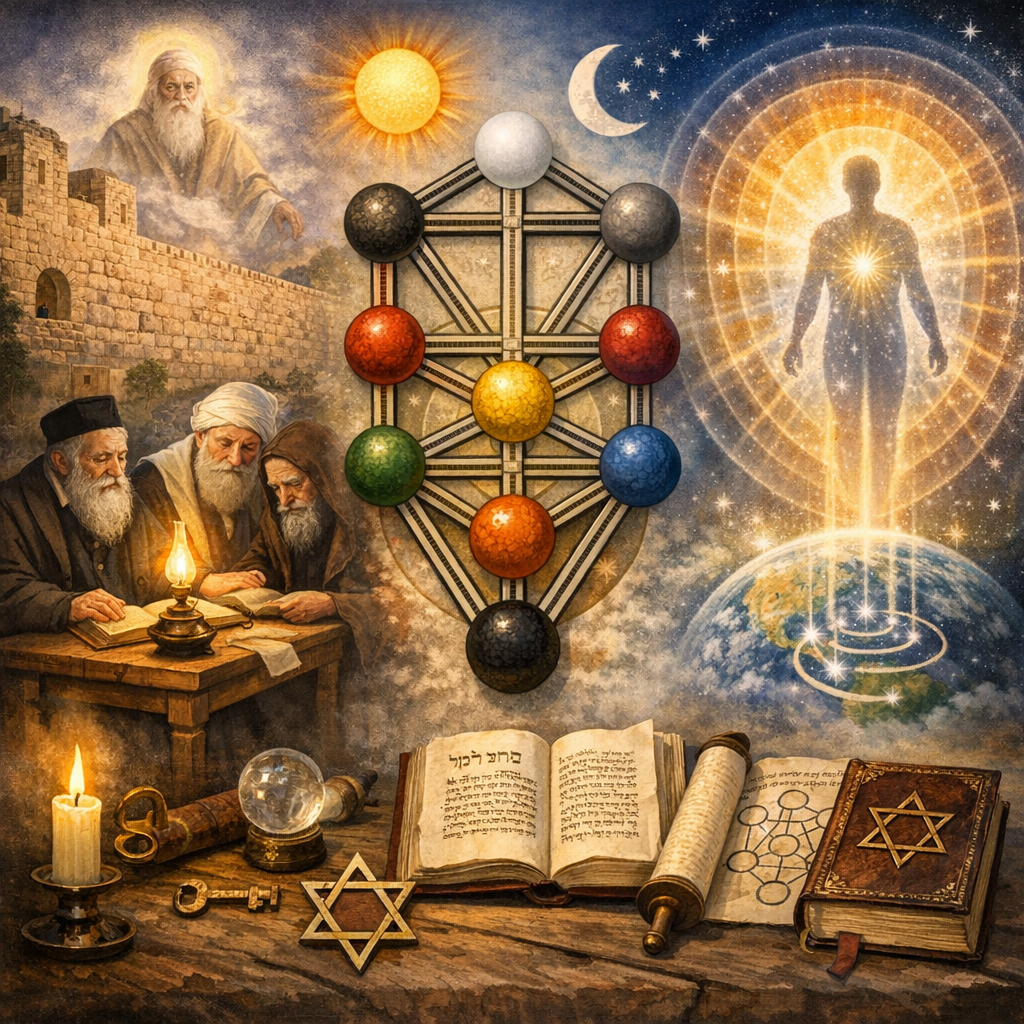
Introduction to Kabbalah: History, Core Ideas, and Classical Texts
This course offers a clear, beginner-friendly introduction to Kabbalah as the mystical dimension of Judaism. You will trace how Kabbalistic thought emerged in Jewish history, meet its key texts, and build a grounded understanding of core ideas like Ein Sof, the Sefirot, Tzimtzum, and the Tree of Life—along with guidance for responsible, deeper study today.
The first lecture plays free — no account needed.
What you'll learn
- Students will be able to describe Kabbalah as a Jewish mystical tradition rooted in received teachings rather than a generic esoteric system.
- Students will understand key differences between classical Kabbalah and contemporary popular or non-Jewish adaptations.
- Students will be able to articulate why historical context and Jewish practice matter for interpreting Kabbalistic ideas.
- Students will be able to outline a basic timeline of Kabbalah’s development from late antiquity through the medieval and early modern periods.
- Students will understand the role of Sefer Yetzirah and Sefer ha-Bahir as precursors to the classical Kabbalah of the Zohar.
- Students will be able to situate Lurianic Kabbalah historically in 16th‑century Safed and explain why it became so influential.
- Students will be able to define Ein Sof as the infinite, boundless aspect of the divine in Kabbalistic thought.
- Students will understand why Kabbalists insist that Ein Sof is beyond all attributes, even as they describe detailed divine structures.
- Students will be able to explain how the concept of Ein Sof frames later ideas like the Sefirot and Tzimtzum.
- Students will be able to list the ten Sefirot and give a brief, plain-language description of each.
Prerequisites
- Meaning of Kabbalah as a Jewish mystical tradition
- Awareness of the distinction between historical and pop Kabbalah
- Basic familiarity with Kabbalah as a Jewish mystical framework
- Historical awareness of Kabbalah’s emergence
- Concept of Ein Sof as infinite divine reality
- Basic understanding that Kabbalah uses symbolic structures to talk about God and creation
Course Content
10 modules · 2h 30m total
What Is Kabbalah? Framing a Misunderstood Tradition
Is Kabbalah a secret code to the universe, a celebrity trend, or a rigorous Jewish mystical discipline? This opening module untangles the myths from the historical reality and gives you a clean, accurate starting point.
From Ancient Roots to Medieval Flowering: A Short History of Kabbalah
From early mystical speculations about creation and the Divine Chariot to the dazzling symbolism of medieval Spain and Safed, this module sketches the story of how Kabbalah took shape over time.
Ein Sof: Encountering the Infinite
Before there can be worlds, souls, or symbols, Kabbalah speaks of an utterly limitless divine reality called Ein Sof. This module introduces that radical idea and how it reshapes the way Kabbalists talk about God.
The Ten Sefirot: Divine Emanations Between Infinite and Finite
A chain of ten luminous qualities bridges the gap between the infinite Ein Sof and our finite world. This module walks you through these Sefirot and how Kabbalists use them to talk about God, creation, and the human soul.
The Tree of Life: Mapping the Sefirot
The iconic Tree of Life diagram weaves the Sefirot into a single image of divine flow and human potential. This module helps you read that map without getting lost in technical detail.
Tzimtzum and Lurianic Kabbalah: Creation, Shattering, and Repair
Imagine a God who contracts to make room for the world, whose first vessels shatter, and whose scattered sparks call out for repair. This module introduces the dramatic mythology of Lurianic Kabbalah in simple, careful terms.
Sefer Yetzirah, Bahir, and the Zohar: Meeting the Classical Texts
Behind every diagram and concept stand strange, beautiful books filled with symbolic language. This module introduces the major classical Kabbalistic texts and what each contributes to the tradition.
Practice, Symbol, and Daily Life: How Kabbalah Is Lived
Beyond abstract diagrams, Kabbalah has shaped Jewish prayer, ritual, and ethical life for centuries. This module offers a glimpse of how Kabbalistic ideas flow into lived practice without turning into DIY mysticism.
From Hasidism to Pop Kabbalah: Modern Interpretations and Misinterpretations
In the modern era, Kabbalah has inspired new movements, scholarly study, and also sensationalized trends. This module helps you see how Kabbalah has been reinterpreted, popularized, and sometimes distorted up to today.
Continuing the Journey: Responsible Paths into Deeper Kabbalah Study
With a foundational map in hand, the question becomes: where to go next? This closing module offers concrete, responsible ways to deepen your learning while staying grounded in authentic sources and good guidance.
Read the Textbook
Read every chapter for free, right here in your browser.
Kabbalah is one of the most talked‑about and misunderstood parts of Judaism.
Some people hear the word and think of red bracelets, celebrity trends, or secret codes to control the universe. Others imagine a dark, magical system separate from religion. None of these pictures are fully accurate.
In this module, we will treat Kabbalah as scholars of religion do today: as a Jewish mystical tradition that developed over centuries inside Jewish communities and texts.
Study Flashcards
Key concepts from this course as flashcard pairs.
What Is Kabbalah? Framing a Misunderstood Tradition
Kabbalah
From a Hebrew root meaning “to receive”; refers to a received Jewish mystical tradition about God, creation, and the soul, developed within Jewish texts and practice.
Jewish mysticism
A broad term for Jewish movements and texts that seek direct or deeper experience and understanding of God and spiritual reality, including but not limited to Kabbalah.
Sefirot
In Kabbalah, ten channels or aspects of divine activity, like different “colors” of one light, used to describe how God relates to the world.
Historical (classical) Kabbalah
Kabbalah as it developed mainly from the 12th to 18th centuries within Jewish communities, in Hebrew and Aramaic, tied to Torah, Jewish law, and communal life.
Pop/occult Kabbalah
Modern adaptations that borrow Kabbalistic symbols but often detach them from Jewish law, prayer, and community, mixing them with New Age, occult, or self‑help ideas.
Received tradition
Knowledge or teaching understood as passed down from earlier generations or from God, rather than invented by an individual; a key idea behind the term Kabbalah.
From Ancient Roots to Medieval Flowering: A Short History of Kabbalah
Merkavah mysticism
An early Jewish mystical tradition focused on visionary ascent to see the Divine Chariot (merkavah) described in Ezekiel, active mainly in late antiquity.
Hekhalot literature
Texts describing mystical journeys through heavenly palaces (hekhalot), involving angels, secret names, and spiritual dangers.
Sefer Yetzirah
The Book of Formation (3rd–6th centuries CE). A short, early mystical text teaching that God creates through ten sefirot and 22 Hebrew letters.
Sefer ha-Bahir
The Book of Brightness (appears in 12th‑century Provence). A proto-kabbalistic work that presents sefirot as symbolic divine powers and reads the Bible in a highly symbolic way.
Sefirot
In classical Kabbalah, ten dynamic aspects or emanations of God that structure both the divine world and creation.
Zohar
The central text of classical Kabbalah, composed in 13th‑century Spain in Aramaic, presenting a rich symbolic system centered on the sefirot.
+2 more flashcards
Ein Sof: Encountering the Infinite
Ein Sof
Hebrew for "without end" or "no limit". In Kabbalah, the infinite, boundless, unknowable aspect of God, beyond all attributes and images.
Transcendence (in this module)
The idea that God (as Ein Sof) is beyond, unlike anything in the world, and cannot be fully grasped or defined by human concepts or attributes.
Immanence (in this module)
The idea that the divine is present within the world; in Kabbalah, the claim that there is no place empty of God, even though Ein Sof remains beyond all grasp.
Sefirot
In Kabbalah, structured ways or channels through which the infinite light of Ein Sof flows into and relates to creation; often described as divine qualities or emanations.
Tzimtzum (preview idea)
A later Kabbalistic concept (especially in Lurianic Kabbalah) describing a symbolic "contraction" or "withdrawal" of Ein Sof’s light to allow space for finite creation.
Attribute (as used here)
Any definable quality (like loving, powerful, wise). Kabbalists say Ein Sof is beyond all such attributes, which only appear at later, relational levels of the divine.
The Ten Sefirot: Divine Emanations Between Infinite and Finite
Ein Sof
The infinite, limitless aspect of God, beyond all description. The source from which the Sefirot emanate.
Sefirot (singular: Sefirah)
Ten divine qualities or channels through which the one God relates to and creates the world.
Keter
Crown; divine will or root desire, above intellect, the first hint of direction toward creation.
Chokhmah
Wisdom; flash of insight, raw creative idea, the first burst of divine wisdom.
Binah
Understanding; analysis and development, unpacking insight into structured plans.
Chesed
Lovingkindness; overflowing love, generosity, expansion, divine grace.
+6 more flashcards
The Tree of Life: Mapping the Sefirot
Tree of Life (Etz ha-Chaim)
A diagram that arranges the ten Sefirot and the paths between them, showing levels from hidden divine will down to manifested world, and mapping intellect, emotion, and action.
Right side of the Tree
The column of Sefirot that leans toward giving, expansion, and kindness: Chokhmah, Chesed, Netzach.
Left side of the Tree
The column that leans toward limits, strength, and judgment: Binah, Gevurah, Hod.
Center column of the Tree
The line of balance and integration: Keter at the top, then Tiferet, Yesod, and Malkhut at the bottom.
Top three Sefirot
Keter (crown), Chokhmah (wisdom), Binah (understanding). Often grouped as the intellectual or supernal triad.
Malkhut
The lowest Sefirah, at the bottom center. Represents manifestation, the world as we experience it, speech, and presence.
+4 more flashcards
Tzimtzum and Lurianic Kabbalah: Creation, Shattering, and Repair
Ein Sof
Literally "without end"; the infinite, unknowable aspect of God in Kabbalah, beyond all limits or specific qualities.
Sefirot
Ten channels or qualities through which divine energy flows from Ein Sof into creation, often shown as the Tree of Life.
Tzimtzum
Divine "contraction" or withdrawal: a symbolic image of God making "space" for a finite world that experiences God as hidden.
Kav
The "line" or ray of divine light that re-enters the empty space after tzimtzum, forming the vessels of the Sefirot.
Shevirat ha-kelim
The "shattering of the vessels": the first Sefirot-vessels cannot contain the intense light, they break, and sparks fall into the world.
Nitzotzot (sparks)
Sparks of divine light trapped in the broken shards of creation after the shattering of the vessels.
+3 more flashcards
Sefer Yetzirah, Bahir, and the Zohar: Meeting the Classical Texts
Sefer Yetzirah: Key Focus
Creation through **10 Sefirot** and **22 Hebrew letters** – the "32 paths of wisdom" – treating them as the basic structure of reality.
Bahir: Key Contribution
Introduces **symbolic Sefirot** and a sense of the **inner life of God**, using images like trees, light, and flowing blessing.
Zohar: Key Character
A **mystical Aramaic commentary on the Torah**, full of stories and symbols, presenting the Sefirot as a dynamic Tree of Life.
Connection to Tree of Life Diagram
The modern Tree of Life diagram draws heavily on **Bahir** and especially the **Zohar**, which describe Sefirot as a structured, relational system.
Link to Lurianic Tzimtzum and Tikkun
Lurianic Kabbalists read **Sefer Yetzirah**, **Bahir**, and especially the **Zohar** as deep sources, mapping ideas of **contraction, shattering, and repair** onto their language.
Relative Order in History
Earliest: **Sefer Yetzirah** → Middle: **Bahir** → Latest and largest: **Zohar**.
Practice, Symbol, and Daily Life: How Kabbalah Is Lived
Sefirot
Ten interrelated divine qualities or channels in Kabbalah, often mapped onto a human-like diagram and used to interpret prayer, the body, and ethics.
Kabbalat Shabbat
The Friday-night service for welcoming Shabbat, shaped by 16th-century Kabbalists; includes Lecha Dodi and images of Shabbat as bride and queen.
Malkhut
The lowest sefirah, often linked with kingship, speech, receptivity, and the presence of the divine in the world; symbolically connected to Shabbat and the community.
Tikkun (Repair)
In Lurianic Kabbalah, the process of repairing the damage from the shattering of the vessels by gathering and raising divine sparks, often through mitzvot and ethical acts.
Neshama Yeteira (Extra Soul)
Traditional idea that on Shabbat a person receives an additional level of soul; Kabbalists see this as increased access to higher spiritual states.
DIY Mysticism (in this course)
Unsupervised, self-invented use of intense Kabbalistic techniques (like divine-name meditations) without grounding, guidance, or community; discouraged in traditional Kabbalah.
From Hasidism to Pop Kabbalah: Modern Interpretations and Misinterpretations
Hasidism
An 18th‑century Eastern European Jewish revival movement that drew heavily on Kabbalah, turning complex ideas into joyful, emotional, and communal religious life centered around Rebbes.
Rebbe (tzaddik)
A Hasidic spiritual leader seen as especially righteous and spiritually connected, often acting as guide, teacher, and intercessor for the community.
Gershom Scholem
20th‑century scholar (1897–1982) who founded modern academic study of Kabbalah, emphasizing historical research and critical analysis of texts like the Zohar.
Academic study of Kabbalah
A modern approach that uses historical, philological, and critical methods to study Kabbalistic texts and movements as part of Jewish and intellectual history.
Occult / Hermetic Kabbalah
Non‑Jewish esoteric traditions that combine Kabbalistic symbols with astrology, tarot, alchemy, and magic, often using the Tree of Life as a universal map.
Pop Kabbalah
Simplified, commercialized forms of Kabbalah (often New Age) that present it as universal self‑help or energy work, usually without Jewish law or communal obligations.
+2 more flashcards
Continuing the Journey: Responsible Paths into Deeper Kabbalah Study
Primary text (in Kabbalah study)
An original or classical work (for example, Zohar, Lurianic writings, Hasidic teachings). Beginners usually access these in translation and with commentary.
Guided study framework
A structured way of learning over time, such as a course, study group, or online program, usually led by a qualified teacher or institution.
Red flag (for Kabbalah resources)
A warning sign, such as big promises of power or wealth, no link to Judaism, vague sources, aggressive sales, or isolation from community.
Academic introduction
A book or article by a scholar of religion that explains Kabbalah's history and ideas, often published by a university press or journal.
Intellectual honesty
A teacher's practice of clearly separating history from opinion, naming sources, and admitting uncertainty or disagreement where it exists.
Personal learning path
A simple plan for the next few months that matches your background and interests to realistic resources and includes clear boundaries.
More in Arts & Culture
See all →
Introduction to Philosophy: Big Questions and Key Thinkers

Mastering The Wheel of Time: A Comprehensive Expert Course
Advanced Tarot: Archetypes, Symbolism, and the Narrative Web of the Arcana
Tarot Card Deep Dive: Symbolism, History, and Story Across the Arcana
Foundations of Tarot: History, Structure, and the Major Arcana Journey