Skarp
Skarp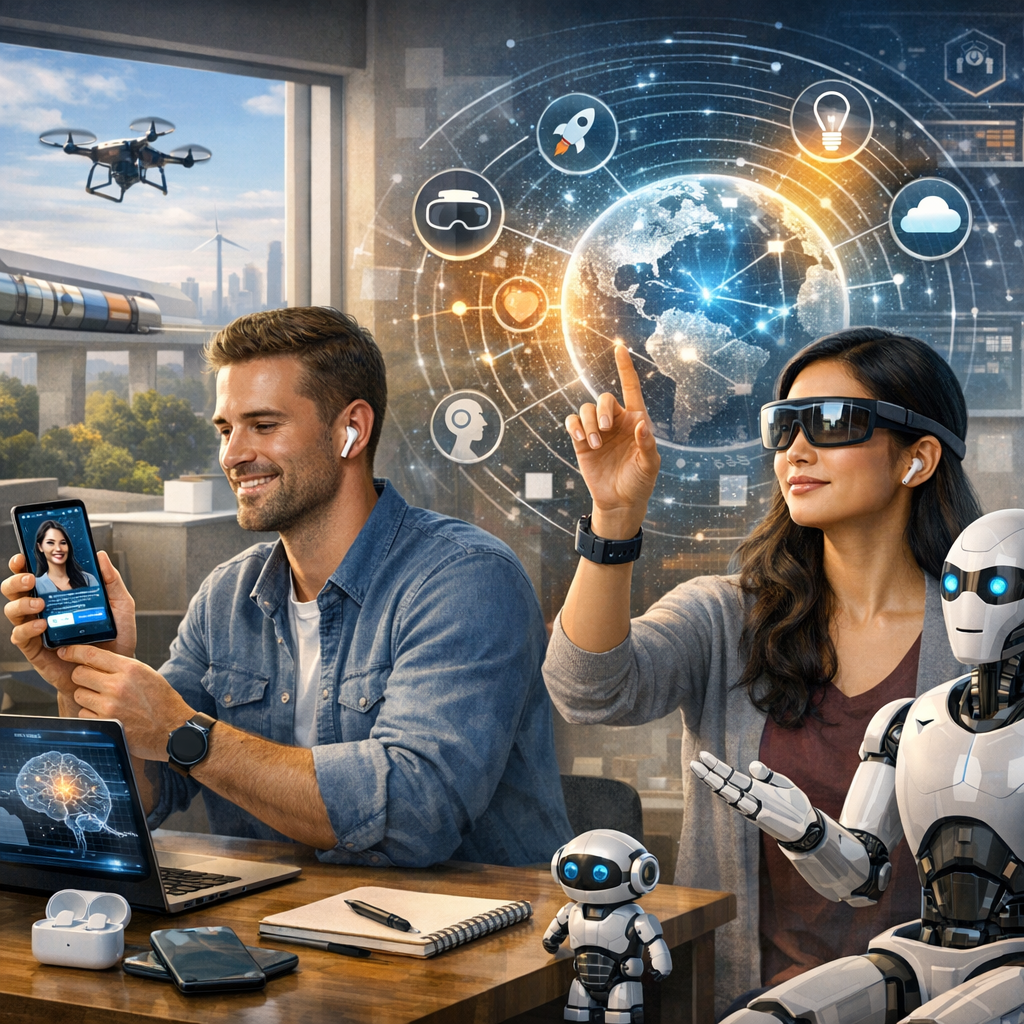
Future-Ready Personal Growth: Navigating Emerging Trends and Technologies
This course helps you understand and intentionally use emerging technologies—like AI coaching, wearables, VR/AR, and digital mental health tools—to shape your personal development in a healthy, ethical, and future-ready way. You will learn how to choose tools wisely, protect your data, and design a tech-enabled growth practice that truly supports your long-term wellbeing.
The first lecture plays free — no account needed.
What you'll learn
- Students will be able to describe the major technology trends currently transforming personal development, including AI coaching tools, digital mental health apps, and immersive experiences.
- Students will understand the main benefits (personalization, accessibility, data-driven insight) and risks (over-reliance, privacy, bias) of using technology for self-improvement.
- Students will be able to distinguish between AI-only coaching, human-led coaching augmented by AI, and AI companions for self-reflection.
- Students will understand the evidence base and emerging research around AI-supported coaching and wellbeing tools, and identify realistic use cases versus overhyped promises.
- Students will be able to summarize how AI is being used in digital mental health (e.g., chatbots, triage tools, VR therapy) and identify their appropriate role in personal development versus clinical care.
- Students will understand key regulatory developments such as state-level restrictions on AI psychotherapy and broader policy moves around AI safety and digital health, and apply basic safety criteria when choosing tools.
- Students will be able to explain how modern wearables and smart garments collect and interpret health and behavioral data to support personal development goals.
- Students will understand key privacy, security, and regulatory considerations around wearable AI and be able to define basic principles for ethical, self-protective use of these devices.
- Students will be able to identify practical use cases for VR/AR in personal development, such as anxiety reduction, pain management, or social skills training.
- Students will understand the psychological impacts and ethical questions raised by immersive environments, including issues of realism, emotional intensity, and potential overuse.
Prerequisites
- Overview of tech-enabled personal development
- AI coaches, copilots, and digital companions
- The new landscape of tech-enabled personal development
- Digital mental health, regulation, and safe use
- Wearables, smart garments, and biofeedback for growth
- Immersive technologies: VR, AR, and the metaverse for personal growth
Course Content
8 modules · 2h total
Module 1: The New Landscape of Tech-Enabled Personal Development
Get an overview of how personal development is being reshaped by AI, wearables, VR/AR, and digital platforms, and what this means for your own growth journey.
Module 2: AI Coaches, Copilots, and Digital Companions
Explore how AI is used as a coach, copilot, and companion in personal development, from chat-based self-reflection tools to hybrid human–AI coaching models.
Module 3: Digital Mental Health, Regulation, and Safe Use
Learn how AI-powered mental health tools, therapy apps, and telehealth are evolving, along with emerging laws and guidelines that shape safe and ethical use.
Module 4: Wearables, Smart Garments, and Biofeedback for Growth
Discover how wearables, smart garments, and biometric tracking are being used for personal performance, emotional regulation, and habit change—and how to use them wisely.
Module 5: Immersive Technologies: VR, AR, and the Metaverse for Personal Growth
Examine how VR, AR, and immersive environments are being used for mindset training, exposure therapy, social skills, and habit formation—and what to watch out for.
Module 6: Data, Privacy, and the Ethics of Self-Tracking
Learn how your data flows through personal development technologies, what current policy debates look like, and how to protect your digital self while still benefiting from innovation.
Module 7: Designing Your Tech-Enabled Personal Growth System
Integrate what you’ve learned to intentionally select tools, define your goals, and create a balanced, sustainable personal development stack that works for you.
Module 8: Future Scenarios: Preparing for What’s Next in Personal Development
Look ahead to plausible future developments—such as more proactive AI ‘inner voices’, hyper-personalized journaling, and integrated health–growth ecosystems—and how to stay adaptive and grounded.
Read the Textbook
Read every chapter for free, right here in your browser.
For most of the 20th century, personal development meant: Self-help books In-person therapy or coaching Seminars and workshops Paper journals and planners
Since roughly the late 2010s, and especially after the COVID-19 pandemic (from 2020 onward), personal development has shifted into tech-enabled ecosystems: Apps that track mood, sleep, focus, and habits AI chatbots that simulate coaching or tutoring Wearables that constantly measure your body and behavior VR/AR tools that create immersive training and therapy environments Social and learning platforms that algorithmically personalize content
Today (early 2026), your growth journey can be: Continuous: Data collected 24/7 via your phone and wearables Personalized: AI systems adapt goals, feedback, and content to you Networked: Communities, influencers, and platforms shape your habits
Study Flashcards
Key concepts from this course as flashcard pairs.
Module 1: The New Landscape of Tech-Enabled Personal Development
Tech-enabled personal development
The use of digital tools—such as AI, wearables, VR/AR, and online platforms—to support and shape individual growth in areas like learning, health, productivity, and mental well-being.
AI coaching tool
An application that uses artificial intelligence (often large language models or recommendation systems) to simulate elements of human coaching—such as goal setting, feedback, and reflection prompts—typically via chat or adaptive content.
Wearable
A body-worn device (e.g., smartwatch, fitness band, smart ring) that continuously or regularly collects physiological or behavioral data, often feeding into apps for feedback and behavior change.
VR (Virtual Reality)
A fully immersive digital environment, usually accessed through a headset, that can simulate real or imaginary situations for training, therapy, or practice.
AR (Augmented Reality)
Technology that overlays digital information or objects onto the real world, typically via glasses or smartphone screens, enhancing but not replacing the physical environment.
Personalization
The process of tailoring content, feedback, or experiences to an individual user based on their data, preferences, and behavior patterns.
+4 more flashcards
Module 2: AI Coaches, Copilots, and Digital Companions
AI-only coaching assistant
A chat- or voice-based system that simulates a coach by guiding goal-setting, planning, and reflection **without** a human coach directly involved in sessions.
Human-led coaching with AI copilot
A model where a **human coach** leads the relationship and decisions, while AI supports with tasks like note-taking, summaries, pattern detection, and resource suggestions.
AI companion for self-reflection
An AI system designed mainly for ongoing conversation, mood check-ins, and reflective prompts, focusing on **emotional support and journaling** rather than performance goals.
Coaching copilot
An AI tool that assists a human coach (or sometimes a coachee) by providing structure, insights, and automation, while leaving **judgment and responsibility** to the human.
Overhyped promise
A claim about AI (e.g., “replaces therapists”) that goes beyond current evidence and ignores known limitations, such as lack of true empathy or difficulty with crisis situations.
Realistic use case
A way of using AI that aligns with what current systems can reliably do, such as helping with **task breakdown, habit tracking, and structured reflection**, under human oversight when needed.
Module 3: Digital Mental Health, Regulation, and Safe Use
Digital mental health
The use of digital technologies (apps, web platforms, AI, VR, telehealth, etc.) to support mental health promotion, prevention, assessment, treatment, or recovery.
AI mental health chatbot
A software agent, often using large language models, that interacts with users via text or voice about mental health topics, sometimes offering coping strategies or reflections.
Digital therapeutic (DTx)
Software that delivers evidence-based therapeutic interventions to prevent, manage, or treat a medical disorder or disease, often regulated as a medical device.
Teletherapy / telepsychiatry
Delivery of psychotherapy or psychiatric care remotely via video, phone, or messaging by a licensed human clinician, sometimes supported by digital tools.
Software as a Medical Device (SaMD)
Software intended to be used for one or more medical purposes (e.g., diagnosis, treatment) that performs these purposes without being part of a hardware medical device.
EU AI Act (high-risk systems)
A European Union regulation (adopted 2024, phased in from 2024–2025) that imposes strict requirements on high-risk AI systems, including many health-related tools, covering risk management, data quality, transparency, and human oversight.
+2 more flashcards
Module 4: Wearables, Smart Garments, and Biofeedback for Growth
Wearable
A device worn on the body (e.g., smartwatch, ring, chest strap) that collects data such as heart rate, movement, or sleep, often with embedded sensors and algorithms.
Smart garment
Clothing with integrated sensors or conductive materials (e.g., shirts with EMG sensors, socks with pressure sensors) that track physiological or movement data.
Heart Rate Variability (HRV)
The variation in time between consecutive heartbeats; used as an indicator of autonomic nervous system balance, stress, and recovery.
Biofeedback
The process of using real-time physiological data (e.g., HRV, breathing, skin conductance) to learn how to consciously influence bodily states, such as stress or relaxation.
Readiness / Recovery Score
A composite metric generated by wearables that combines sleep, HRV, resting heart rate, and recent activity to estimate how prepared your body is for exertion.
GDPR (General Data Protection Regulation)
EU regulation governing personal data processing, giving individuals rights over their data and imposing obligations on organizations that collect and process it.
+4 more flashcards
Module 5: Immersive Technologies: VR, AR, and the Metaverse for Personal Growth
Virtual Reality (VR)
A fully computer-generated 3D environment, usually experienced through a headset, that replaces the user’s view of the real world and can create a strong sense of presence.
Augmented Reality (AR)
Technology that overlays digital information (images, text, objects) onto the real-world environment, typically via smartphones, tablets, or AR/mixed-reality headsets.
Presence
The subjective feeling of 'being there' in a virtual or augmented environment, rather than just observing it on a screen.
Embodiment
The sense that a virtual body, avatar, or virtual hands are your own, influencing how you move, feel, and behave in immersive environments.
VR Exposure Therapy (VRET)
A therapeutic technique that uses VR to gradually and safely expose individuals to feared situations or stimuli, typically under the guidance of a trained clinician.
Metaverse (practical definition)
A network of persistent, shared 3D virtual spaces where users interact via avatars for socializing, work, learning, and play, rather than a single unified world.
+2 more flashcards
Module 6: Data, Privacy, and the Ethics of Self-Tracking
Data Lifecycle
The stages personal data passes through: collection, transmission, storage, analysis, sharing, re‑use, and deletion/portability.
Personal Data (GDPR sense)
Any information relating to an identified or identifiable natural person, including names, IDs, location data, online identifiers, or factors specific to physical, physiological, genetic, mental, economic, cultural, or social identity.
Special Category / Sensitive Data
Under GDPR, data such as health, biometric, genetic, racial or ethnic origin, political opinions, religious beliefs, or sexual orientation, which require stronger protection and usually explicit consent.
Data Minimization
A principle requiring that only the personal data necessary for a specific purpose is collected and processed—no more than needed.
Dark Patterns
Interface designs that manipulate or pressure users into choices they might not otherwise make, such as oversharing data or accepting tracking.
EU AI Act
A European Union regulation adopted in 2024 that classifies AI systems by risk level, bans certain practices, and imposes obligations (e.g., risk management, transparency, human oversight) on high‑risk AI, including some health and behavior‑influencing tools.
+2 more flashcards
Module 7: Designing Your Tech-Enabled Personal Growth System
Tech-enabled personal growth system
A deliberately designed set of goals, metrics, and digital tools (apps, AI, wearables, VR/AR, etc.) that work together to support your personal development, rather than a random collection of apps.
Minimal effective stack
The smallest set of tools that can reliably support your goals across capture, guidance, execution, and reflection, without causing overload or fragmentation.
Capture / Noticing tools
Tools that primarily record or surface data about your behavior, environment, or internal state (e.g., step counters, sleep trackers, mood logs, VR usage logs).
Guidance / Coaching tools
Tools—often AI-based—that help interpret your data and suggest actions or plans (e.g., AI study planners, CBT-style mental health apps, habit coaches).
Reflection loop
A regular process (often weekly) where you review your data and experiences, extract patterns, and adjust your system or behavior accordingly.
Agency
Your ability to make and own decisions about your behavior and tools, rather than passively following automated suggestions or default settings.
+2 more flashcards
Module 8: Future Scenarios: Preparing for What’s Next in Personal Development
Proactive AI companion
An AI system that initiates interactions or suggestions based on context (e.g., time, location, biometrics, behavior) rather than only responding when you ask.
Context-aware computing
Technology that uses information about the user’s situation—such as location, activity, physiological state, or social context—to adapt its behavior or outputs.
AI-augmented journaling
Journaling practices supported by AI features like smart prompts, emotion analysis, pattern detection, and future-self simulations.
Integrated health–growth ecosystem
A connected set of tools and platforms that combine health, mental well-being, and personal development data into a unified system of recommendations and insights.
Function creep
The gradual expansion of a system’s data use beyond its original purpose, often without clear consent (e.g., wellness data used for insurance or employment decisions).
Future self-continuity
The psychological sense that your future self is connected to who you are now, which often increases motivation to make long-term-beneficial choices.
+1 more flashcards
More in Personal Development
See all →
Master Thief of Skyrim: Stealth, Strategy, and Heists
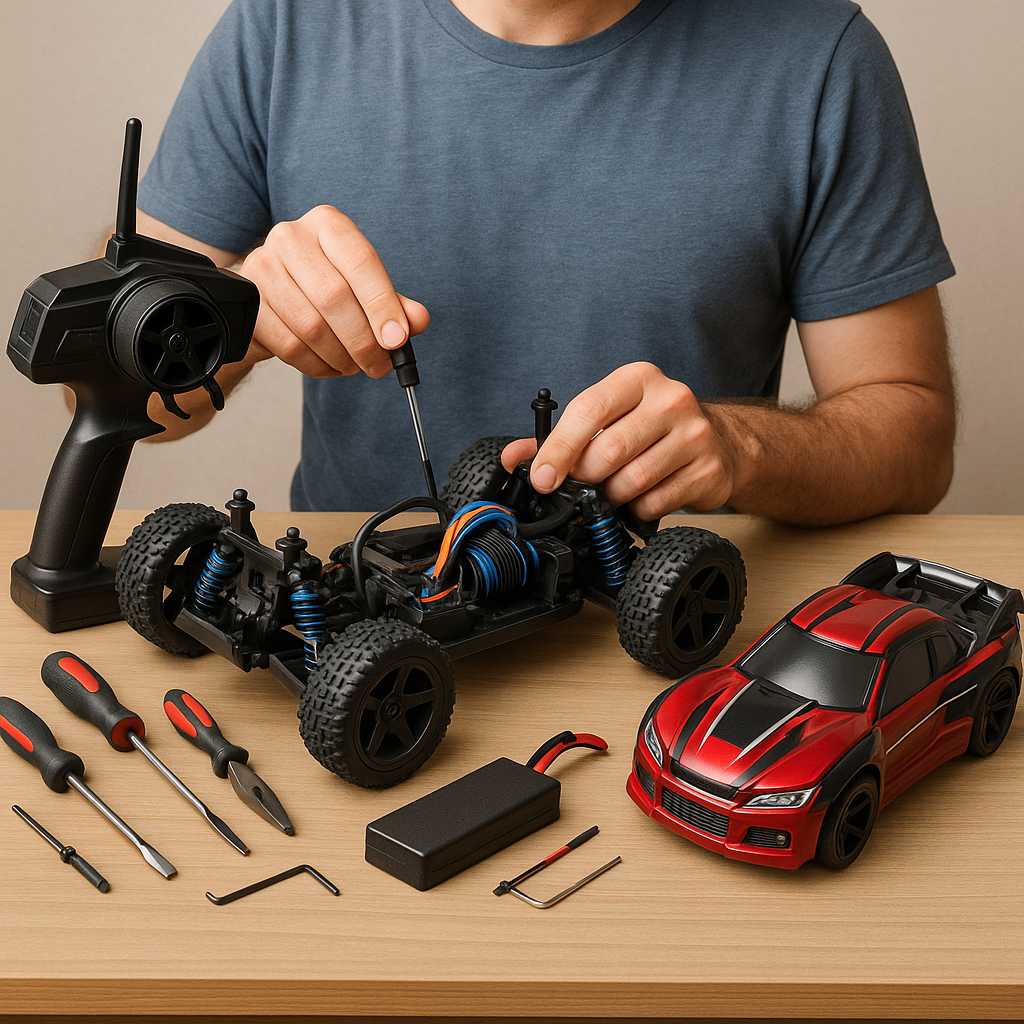
Rc-autoilun perusteet ja turvallinen harrastaminen

Matematiklyftet åk 9 – komplett träning inför nationella provet

Kabbalah Beyond Maps: Intensive Letter, Tree, and Name Work as Technology of Consciousness

Hyper-Advanced Kabbalah Lab: Designing and Operating Your Personal Tree of Life System