 Skarp
Skarp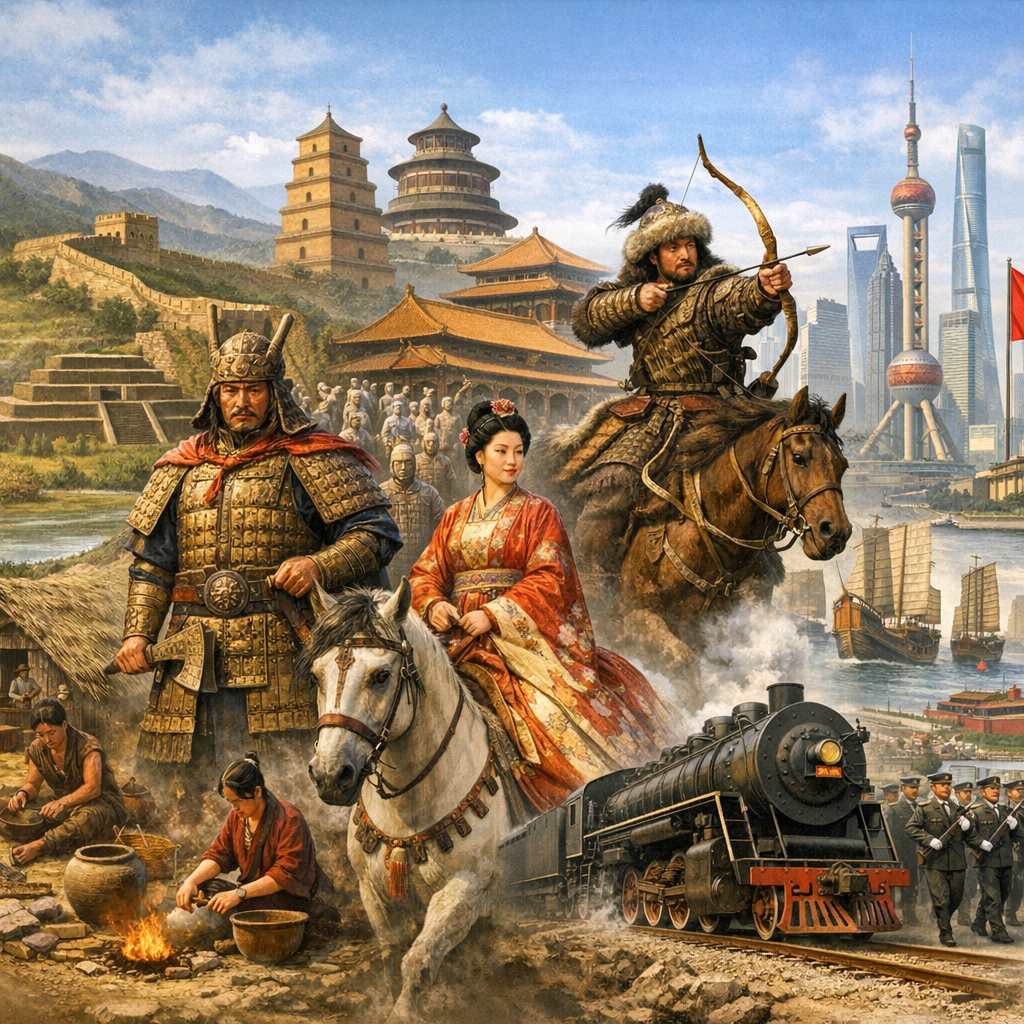
From Dynasties to Superpower: A Concise History of China
This course offers a clear, timeline-based overview of Chinese history from its earliest civilizations to the People’s Republic of China today. You will explore major dynasties, cultural and technological achievements, foreign invasions, revolutions, and China’s rapid transformation into a 21st‑century power.
The first lecture plays free — no account needed.
What you'll learn
- Students will be able to locate major geographic regions that shaped Chinese civilization.
- Students will understand what a dynasty is and how the dynastic cycle is used to explain political change in China.
- Students will be able to describe how historians use archaeological and textual evidence to reconstruct early Chinese history.
- Students will be able to outline the major periods of Chinese history from ancient times to the People’s Republic of China.
- Students will be able to explain how early agriculture and Neolithic cultures laid the foundation for Chinese civilization.
- Students will understand the significance of the Shang dynasty’s oracle bones for writing and state power.
- Students will be able to summarize the political and moral meaning of the Mandate of Heaven in the Western Zhou period.
- Students will recognize that modern projects like the Xia–Shang–Zhou Chronology Project use scientific dating methods to refine early Chinese timelines.
- Students will be able to describe the political fragmentation of the Eastern Zhou period and its impact on warfare.
- Students will understand the core ideas of Confucianism, Daoism, and Legalism and how they responded to disorder.
Prerequisites
- Geography of China and overall historical timeline
- Concept of dynasties and periodization
- Knowledge of early dynasties (Xia, Shang, Zhou)
- Understanding of the Mandate of Heaven and basic political structures
- Eastern Zhou political context and major philosophical schools
- Understanding of the Han empire and its political structures
Course Content
11 modules · 2h 45m total
Big Picture: How to Read the History of China
Introduces the overall timeline of Chinese history from prehistory to the present, the idea of dynasties, and how historians organize and debate China’s past.
Origins: From Neolithic Cultures to Early States (Prehistory–c. 771 BCE)
Covers the emergence of agriculture, early cultures, and the first recorded dynasties, focusing on Xia, Shang, and Western Zhou and what recent research suggests about their chronology.
Philosophers and Warring States: The Eastern Zhou Era (770–221 BCE)
Explores the Spring and Autumn and Warring States periods, when competing states fought for dominance and major philosophical schools emerged.
Empire Forged: Qin Unification and Han Consolidation (221 BCE–220 CE)
Focuses on the first unification of China under the Qin and the long‑lasting Han dynasty, highlighting state building, law, infrastructure, and cultural integration.
Division and Flourishing: Three Kingdoms to Tang Golden Age (220–907 CE)
Covers the fragmentation after Han, the Northern and Southern dynasties, and the reunification under Sui and Tang, emphasizing cultural flowering and religious change.
Trade, Invasion, and Innovation: Song, Yuan, and Ming (960–1644)
Explores economic growth, technological innovation, foreign conquest, and maritime engagement during the Song, Mongol‑ruled Yuan, and early‑modern Ming dynasties.
Crisis and Contact: The Qing Dynasty and the 19th Century (1644–1911)
Analyzes the Manchu‑ruled Qing dynasty, its early expansion and prosperity, and the later crises brought by internal rebellions and Western imperialism.
Revolution and Republic: From Qing Fall to Civil War (1911–1949)
Covers the fall of the Qing, the 1911 Revolution, the fragile Republic of China, warlordism, Japanese invasion, and the Chinese Civil War between Nationalists and Communists.
Mao’s China: Revolution, Campaigns, and Social Transformation (1949–1976)
Examines the establishment of the People’s Republic of China, Mao Zedong’s leadership, socialist transformation, and major political campaigns including the Great Leap Forward and the Cultural Revolution.
Reform and Opening: Deng Xiaoping and the Transformation of China (1978–early 2000s)
Explores the shift from Maoist policies to market‑oriented reforms under Deng Xiaoping and his successors, including rapid economic growth and social change.
Global Power: China in the 21st Century (2000s–2025)
Looks at China’s rise as a global economic and technological power, domestic challenges, and its evolving role in international affairs up to around 2025.
Read the Textbook
Read every chapter for free, right here in your browser.
When people talk about “Chinese history,” they are usually talking about more than 4,000 years of change across a huge area. To make sense of this, historians: Zoom out to see the long timeline (from early villages to today’s People’s Republic of China). Use patterns like dynasties and the “dynastic cycle” to organize political history. Compare sources: legends, written texts, and modern archaeology. Divide time into periods (periodization) so we can talk about “ancient,” “imperial,” and “modern” China.
As you go through this module, keep asking yourself:
What pattern is the historian using? Geography? Dynasties? Wars? Ideas? Evidence types?
Study Flashcards
Key concepts from this course as flashcard pairs.
Big Picture: How to Read the History of China
Dynasty
A period when political power is held by a single ruling family or house, often giving its name to the era (e.g., Han, Tang, Ming).
Dynastic Cycle
A traditional Chinese idea that dynasties go through a repeating pattern of founding, prosperity, decline, and fall, linked to the Mandate of Heaven.
Mandate of Heaven (Tianming)
The belief that Heaven gives rulers the right to rule, and can withdraw it if they govern badly, shown through disasters and rebellions.
North China Plain
Flat, fertile region around the Yellow River; early heartland of Chinese states and many capitals.
Yellow River (Huang He)
Northern river known for its loess-filled waters and destructive floods; cradle of early Chinese civilizations like the Shang.
Yangtze River (Chang Jiang)
Long central river supporting rich rice agriculture, especially in southern China; later an economic core region.
+4 more flashcards
Origins: From Neolithic Cultures to Early States (Prehistory–c. 771 BCE)
Neolithic (in Chinese context)
A period before written records (roughly c. 10,000–2000 BCE) marked by farming, pottery, and settled villages, but no surviving local writing.
Millet vs. Rice regions
Millet was mainly grown in the dry uplands of North China (Yellow River); rice was grown in the wetter lowlands of South China (Yangtze and south).
Oracle bones
Animal bones or turtle shells used for divination in the Shang dynasty; questions, cracks, and sometimes answers were inscribed, giving us the earliest widely accepted Chinese writing.
Erlitou culture
An early Bronze Age culture (c. 1750–1500 BCE) in Henan with palatial buildings and bronzes; some scholars link it to the Xia dynasty, but this identification remains debated.
Mandate of Heaven (Tianming)
A Zhou-era idea that Heaven grants the right to rule to a virtuous ruler who protects the people; if the ruler becomes immoral and disasters and chaos follow, Heaven withdraws the mandate.
Western Zhou feudal order
A political system (c. 1046–771 BCE) where the Zhou king granted lands and titles to relatives and allies, creating a network of regional lords who owed military and ritual obligations to the king.
+2 more flashcards
Philosophers and Warring States: The Eastern Zhou Era (770–221 BCE)
Eastern Zhou (770–221 BCE)
The later phase of the Zhou dynasty when the royal house lost real power, and numerous states competed, leading to the Spring and Autumn and Warring States periods.
Spring and Autumn period
Early Eastern Zhou era (c. 770–481 BCE) with many smaller states, limited warfare, and regional hegemons claiming to protect the Zhou order.
Warring States period
Later Eastern Zhou era (c. 475–221 BCE) marked by consolidation into a few powerful states, large-scale warfare, and intense state-building, ending when Qin unified China.
Hundred Schools of Thought
A later term for the wide range of intellectual traditions that flourished in the Eastern Zhou, including Confucianism, Daoism, Legalism, Mohism, and others.
Confucianism
A tradition rooted in the teachings of Confucius, emphasizing moral cultivation, ritual (li), humaneness (ren), and rule by virtuous example.
Daoism
A set of ideas linked to texts like the Daodejing and Zhuangzi, emphasizing the Dao (Way), non-action (wu-wei), naturalness, and skepticism about rigid rules.
+4 more flashcards
Empire Forged: Qin Unification and Han Consolidation (221 BCE–220 CE)
Qin Shi Huang
The founder of the Qin dynasty and first emperor of a unified Chinese empire (reigned 221–210 BCE). Known for Legalist governance, standardization, and large building projects.
Legalism
A Chinese political philosophy emphasizing strict laws, clear rewards and punishments, and strong central authority rather than moral persuasion.
Standardization (Qin)
Qin policies making writing, weights and measures, coinage, and even cart axle widths uniform across the empire to strengthen central control.
Great Wall (early Qin–Han phases)
Networks of earthen walls, fortifications, and watchtowers built and linked under Qin and Han to defend northern frontiers, later rebuilt into the more famous Ming‑era stone walls.
Han dynasty
Dynasty that ruled China from 206 BCE to 220 CE, maintaining Qin’s centralized structures while promoting Confucianism and expanding territory and trade.
Confucianism (Han state ideology)
A system of thought based on the teachings of Confucius, emphasizing moral behavior, proper relationships, and benevolent rule; adopted by the Han as the core of official education and ideology.
+4 more flashcards
Division and Flourishing: Three Kingdoms to Tang Golden Age (220–907 CE)
Three Kingdoms
Period after the Han collapse (early 3rd century CE) when China was divided mainly between Wei (north), Shu-Han (southwest), and Wu (southeast), later romanticized in the novel _Romance of the Three Kingdoms_.
Northern and Southern dynasties
Era (4th–6th centuries CE) when China was politically divided between northern regimes (often founded by non-Han groups) and southern Chinese-ruled dynasties, marked by cultural diversity and the spread of Buddhism.
Sui dynasty
Short dynasty (581–618 CE) that reunified China, rebuilt central institutions, and launched major infrastructure projects like the Grand Canal, laying foundations for the Tang.
Grand Canal
A vast canal system, significantly expanded under the Sui and used by later dynasties, linking northern and southern China for transport of grain, troops, and goods.
Tang dynasty
Dynasty from 618–907 CE, often seen as a golden age of Chinese history, known for strong institutions, cosmopolitan cities like Chang’an, flourishing poetry, and active trade.
Cosmopolitanism (in the Tang context)
The openness of Tang China, especially its capital Chang’an, to foreign people, goods, and ideas from Central Asia, the Middle East, Korea, Japan, and beyond.
+2 more flashcards
Trade, Invasion, and Innovation: Song, Yuan, and Ming (960–1644)
Song commercial revolution
A major shift during the Song dynasty from a mostly local, subsistence economy to a market‑oriented one with expanded trade, monetization, specialization, and urban growth.
Champa rice
A fast‑ripening strain of rice (originally from what is now Vietnam) adopted widely in Song China, allowing multiple harvests per year and supporting population growth.
Neo‑Confucianism
A later development of Confucian thought, systematized by thinkers like Zhu Xi (Song period), emphasizing moral self‑cultivation and metaphysical principles; became the basis for Ming and later civil service examinations.
Yuan dynasty
The dynasty established by the Mongols in China (1271–1368), ruling a multiethnic empire that connected China to the broader Mongol world across Eurasia.
Ming dynasty
Han‑ruled dynasty (1368–1644) that replaced the Yuan, known for strong centralization, expanded civil service exams, cultural flourishing, and early maritime expeditions under Zheng He.
Civil service examinations
Competitive exams based on the Confucian classics used to select officials for the imperial bureaucracy, especially important in the Song and Ming dynasties.
+2 more flashcards
Crisis and Contact: The Qing Dynasty and the 19th Century (1644–1911)
Manchus
A Northeast Asian people from Manchuria who founded and ruled the Qing dynasty from 1644 to 1911, governing a multiethnic empire over a mostly Han Chinese population.
Eight Banners
A military and social organization system used by the Manchus (and some Mongols and Han) that grouped soldiers and families into banner units, forming the core of Qing military and ruling elites.
Unequal treaties
Treaties imposed on China by foreign powers after military defeats (starting with the Treaty of Nanjing in 1842) that opened ports, fixed low tariffs, granted extraterritoriality, and ceded territory, reducing Chinese sovereignty.
Extraterritoriality
A legal principle in treaty ports where foreigners were subject to their own consular courts rather than local Chinese courts, undermining Qing legal authority.
Taiping Rebellion
A massive civil war (1850–1864) led by Hong Xiuquan, who sought to overthrow the Qing and create the Taiping Heavenly Kingdom; it caused tens of millions of deaths and weakened the dynasty.
Self‑Strengthening Movement
A series of Qing reforms (c. 1860s–1890s) that aimed to strengthen China by adopting Western military technology and industry while preserving Confucian political and cultural foundations.
+4 more flashcards
Revolution and Republic: From Qing Fall to Civil War (1911–1949)
1911 Revolution
The uprising beginning with the Wuchang Uprising that led to the abdication of the last Qing emperor and the founding of the Republic of China in 1912.
Republic of China (ROC)
The state founded in 1912 after the fall of the Qing dynasty, led by the Kuomintang on the mainland until 1949 and continuing on Taiwan afterward.
Warlord Era
Period roughly from 1916 to the late 1920s when regional military leaders controlled different parts of China, leading to political fragmentation.
Kuomintang (KMT)
The Nationalist Party of China, reorganized by Sun Yat-sen, aiming to build a unified, modern nation-state; led the Nationalist government until 1949.
Chinese Communist Party (CCP)
Political party founded in 1921 that led a Marxist-Leninist revolution and established the People’s Republic of China in 1949.
Long March
The 1934–1935 retreat of the CCP’s Red Army from Jiangxi to Shaanxi, symbolizing sacrifice and helping Mao Zedong rise to leadership.
+4 more flashcards
Mao’s China: Revolution, Campaigns, and Social Transformation (1949–1976)
People’s Republic of China (PRC)
The socialist state proclaimed by Mao Zedong on 1 October 1949 after the CCP’s victory in the Chinese Civil War.
One‑party state
A political system in which a single party (in this case the CCP) monopolizes power and other parties, if allowed, have no real influence.
Planned economy
An economic system in which the state, rather than the market, sets production targets, prices, and investment priorities.
Land reform
Early 1950s policy that confiscated land from landlords and redistributed it to poor peasants, breaking traditional rural elites.
Collectivization
The process of merging individual farms into cooperative or communal farms where land and tools are worked collectively.
Great Leap Forward
A campaign (1958–1962) to rapidly industrialize and collectivize China, leading to economic chaos and a catastrophic famine.
+4 more flashcards
Reform and Opening: Deng Xiaoping and the Transformation of China (1978–early 2000s)
Reform and Opening (Gaige Kaifang)
The period starting in 1978 when China, under Deng Xiaoping and later leaders, introduced market-oriented economic reforms and opened to foreign trade and investment while keeping one-party rule.
Socialism with Chinese Characteristics
Deng Xiaoping’s concept describing a system where the Communist Party stays in power and the state controls key sectors, but market mechanisms, private enterprise, and foreign investment are widely used to develop the economy.
Household Responsibility System
A rural reform in which land remained collectively owned but was contracted to individual households, which had to meet state quotas but could sell surplus on the market and keep profits, greatly boosting farm output in the early 1980s.
Special Economic Zone (SEZ)
A designated area, first created in 1980 in coastal regions like Shenzhen, where foreign investment, flexible economic rules, and export-oriented production were encouraged to promote growth and technology transfer.
State-Owned Enterprise (SOE)
A company owned or controlled by the state. In China, many SOEs were given more autonomy and later restructured or downsized during reforms, especially in the 1990s.
Township and Village Enterprise (TVE)
A type of rural industrial firm, often collectively or locally owned, that grew rapidly in the 1980s and 1990s and operated in a market-oriented way, helping absorb surplus rural labor.
+4 more flashcards
Global Power: China in the 21st Century (2000s–2025)
World Trade Organization (WTO) accession (2001)
China’s entry into the WTO in 2001 deepened its integration into the global trading system, locked in many market‑opening reforms, and helped boost exports and foreign investment.
Belt and Road Initiative (BRI)
A global infrastructure and investment strategy launched by China in 2013, involving projects like ports, railways, and power plants across Asia, Africa, Europe, and beyond, aimed at improving connectivity and strengthening China’s economic and political ties.
High‑speed rail in China
China’s extensive network of fast trains (often 250–350 km/h) built mainly since the late 2000s, connecting major cities and symbolizing technological and infrastructural modernization.
Xi Jinping Thought
The official ideological framework associated with Xi Jinping, emphasizing strong Party leadership, national rejuvenation, security, and socialism with Chinese characteristics for a ‘new era.’
Common prosperity
A policy slogan under Xi Jinping focused on reducing extreme inequality, improving social welfare, and regulating some large private firms to promote more balanced development.
Energy transition in China
China’s shift toward cleaner energy sources, including massive investment in renewables (solar, wind, hydro, nuclear), while still relying heavily on coal, creating a complex and sometimes contradictory energy mix.
+1 more flashcards
More in History
See all →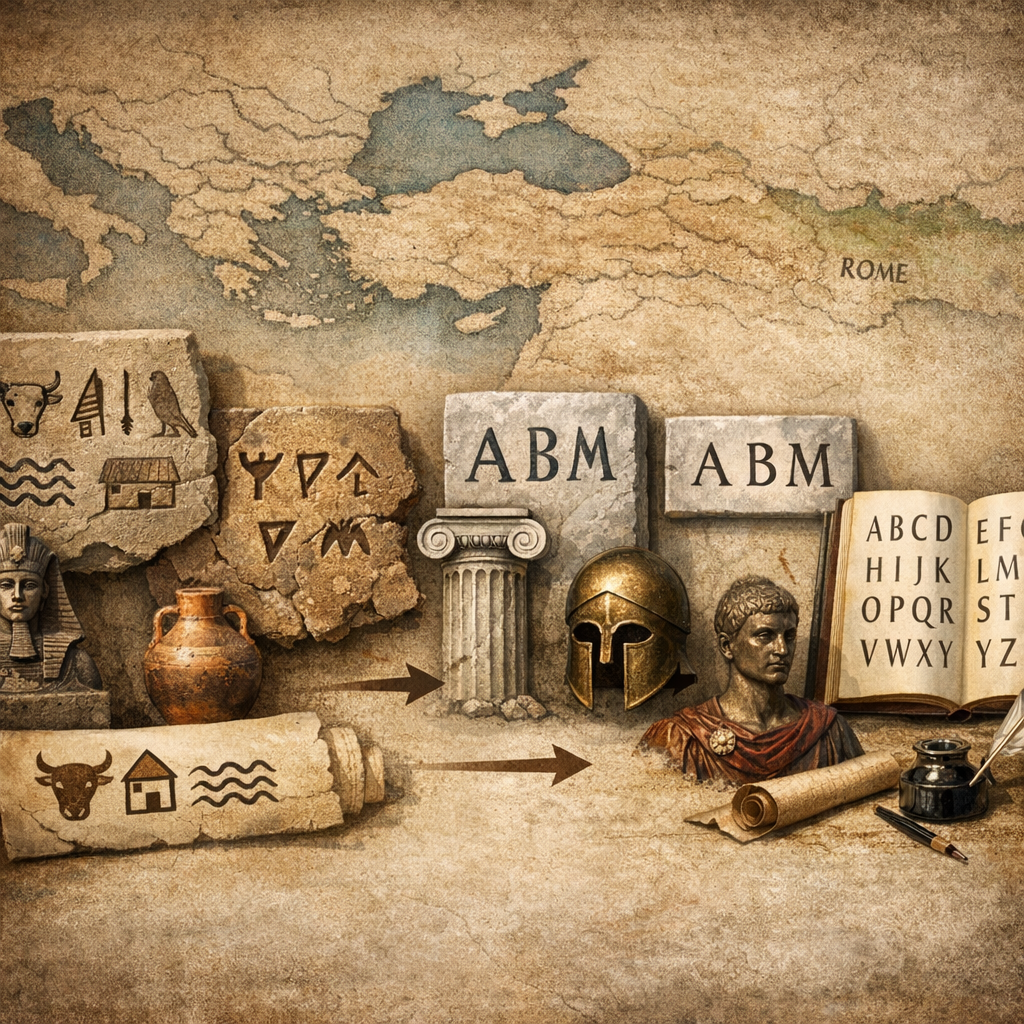
The Origin Story of the English Alphabet
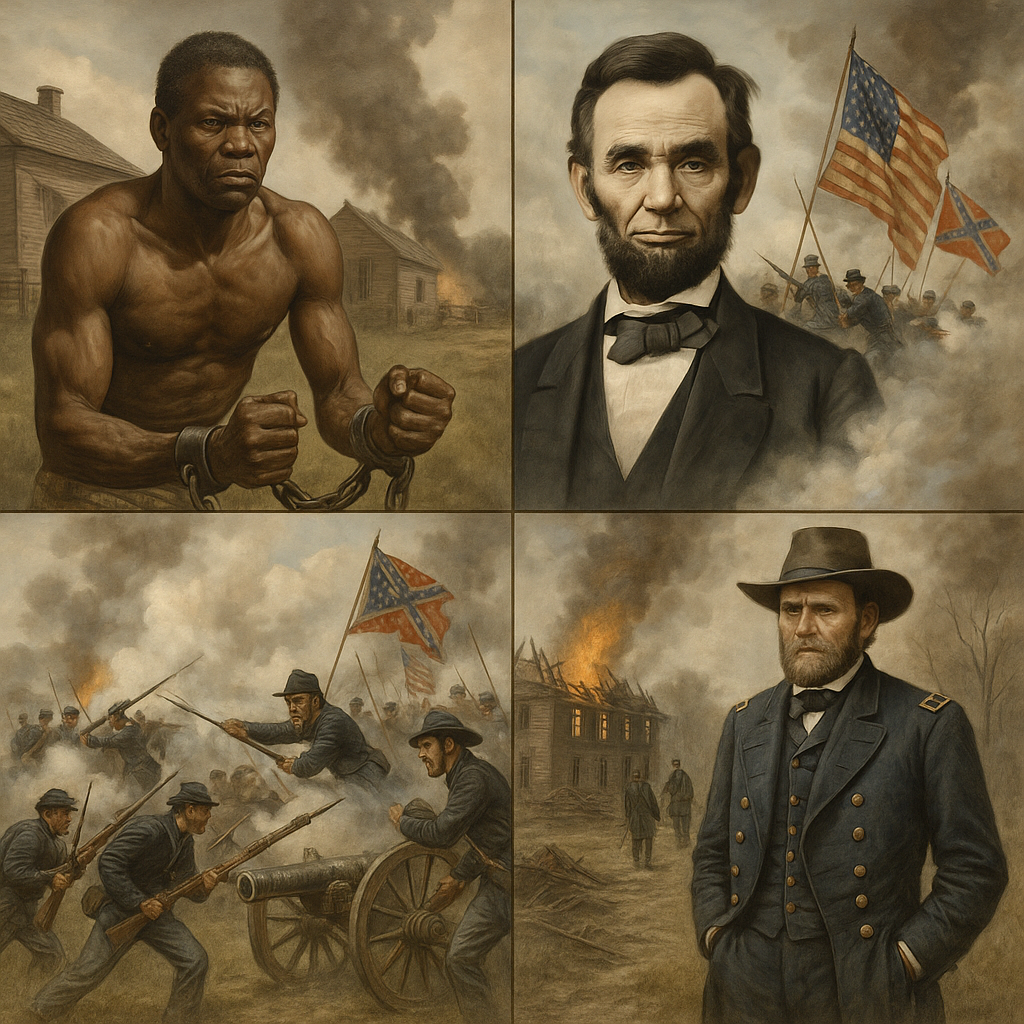
Yhdysvaltain sisällissota: syyt, kulku ja seuraukset
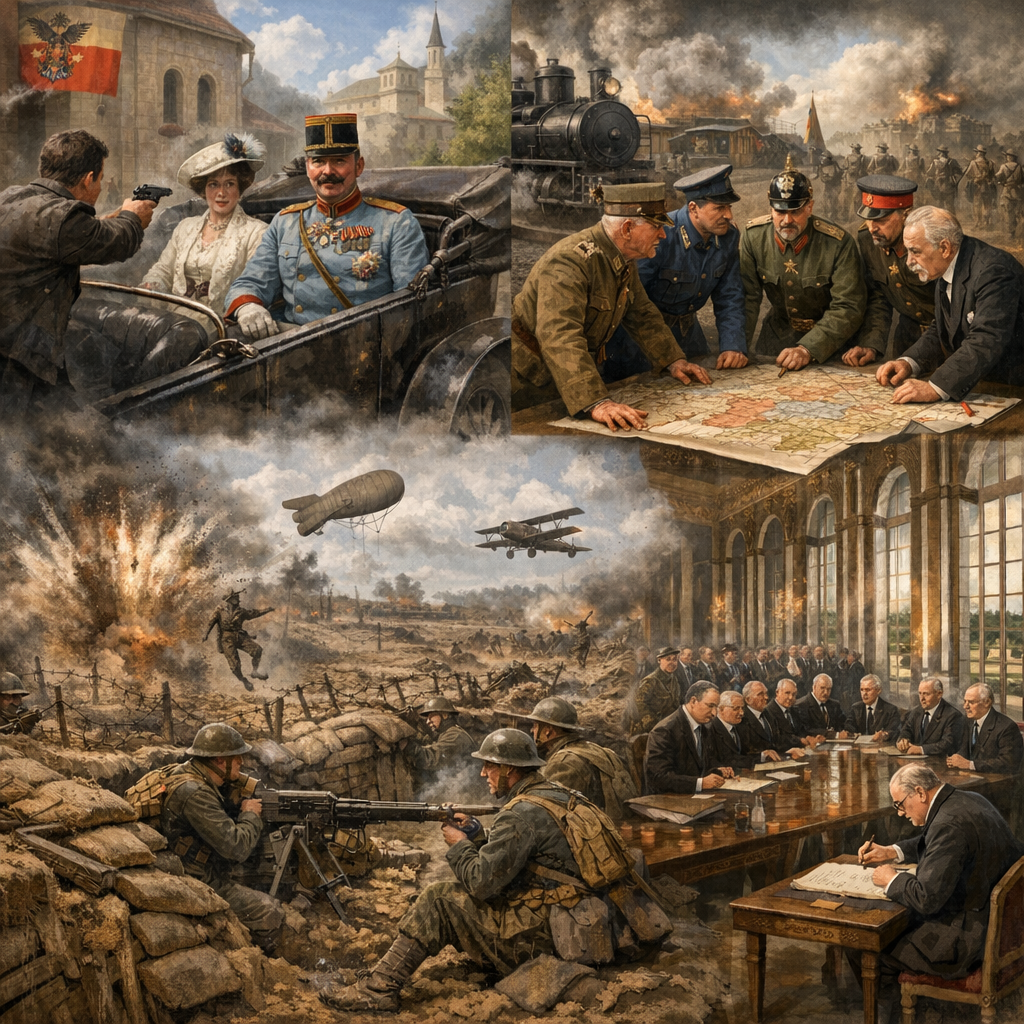
Första världskriget för åk 8: Från skottet i Sarajevo till Versaillesfreden
Decisive Battles of the American Civil War

World War I: A Global War and Its Lasting Aftermath
